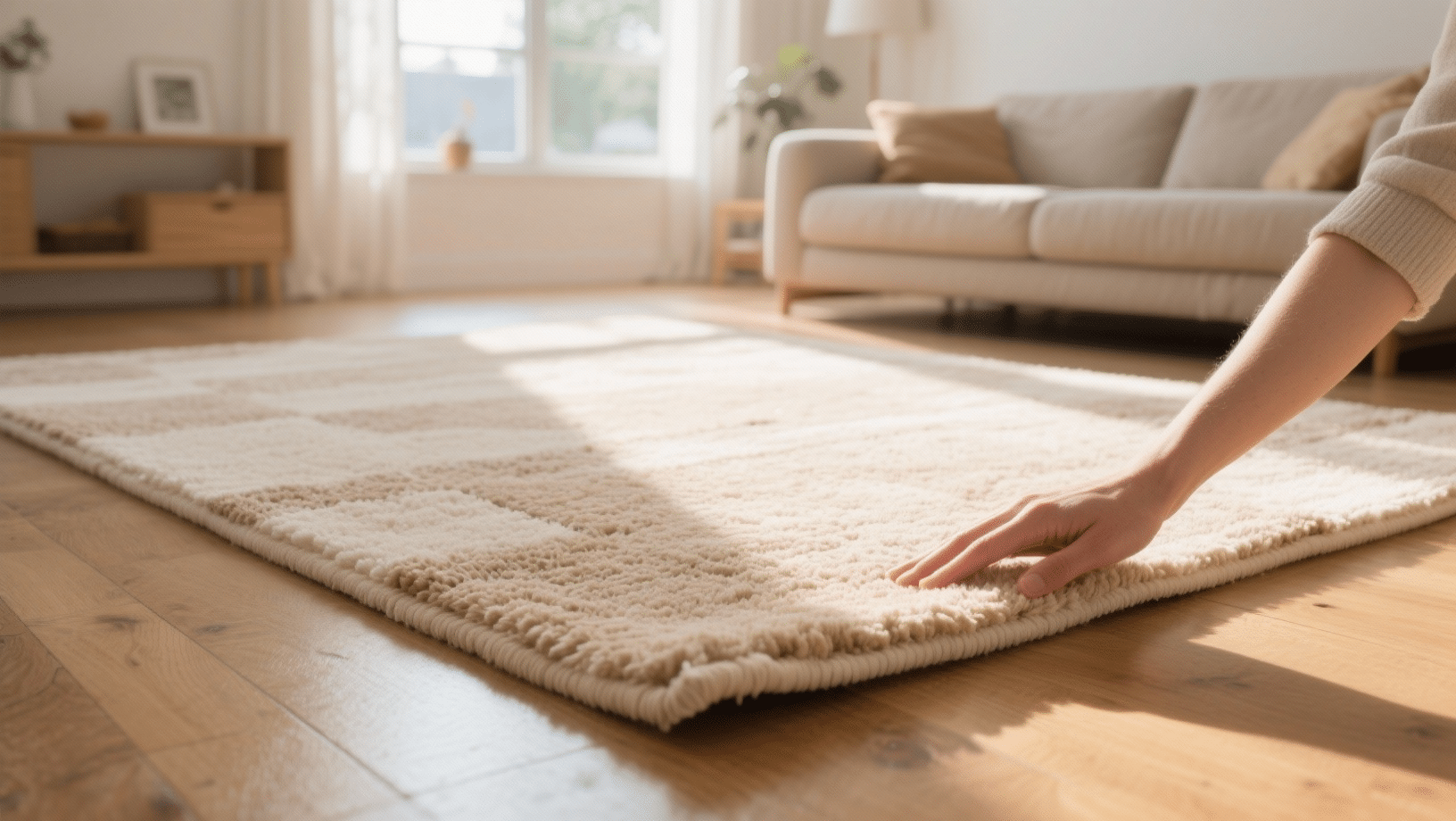

You know the feeling. You unroll a rug, step back to admire it, but nope. The corners pop up like it’s trying to escape. Or maybe there’s a big wave right in the middle where everyone walks.
It’s not just ugly. It’s actually dangerous. Someone can catch their foot on that curl.
You can fix it yourself. Trust me. No fancy tools, no calling a professional.
This blog shows you exactly how to flatten a rug or how to get waves out of a rug, whether you need a quick fix before guests arrive or a permanent solution for a stubborn problem.
Let’s get that rug smooth and safe.
Tools & Materials by Method
| Method | Required Items | Optional Items |
|---|---|---|
| Weighted Flattening | Heavy books, flat weights, clean floor space | Towels (to protect the rug under weights), boards (to distribute the weight) |
| Reverse Rolling | Straps or rope, weights, floor space | None |
| Steam Method | Hand steamer OR steam iron, cotton cloth, weights, towels | Spray bottle with water |
| Dry Heat (Hair Dryer) | Hair dryer, weights | Heat-resistant gloves |
| Damp Towel + Weight | Clean towels, spray bottle with water, heavy weights | Fan (for faster drying) |
| Carpet Stretcher | Carpet stretcher (rental), rug tape, OR tack strips | Utility knife (for trimming), knee pads |
| Adhesive Solutions | Double-sided rug tape, or rug gripper pads, OR corner grippers | Rubbing alcohol (for cleaning surfaces first) |
Different Methods to Flatten Your Rug
Pick the approach based on how fast you need results and what type of rug you’re working with.
1. Weighted Flattening
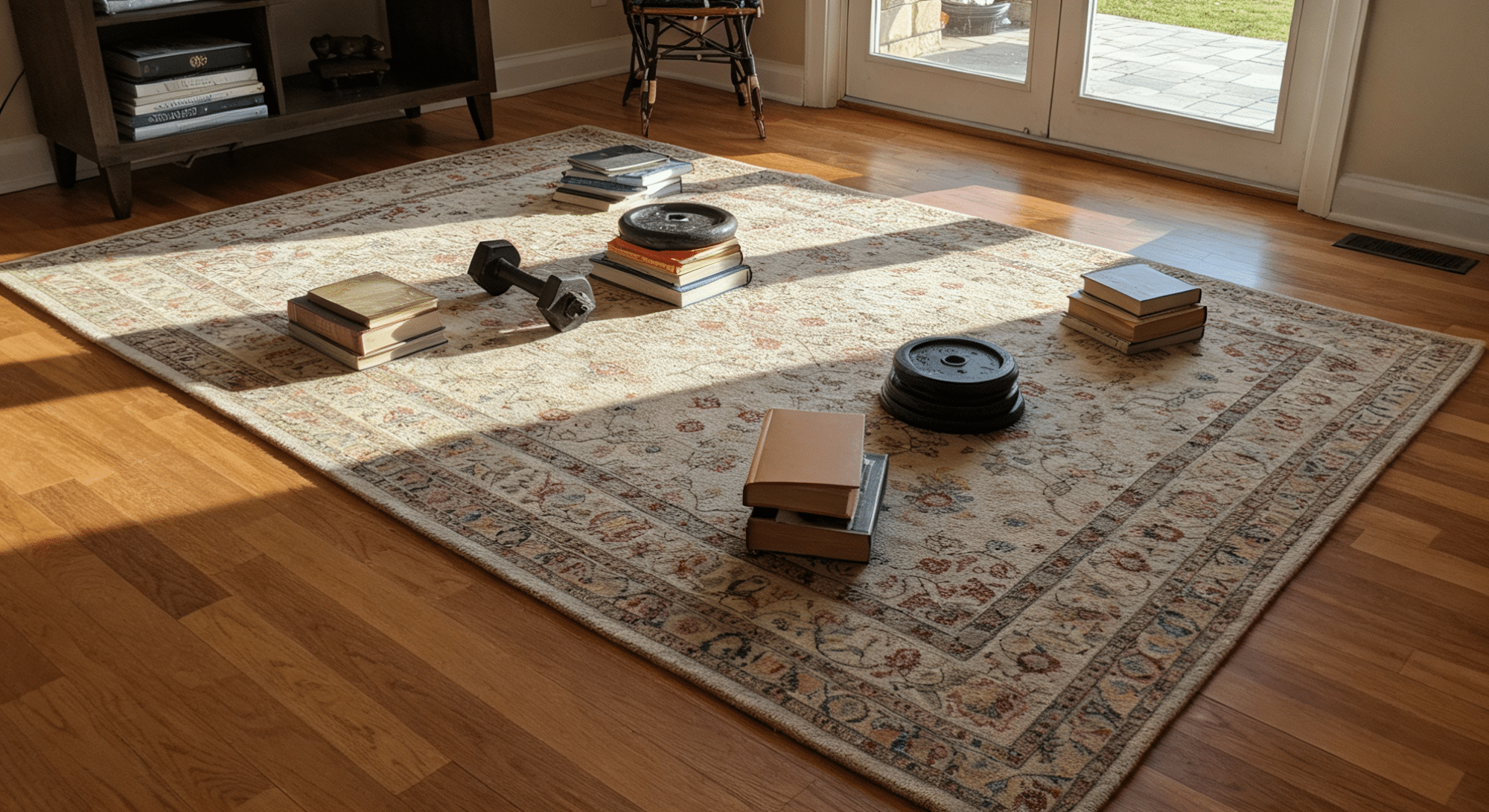
The safest starting point for any rug type, for how to get waves out of a rug
How it works:
- Clean the rug surface
- Roll it backward (opposite the curl)
- Unroll flat and distribute heavy weights across problem areas
- Wait for 24–72 hours
Best for: Natural fibers, delicate backings, minor curling
Pros: Risk-free for almost all rugs, uses household items, and no special skills needed
Cons: Requires patience, won’t eliminate severe creases alone
Pro tip: Wrap weights in towels to avoid crushing pile fibers.
2. Reverse Rolling
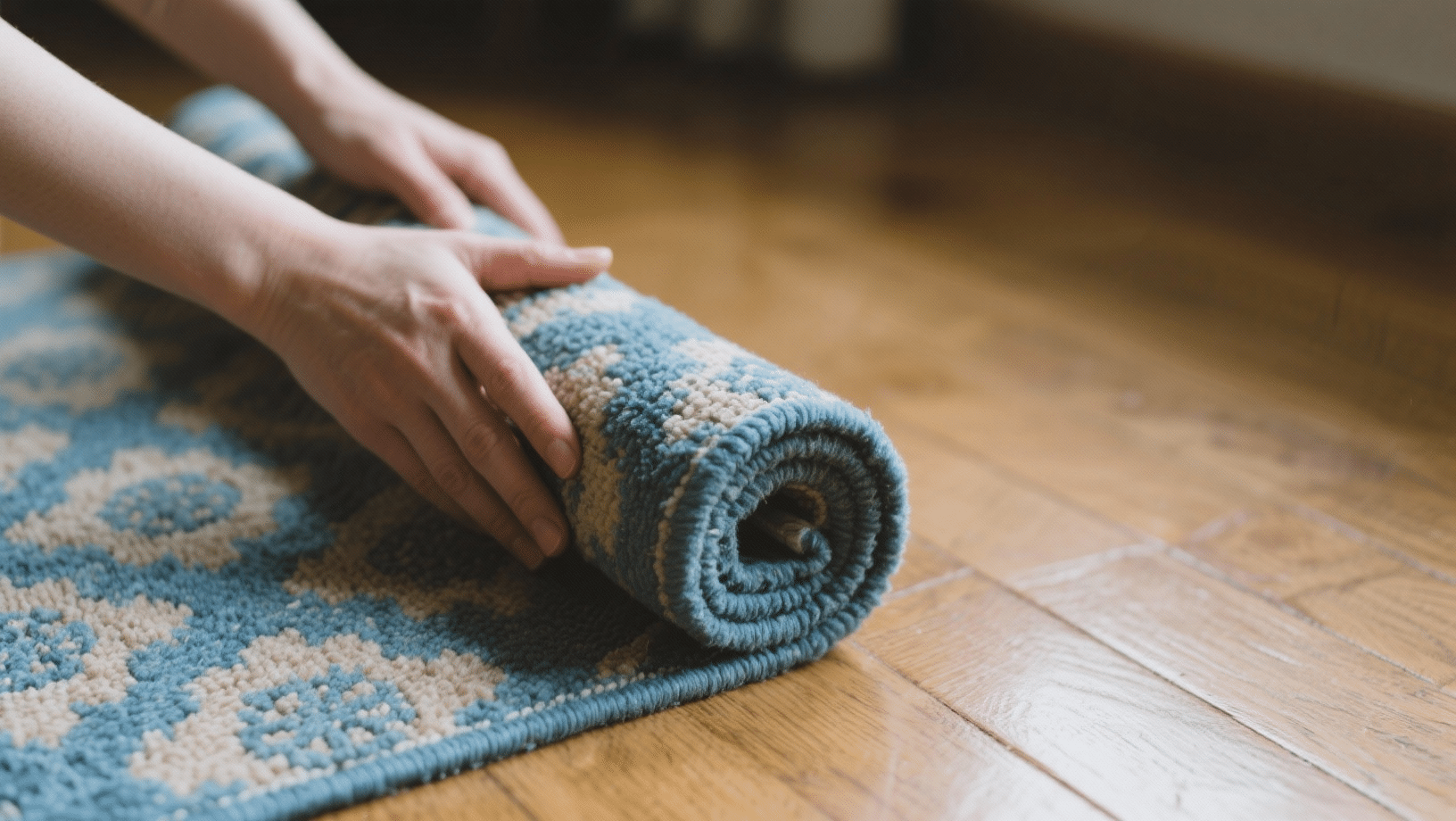
This method teaches your rug a new memory.
How it works:
- Roll the rug tightly in the opposite direction of the curl
- Secure with straps or rope
- Leave rolled for 12–24 hours
- Unroll and immediately add weights to problem spots
- Wait another 24 hours
Best for: Medium-weight rugs, edge curls, blended materials
Pros: Highly effective for edge issues, zero equipment cost, works on most rug types
Cons: Requires floor space, physically demanding for large rugs
Warning: Skip this for antique rugs; tight rolling can crack old fibers.
3. Steam Treatment
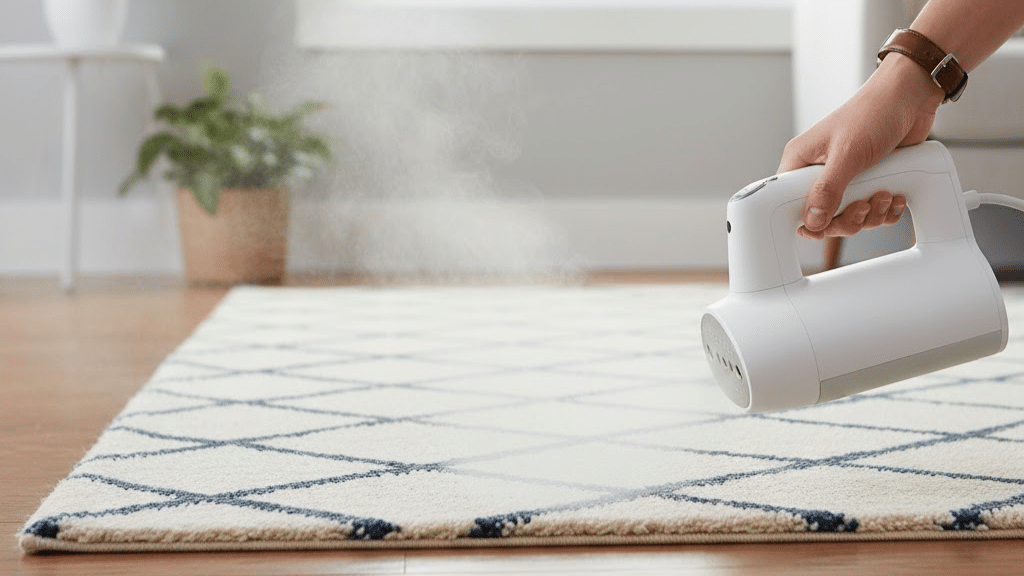
Fast results through heat and moisture on how to flatten a rug
How it works:
- Test a hidden corner for 10 minutes first
- Hold the hand steamer 6 inches above, or use a steam iron with a cotton cloth barrier
- Apply steam in short bursts while smoothing
- Weight immediately
- Let cool and dry (2–4 hours)
Best for: Wool, cotton, synthetic blends with fabric backing only
Pros: Quick changes, reshapes fibers permanently, works on stubborn creases
Cons: Can damage rubber backing, risk of shrinkage or color bleeding, requires careful technique
Never: Let the iron touch the rug directly or saturate one spot.
4. Hair Dryer Method
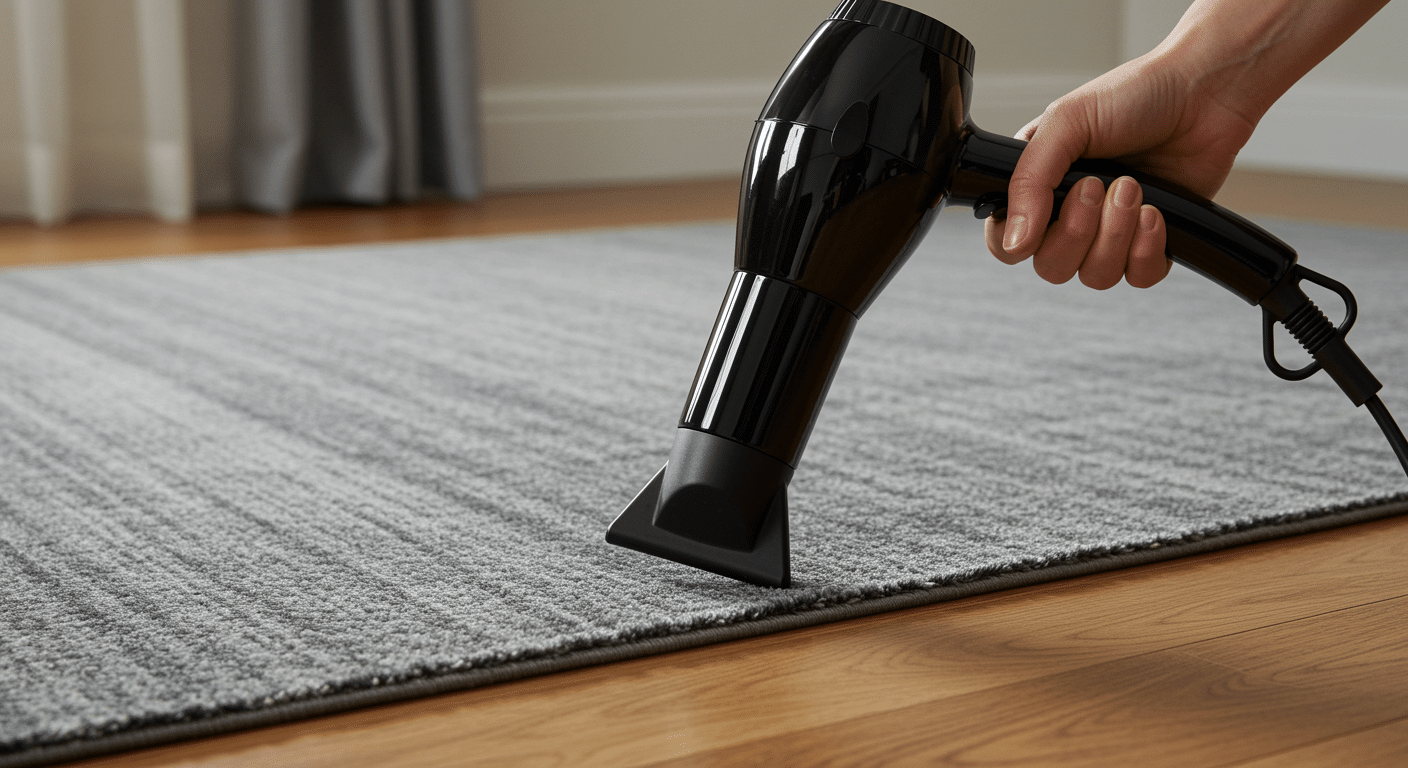
Quick fix for small problem zones.
How it works:
- Set the dryer to medium heat
- Hold 8–10 inches away, keep moving
- Smooth with your free hand
- Work in 30-second intervals
- Weigh immediately and cool for 30 minutes
Best for: Spot wrinkles, synthetic materials, pre-party emergencies
Pros: Lightning fast, portable, perfect for touch-ups
Cons: Only handles small areas, can melt synthetics if misused
Stop if: You smell burning or see fibers changing texture.
5. Damp Towel Technique
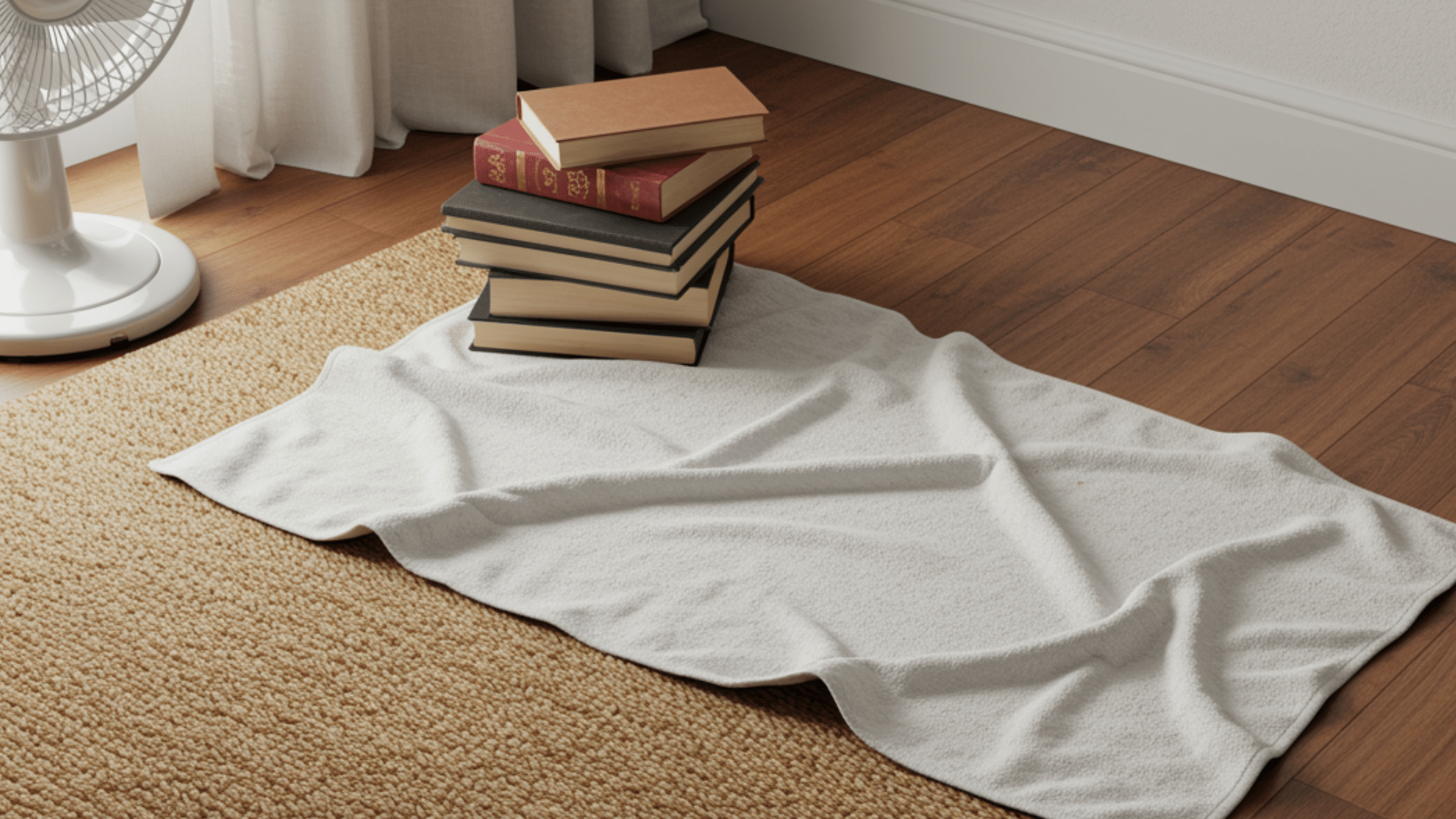
Steam’s benefits without direct heat.
How it works:
- Wring towel until just damp
- Lay over the curled section
- Add weights on top
- Check at 4 hours
- Remove the towel, continue putting weight on it while the rug dries
Best for: Natural fibers, heat-sensitive rugs, deep creases
Pros: Gentle moisture release, no equipment needed, safer than direct steam
Cons: Slower drying time
Essential: Good airflow prevents mold from cracking a window or running a fan.
6. Carpet Stretcher
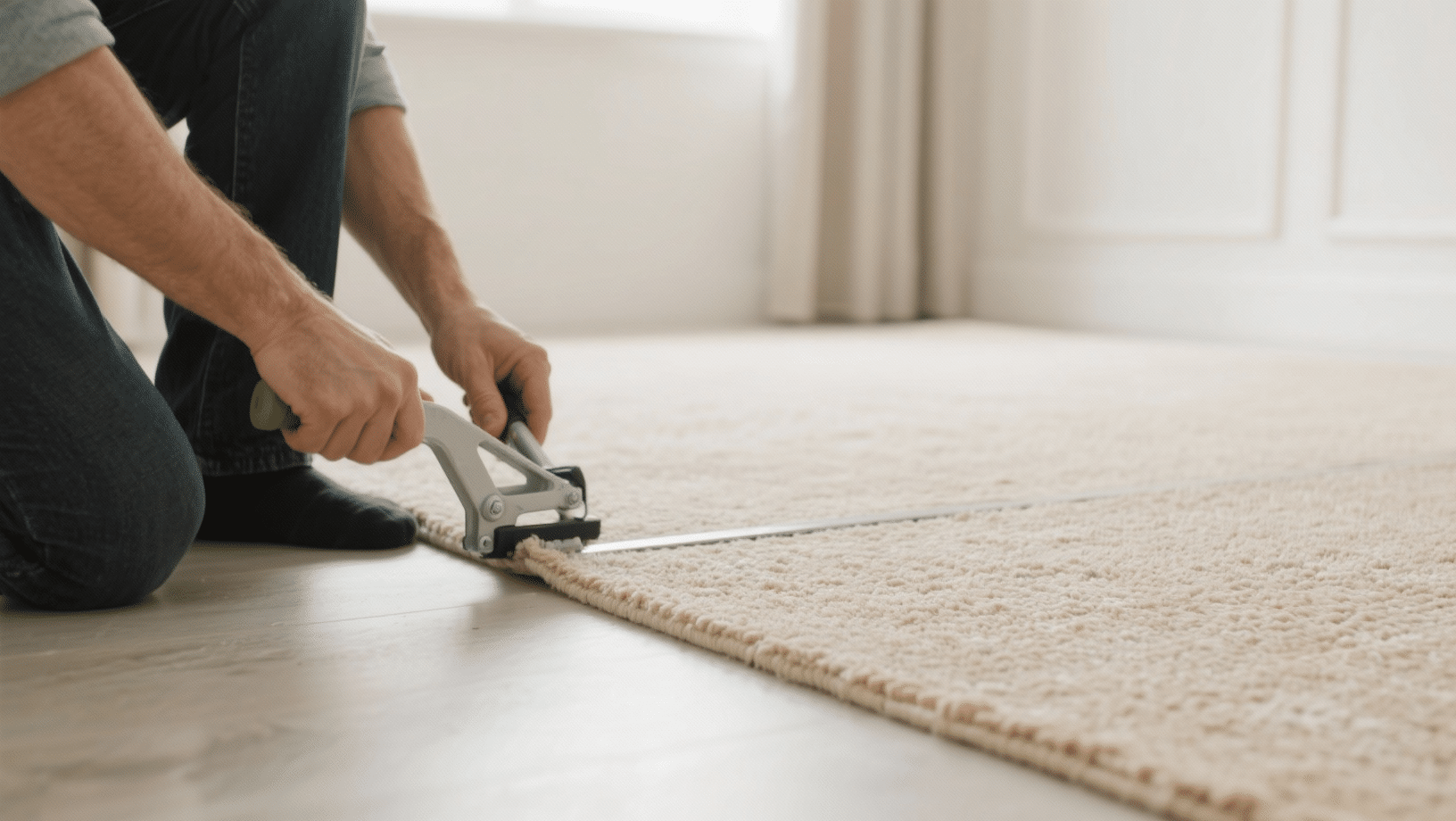
Heavy artillery for serious problems.
How it works:
- Rent a stretcher from a hardware store or hire a pro
- Stretch the rug taut using a tool
- Secure with rug tape or tack strips
- Trim any excess
Best for: Large area rugs, persistent ripples, wall-to-wall buckling
Pros: Permanent solution, professional-level results
Cons: Learning curve for DIY
Consider hiring out if: You’re dealing with expensive or delicate rugs.
7. Adhesive & Gripper Products
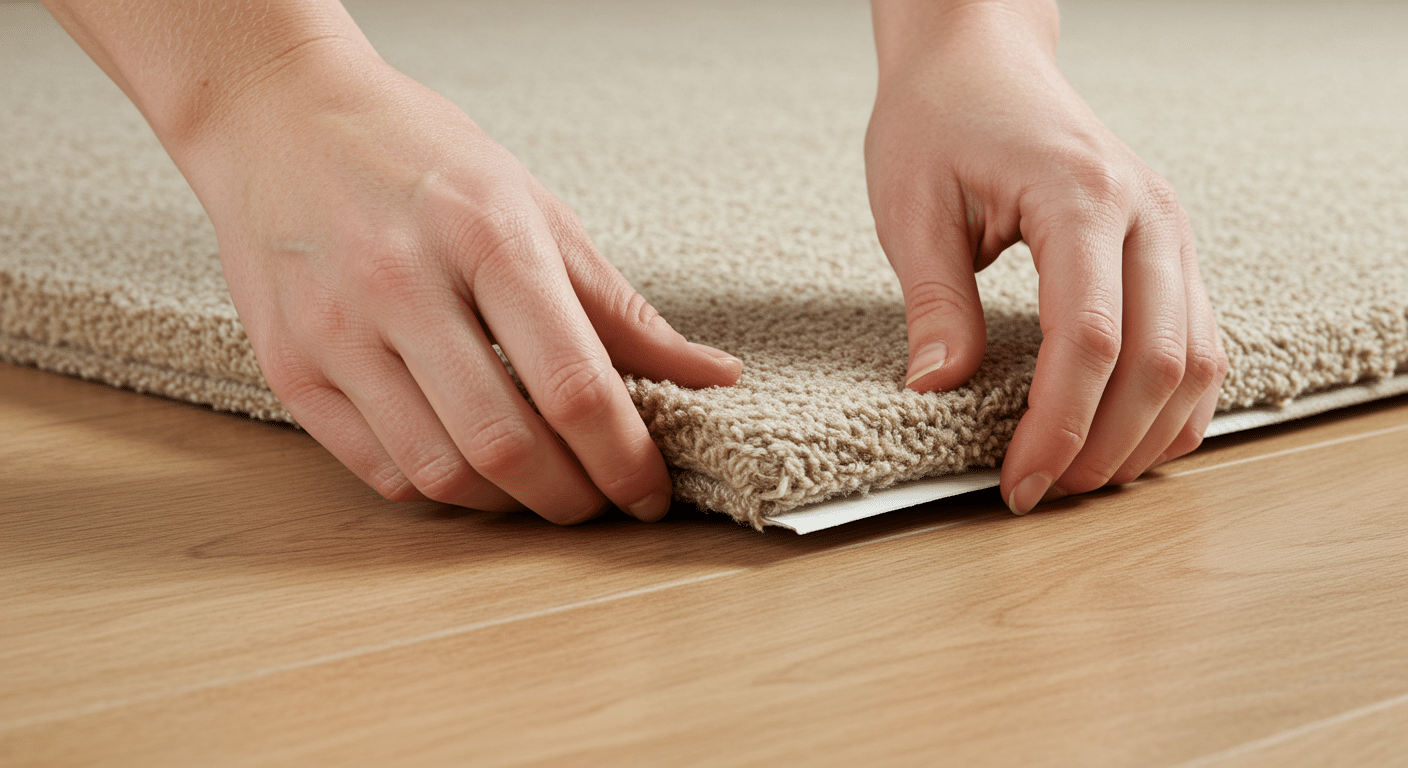
Prevention, not cure, is crucial for long-term flatness.
Options:
- Double-sided rug tape (corners and edges)
- Full rug gripper pads (underneath the entire rug)
- Anti-curl corner stickers
Best for: Maintaining results, high-traffic zones, pet/kid households
Pros: Stops re-curling, prevents slipping and tripping, and is easy to apply
Cons: Leaves sticky residue, doesn’t flatten existing curls
Smart move: Test the adhesive on your floor type first; some finishes can cause damage.
What Signs Indicate You Need Professional Help?
Sometimes a rug is beyond what you can fix at home, and that’s completely normal.
You should get professional help on how to get waves out of a rug if the backing is crumbling or peeling; that’s a structural issue you can’t fix with weights or steam.
If you’ve been trying different techniques on how to flatten a rug for two weeks with zero improvement, it’s time to admit defeat and call someone who does this for a living.
Antique or high-value rugs should skip DIY altogether.
One mistake can destroy something irreplaceable, and professionals have specialized tools and knowledge to handle delicate materials safely.
Wall-to-wall carpet buckling also requires expert attention, as it often indicates subfloor or installation issues.
Final Thoughts
Flattening a rug doesn’t require professional help or expensive tools.
Most curls and wrinkles respond well to simple home methods; you just need patience and the right approach for your rug type.
Tip: always test the heat methods first, and remember that natural fibers and rubber backing don’t mix well with moisture.
Once your rug lies flat, keep it that way with gripper pads or rug tape. They prevent re-curling and make your floors safer for everyone.