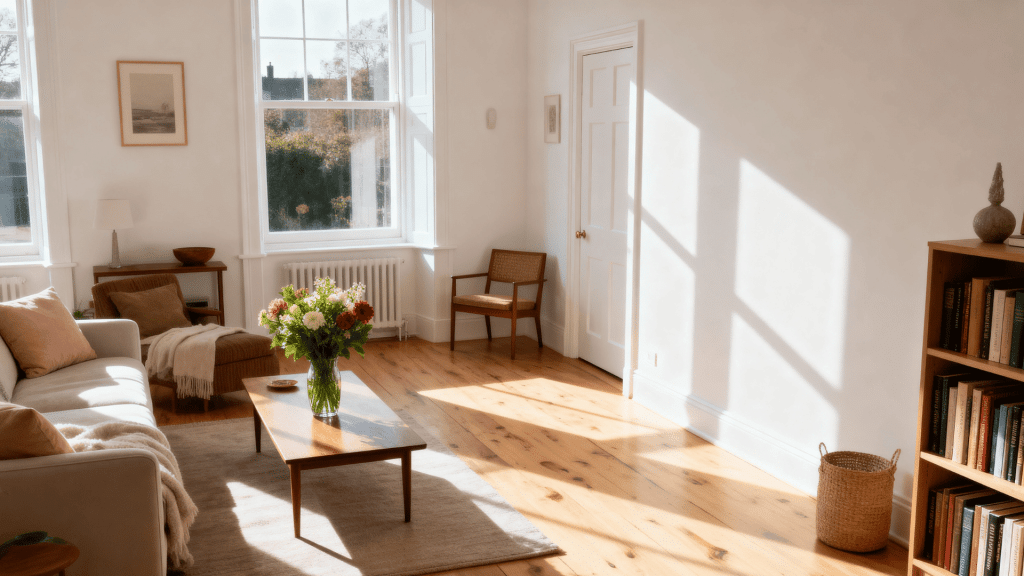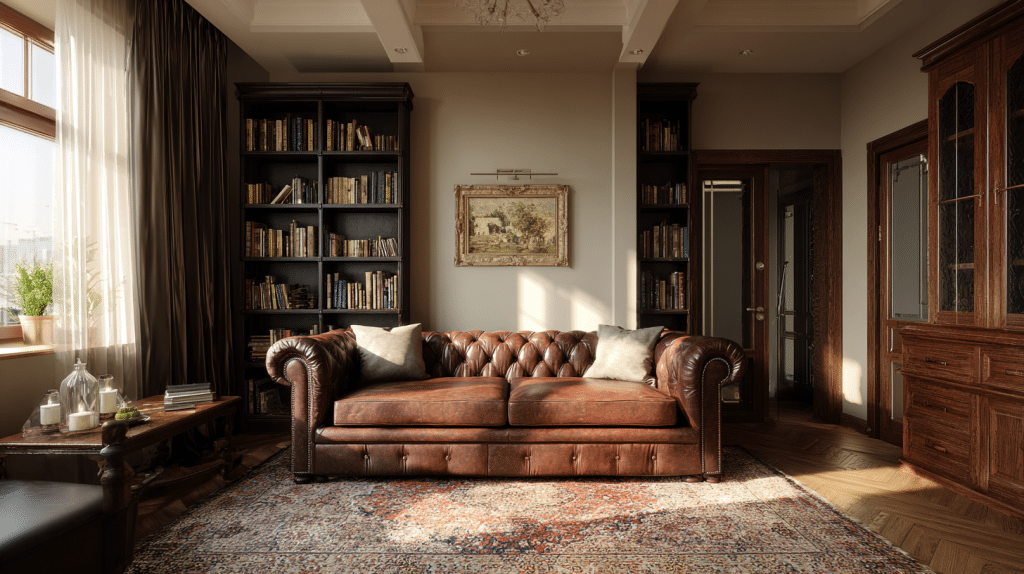
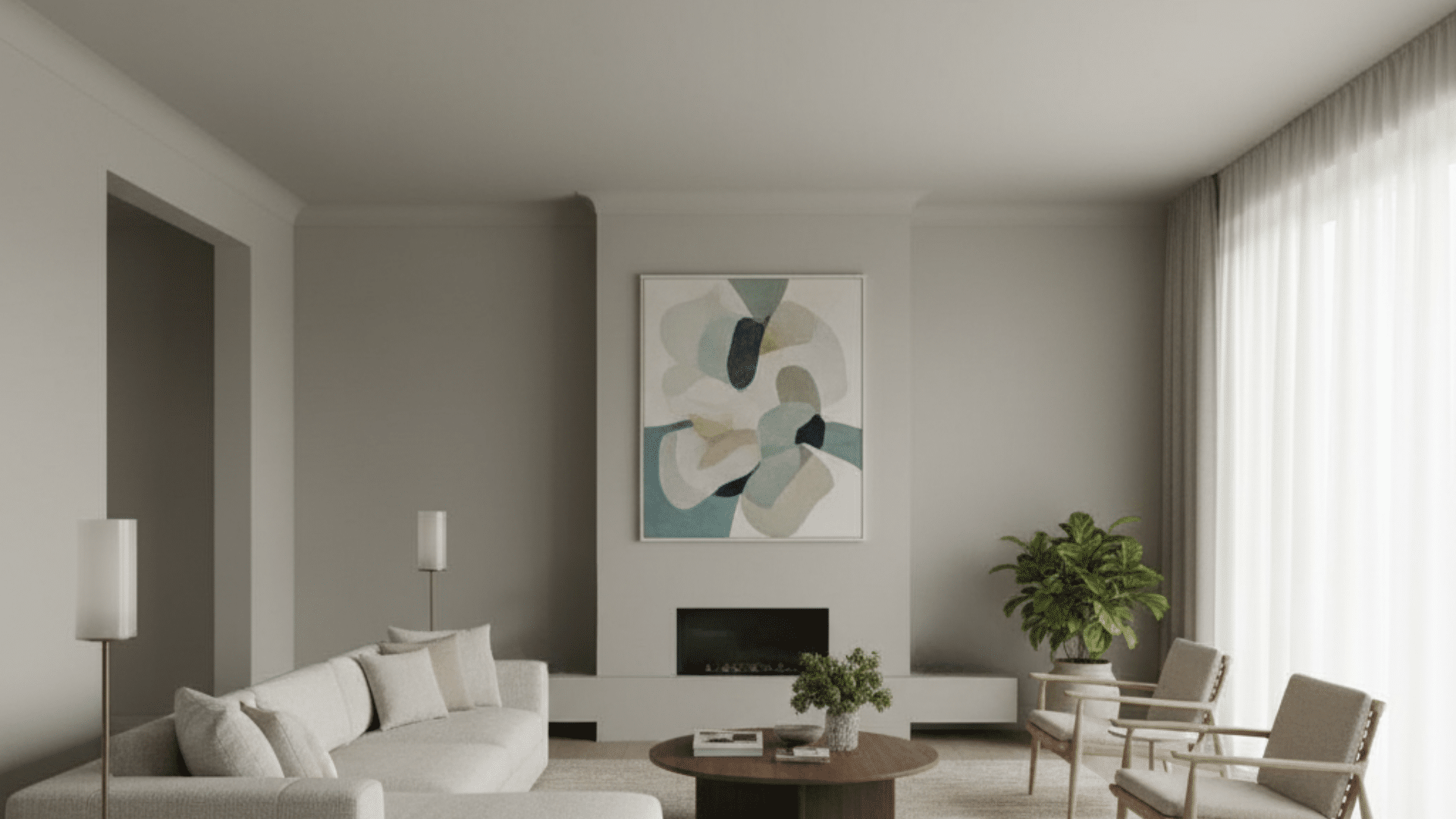

Yes, you can paint your ceiling and walls the same color. There’s no rule stopping you. In fact, this is done in homes everywhere, from modern apartments to traditional houses.
The key is knowing what you’re getting into. This approach works differently depending on your room size, ceiling height, and natural light.
Some rooms look fantastic with matching ceilings and walls. Others, not so much.
Professional painters do this all the time. Interior designers use it as a technique to create specific effects. But it’s not a one-size-fits-all solution.
You’ll need to carefully consider your space. Think about the color you choose and how it interacts with your lighting. The decision matters more than you might think.
Pros and Cons of Painting Ceiling Same Color as Walls
Here’s a complete run-through of what happens when you choose this bold approach to paint ceilings and walls the same color.
Pros
- Smooth visual flow: Your eye moves around the room without stopping at the ceiling line.
- Makes rooms feel bigger: Removing the wall-ceiling boundary tricks your brain into seeing more space.
- Easier painting project: Buy one color instead of two and skip the tricky ceiling cut-in lines.
- Highlights trim and molding: Crown molding and beams pop more against a colored background.
- Adds coziness: Matching colors feel warmer and more inviting than cold white ceilings.
- Modern designer look: Get that fresh, magazine-worthy style without hiring a decorator.
Cons
- Can feel lower: Dark ceilings make rooms feel smaller and more cramped.
- Reduces brightness: Colored ceilings reflect less light than white ceilings, making rooms darker.
- Uses more paint: Ceilings absorb paint quickly, increasing your project costs.
- Shows mistakes easily: Every drip and roller mark shows up on colored ceilings.
- Blocks natural light: Rooms with few windows feel gloomier when the ceilings are colored.
- It may look dated quickly: Color trends change, but white ceilings always look classic.
Ceiling and Wall Color Ideas That Work Well Together
Certain colors perform better than others when you paint both surfaces the same shade.
Here are tried-and-tested options that actually work.
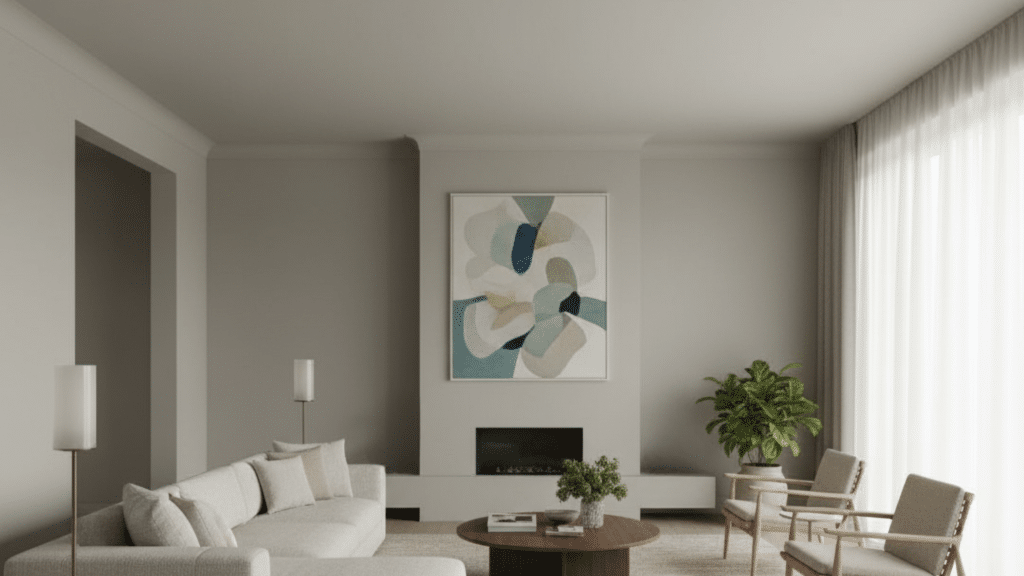
1. Dolphin Gray
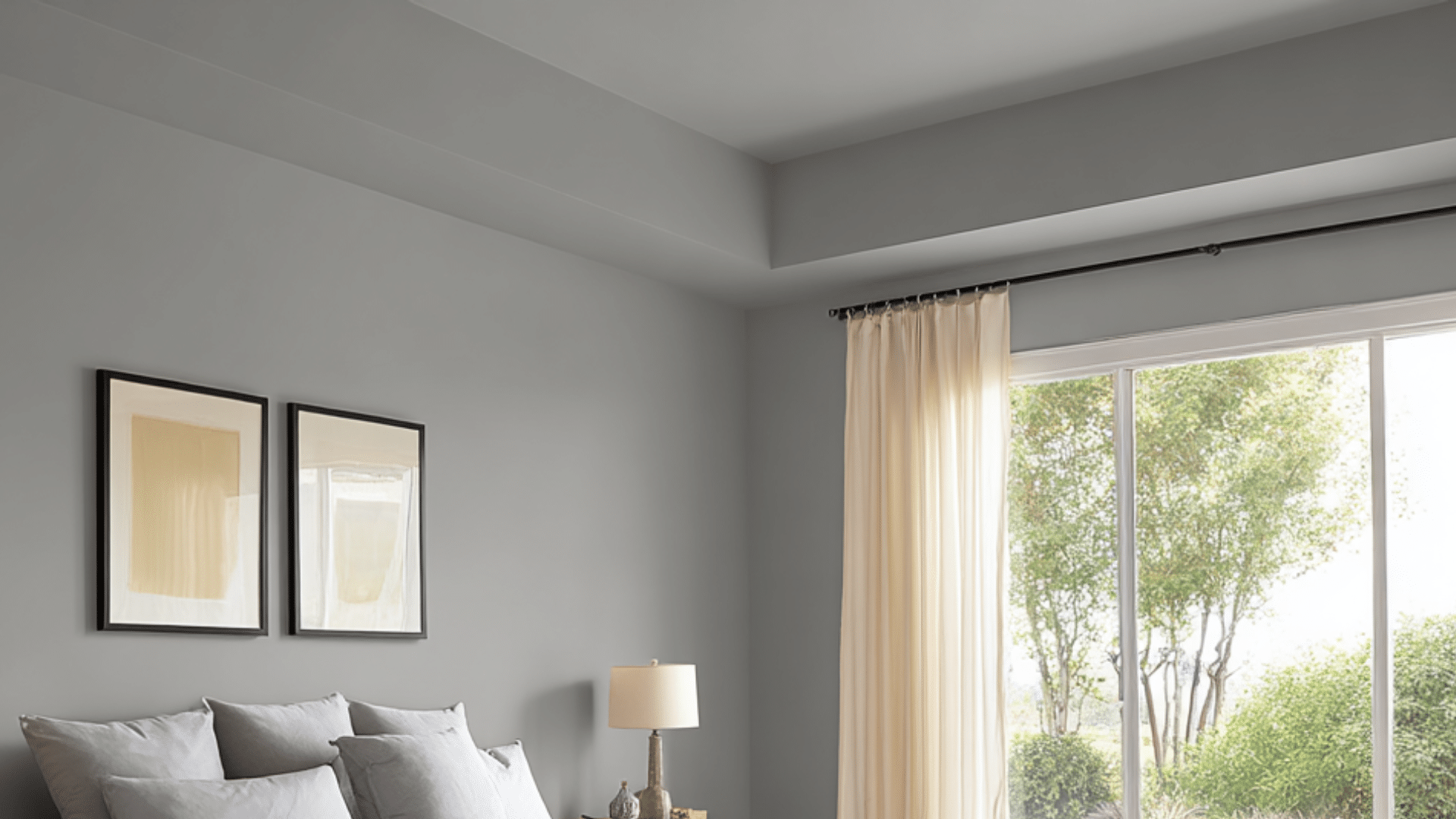
This neutral suits nearly any room and doesn’t weigh down the overhead. Dolphin Gray adds charm without darkness, pairs well with white trim, and complements calm, cool furniture tones.
Your space looks modern, clean, and colorful enough to avoid plainness.
2. Shaker Beige
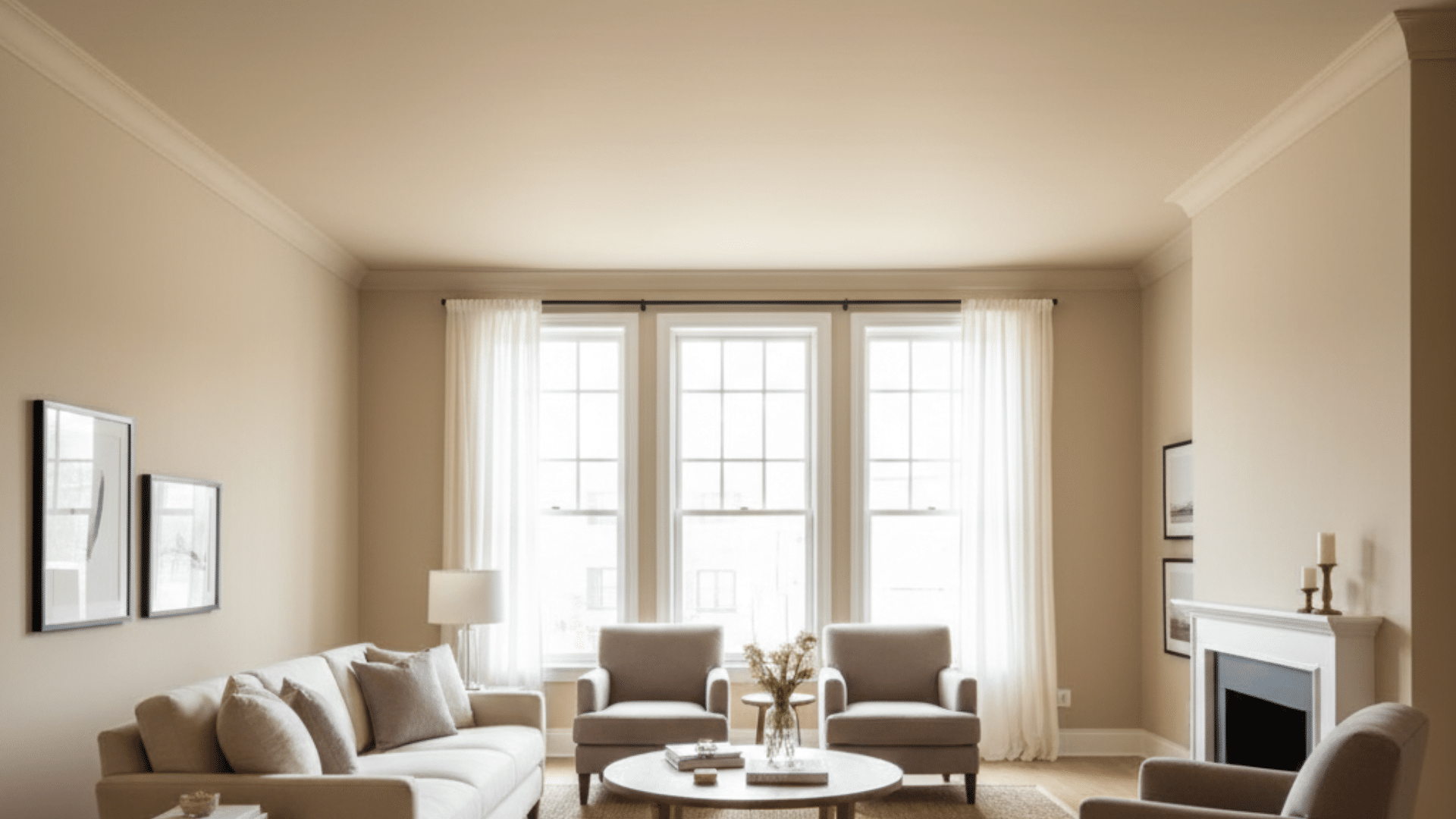
Shaker beige creates a cozy atmosphere and reflects light better than most colors.
Ideal for bedrooms, living rooms, and offices, it provides comfort without making spaces feel smaller or darker.
3. Soft Sage
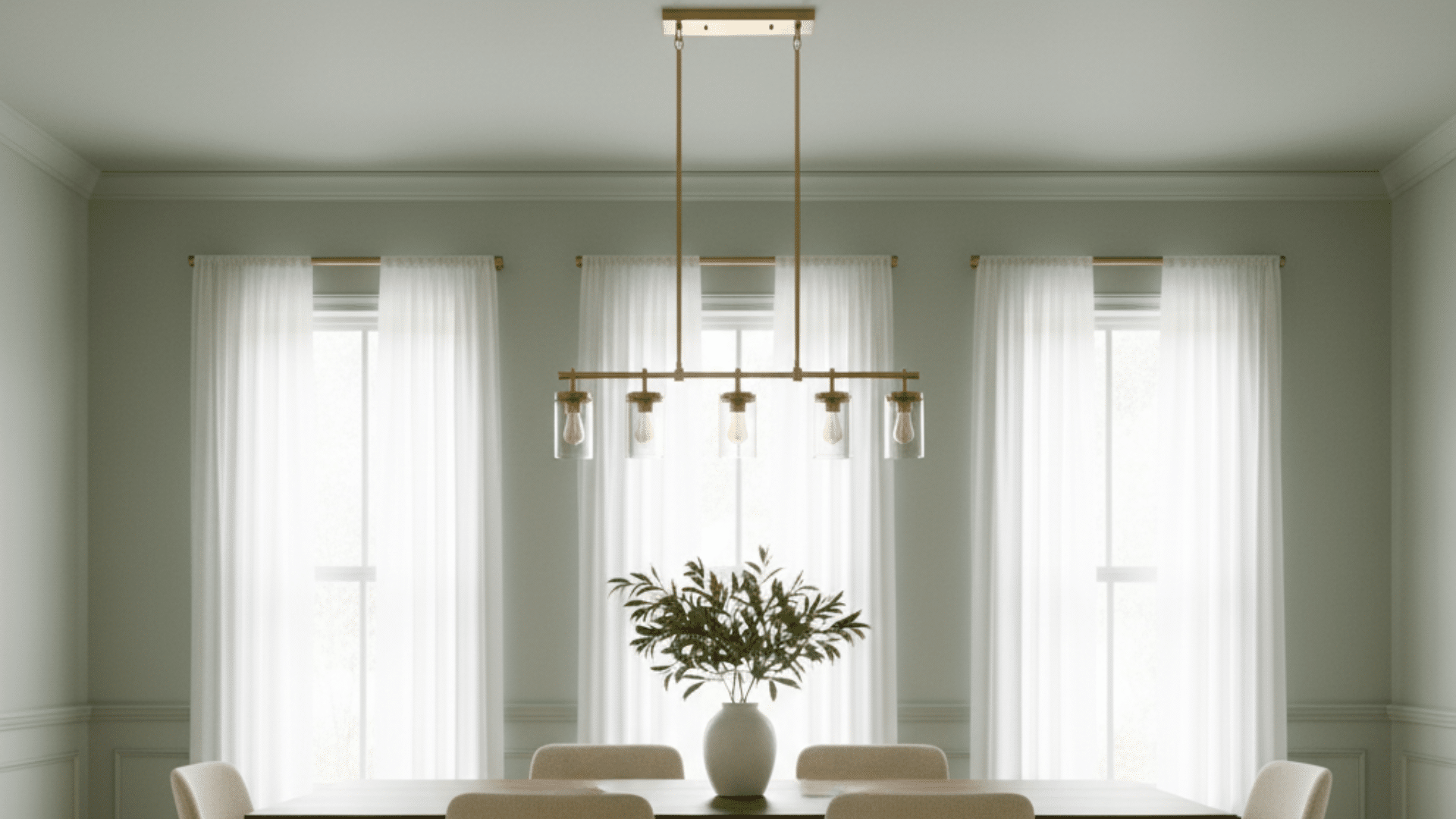
Green connects to nature, making rooms feel peaceful and grounded. Soft Sage is perfect for kitchens, bathrooms, and bedrooms for tranquil moments.
It provides visual interest, and it complements wood and natural materials better than most paints.
4. Graphic Charcoal
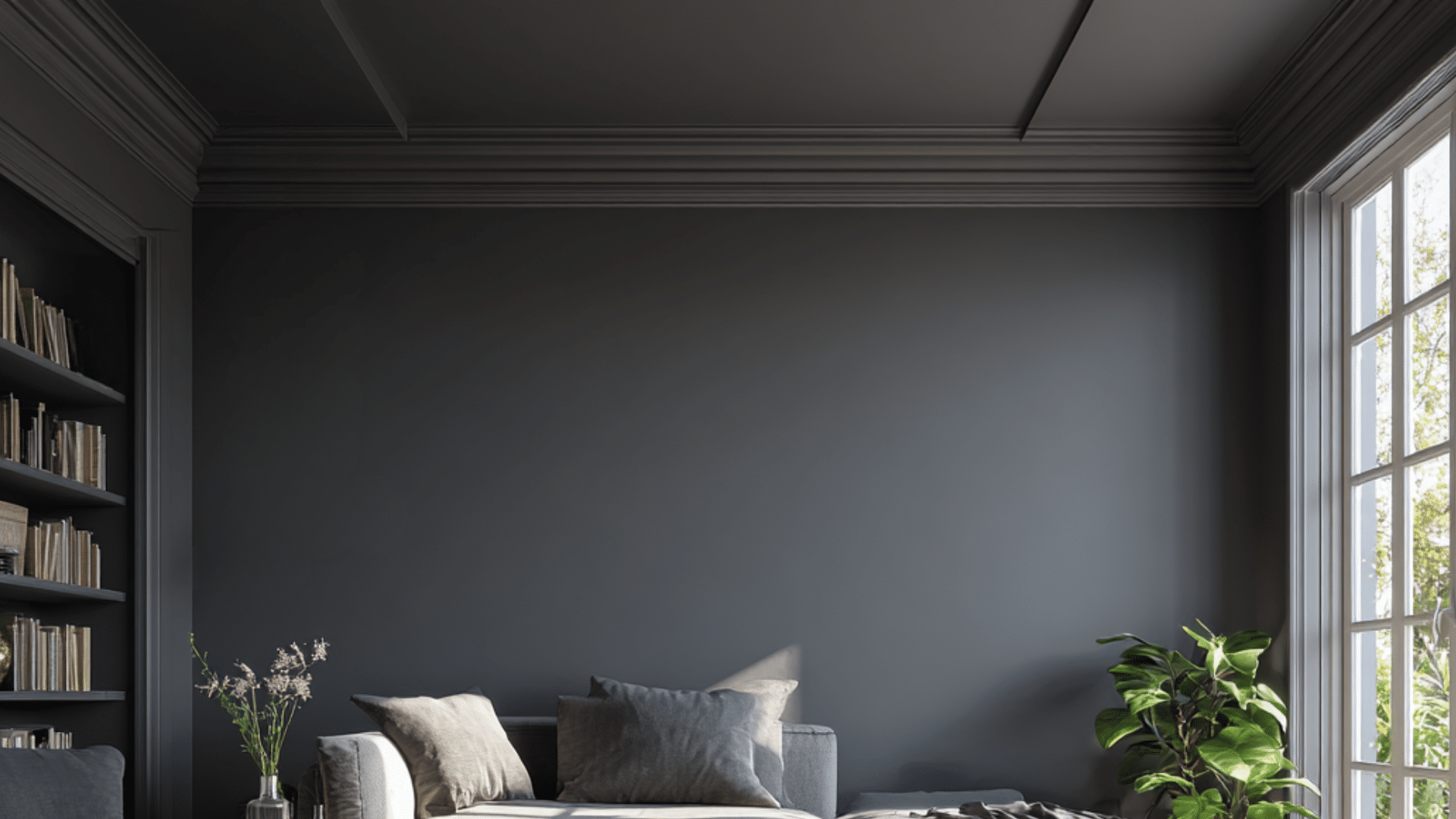
Gray makes a bold statement and works well in rooms with high ceilings. Graphic charcoal creates a cozy, intimate feeling ideal for media rooms and libraries.
Good lighting is essential. The dramatic look improves a modern, moody space, setting it apart from typical homes.
Alternative Color Combinations for Balanced Visual Interest
The right combination creates balance and keeps the space interesting.
5. White Ceiling with Colored Walls
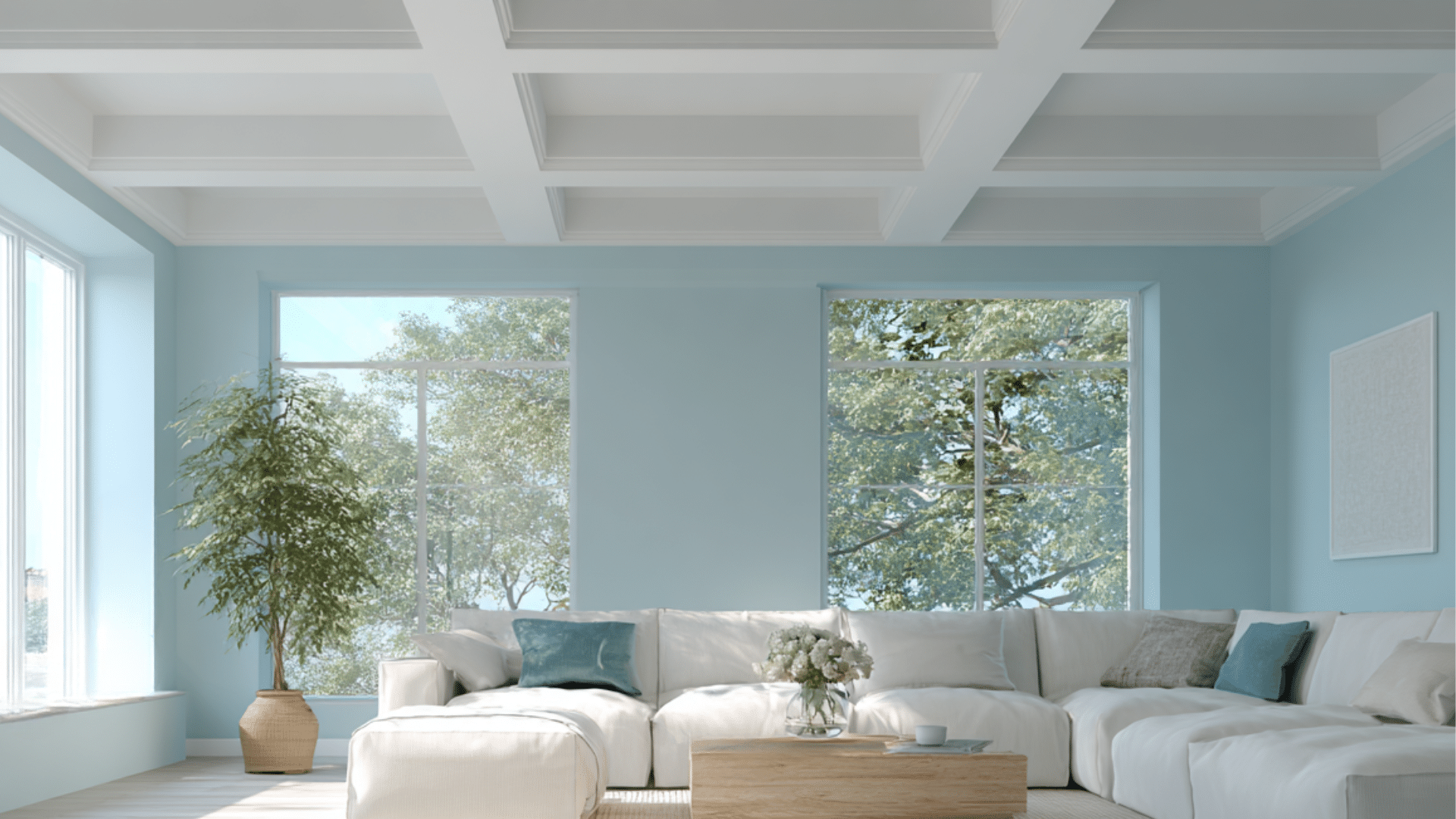
The classic approach keeps ceilings bright white and paints walls your chosen color.
This makes ceilings seem higher, maximizes light reflection, and adds personality without shrinking or darkening the room.
6. Lighter Ceiling Than Walls
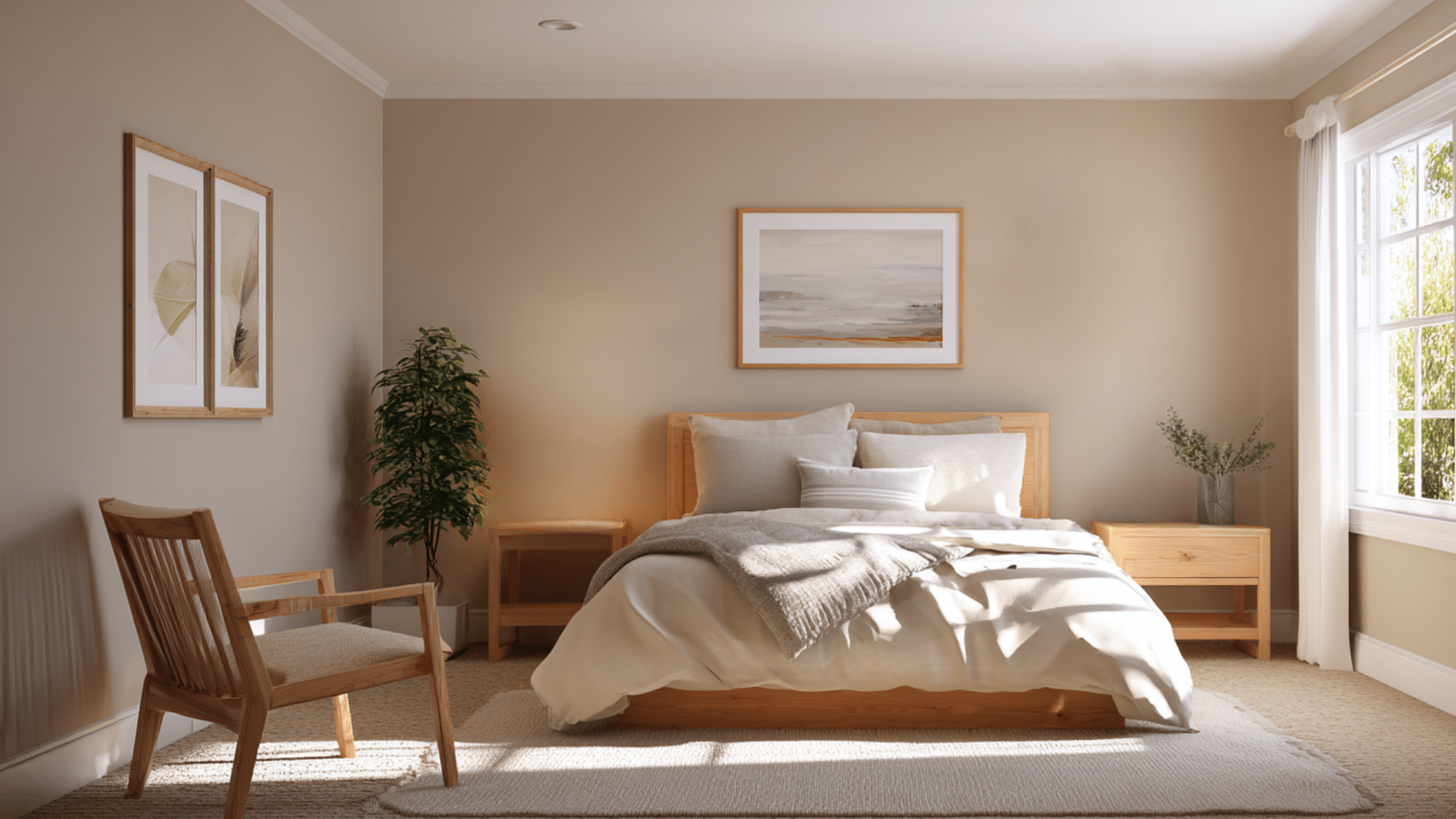
Paint your ceiling two to three shades lighter than the wall to create a subtle contrast and depth while keeping the room open and airy.
This offers color without a bold monochrome commitment.
7. Accent Ceiling with Neutral Walls
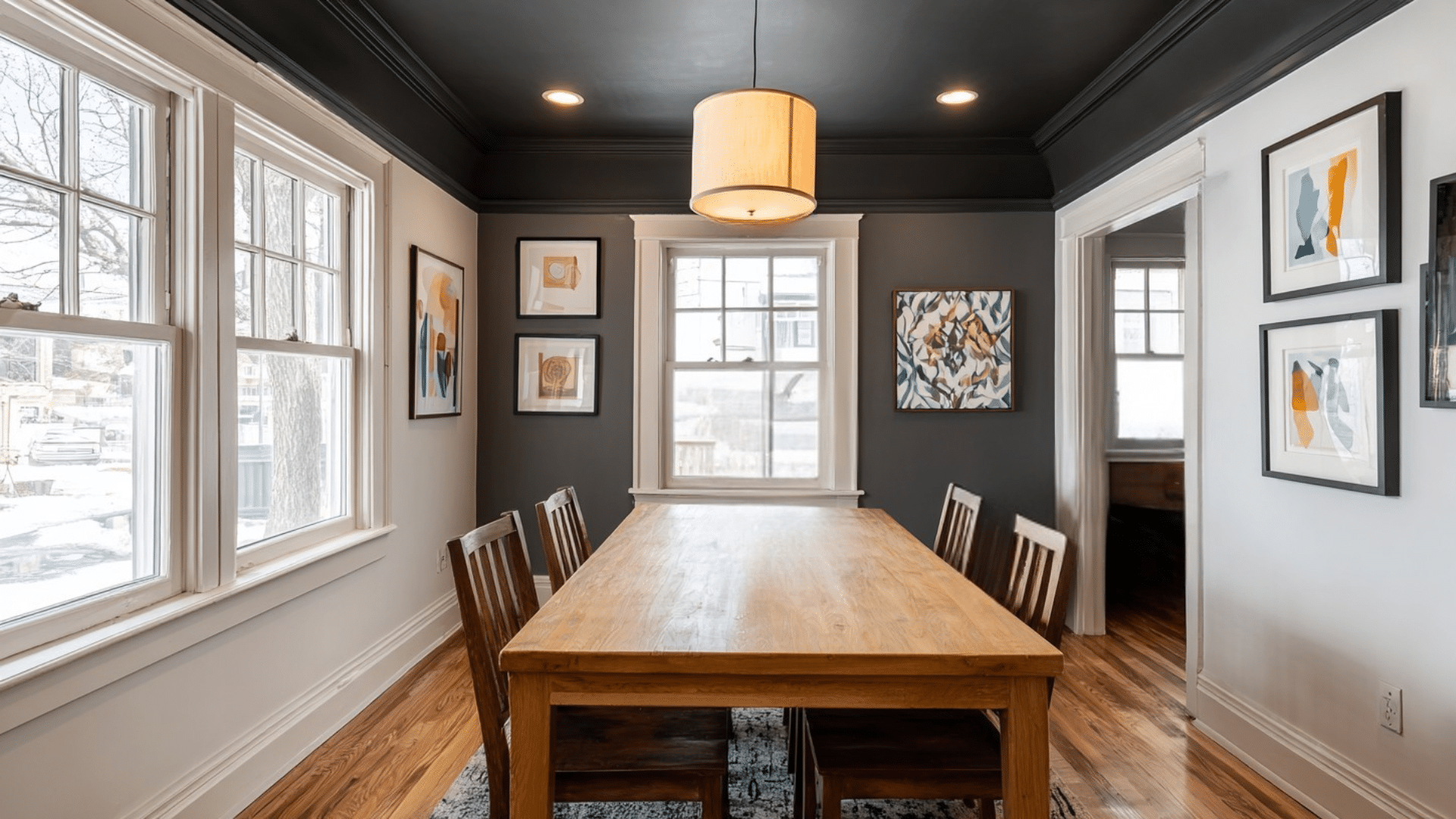
Make your ceiling the statement with bold colors like navy, green, or charcoal, while keeping the walls neutral.
This is ideal for dining rooms, bedrooms, or high-ceiling spaces for visual interest.
8. Two-Tone Walls with White Ceiling
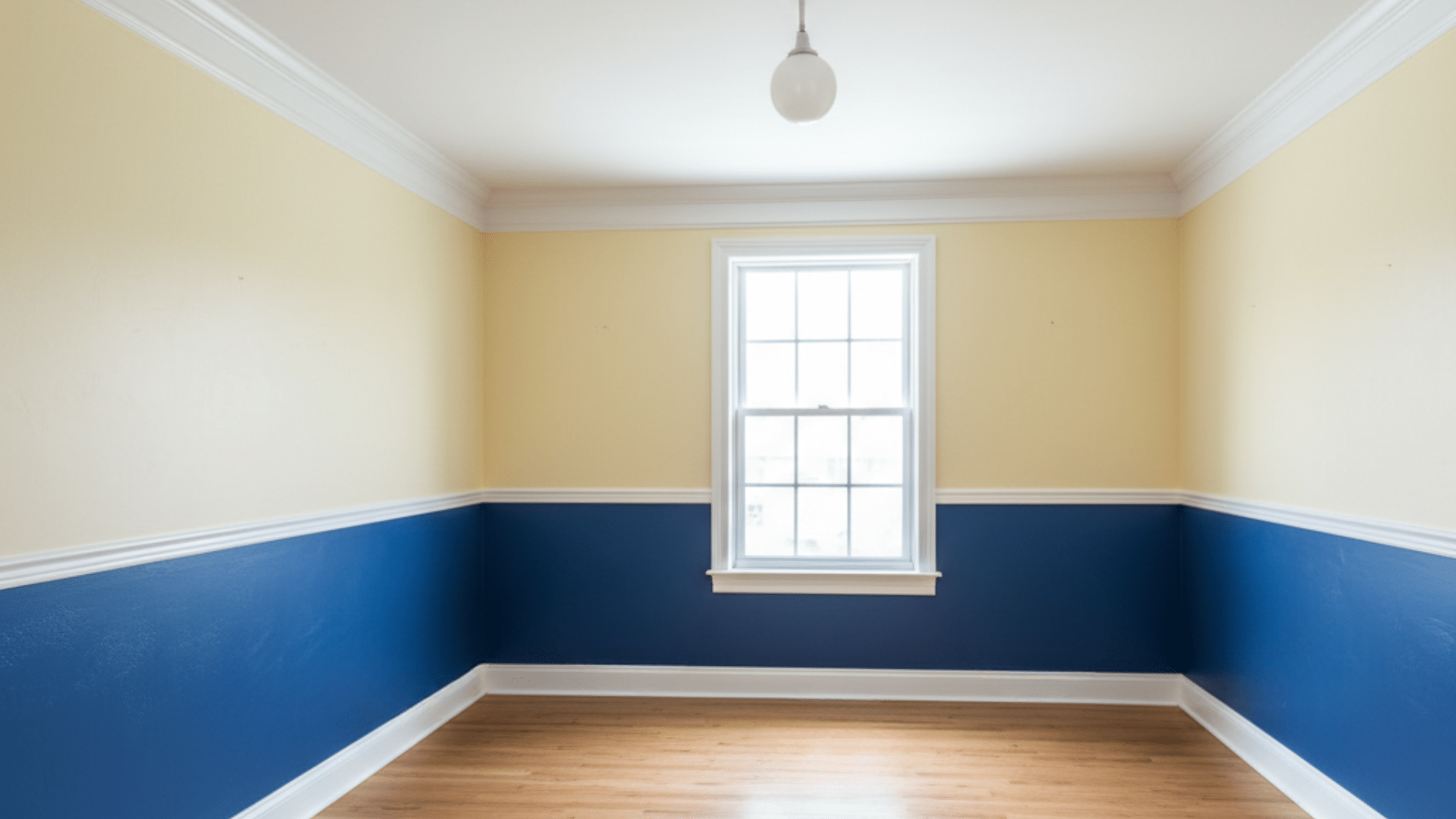
Paint the lower and upper walls different colors, keeping the ceiling white.
This adds architectural interest without overcrowding the space, ideal for dining rooms, entryways, and kids’ rooms with playful color.
Tips on How to Select the Right Color and Finish
- Test paint samples on both your walls and ceiling before committing to the whole project.
- Consider your room’s natural light levels throughout the day and how colors shift in different lighting conditions.
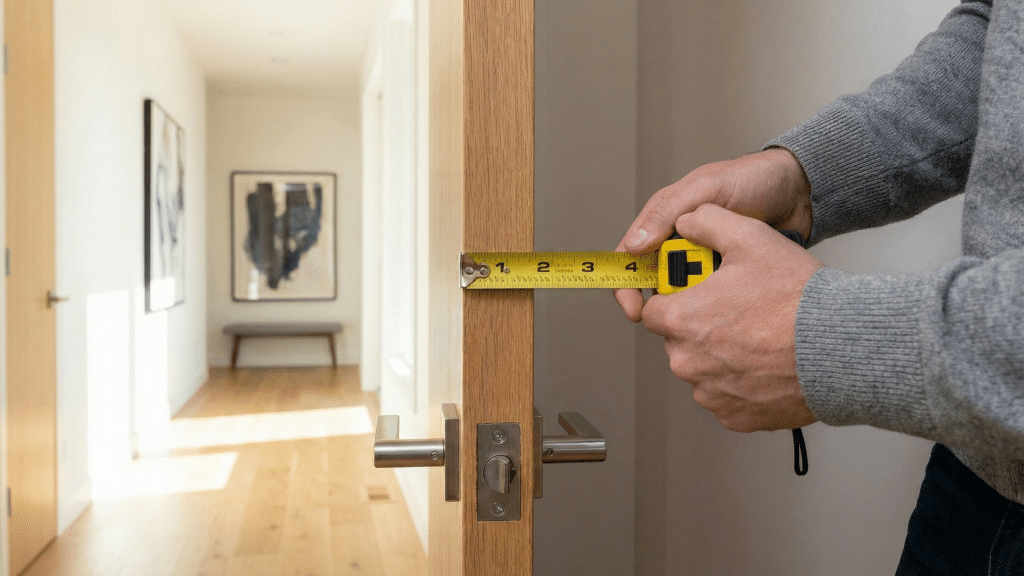
- Measure your ceiling height, as rooms under 8 feet need lighter colors to avoid feeling cramped.
- Choose matte or flat finishes for ceilings to hide imperfections and minimize glare from light fixtures.
- Look at paint samples in the actual room, not under fluorescent lighting in the store.
- Check paint undertones by comparing samples against pure white to spot hidden yellow, pink, or green tints.
- Plan for two to three coats of paint on ceilings, as they absorb more and show streaks more easily.
Key Takeaway
Painting your ceiling and walls the same color isn’t right for every home. But when it works, it really works. Remember to test your chosen color in the actual space before buying gallons of paint.
Ready to turn your space? Grab those paint samples and see how different colors change your room’s feel.
Share your experience in the comments below!