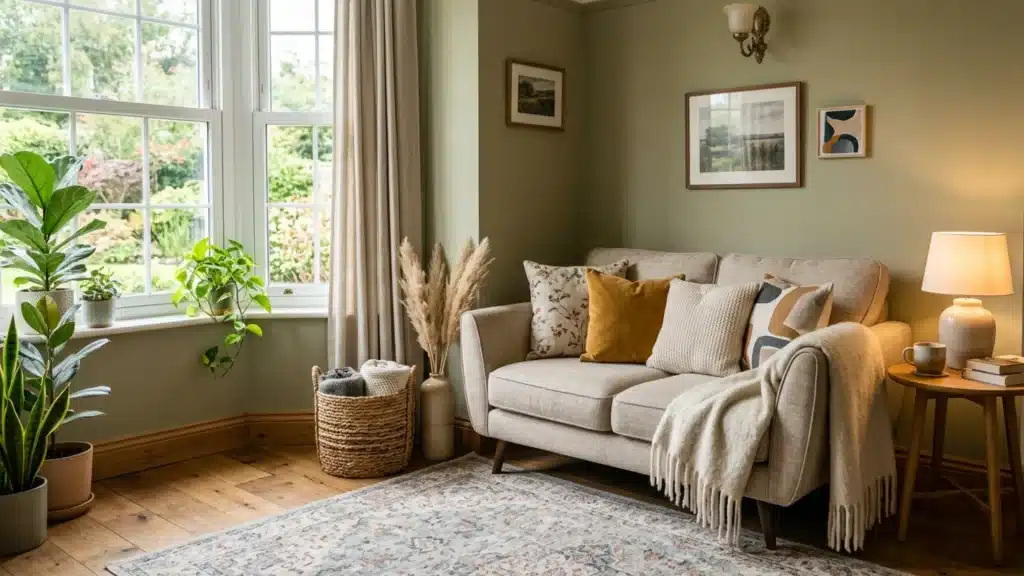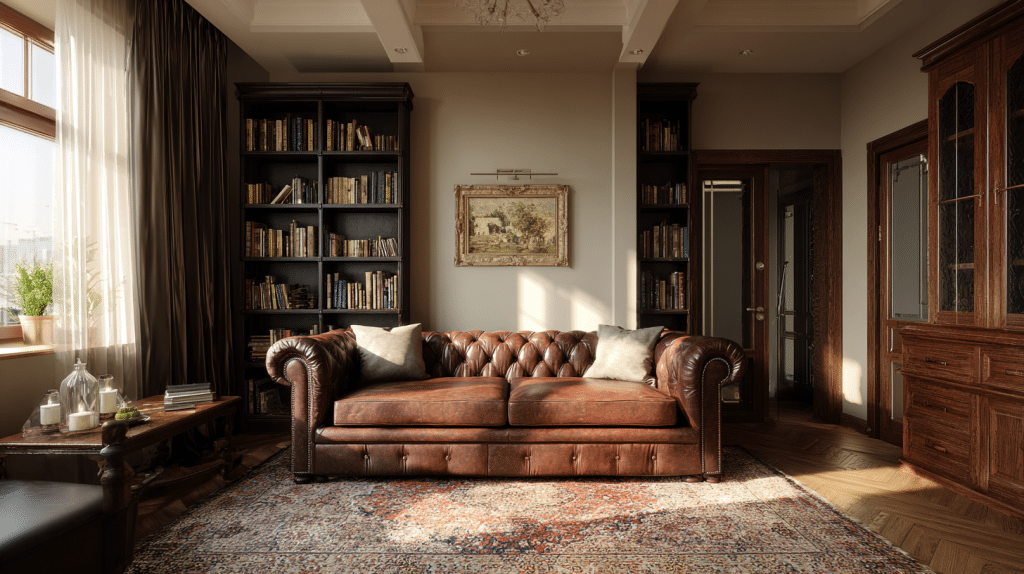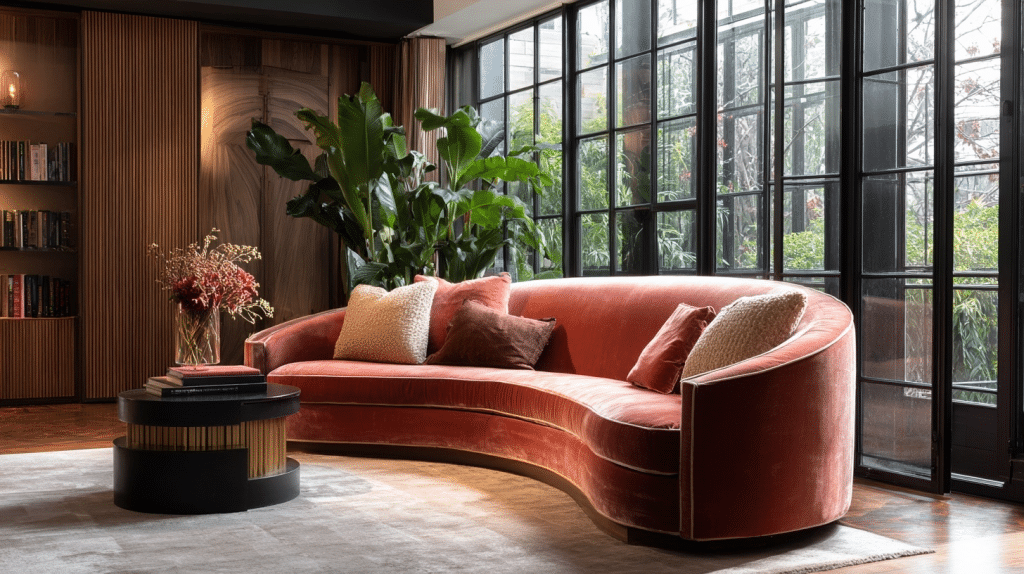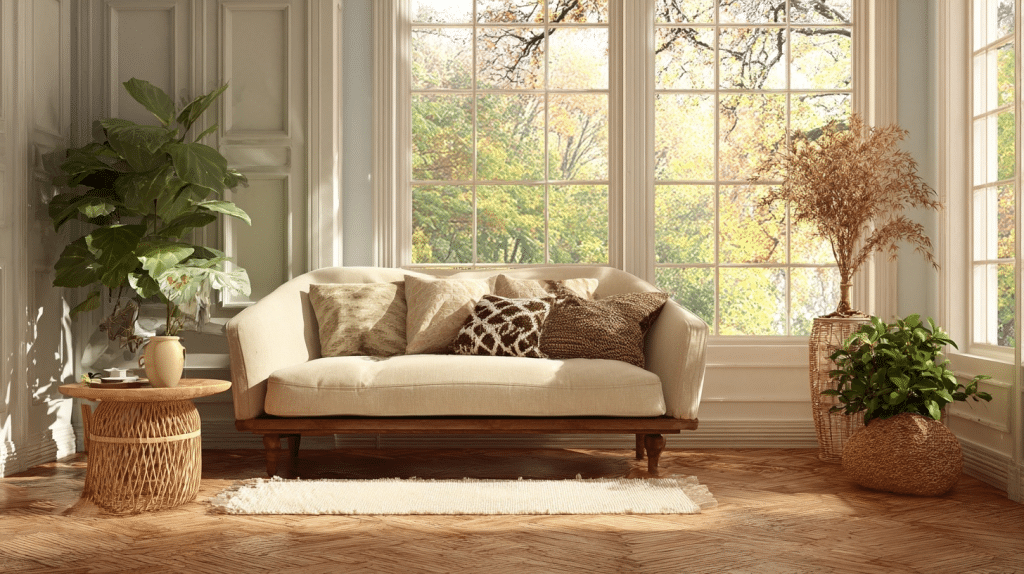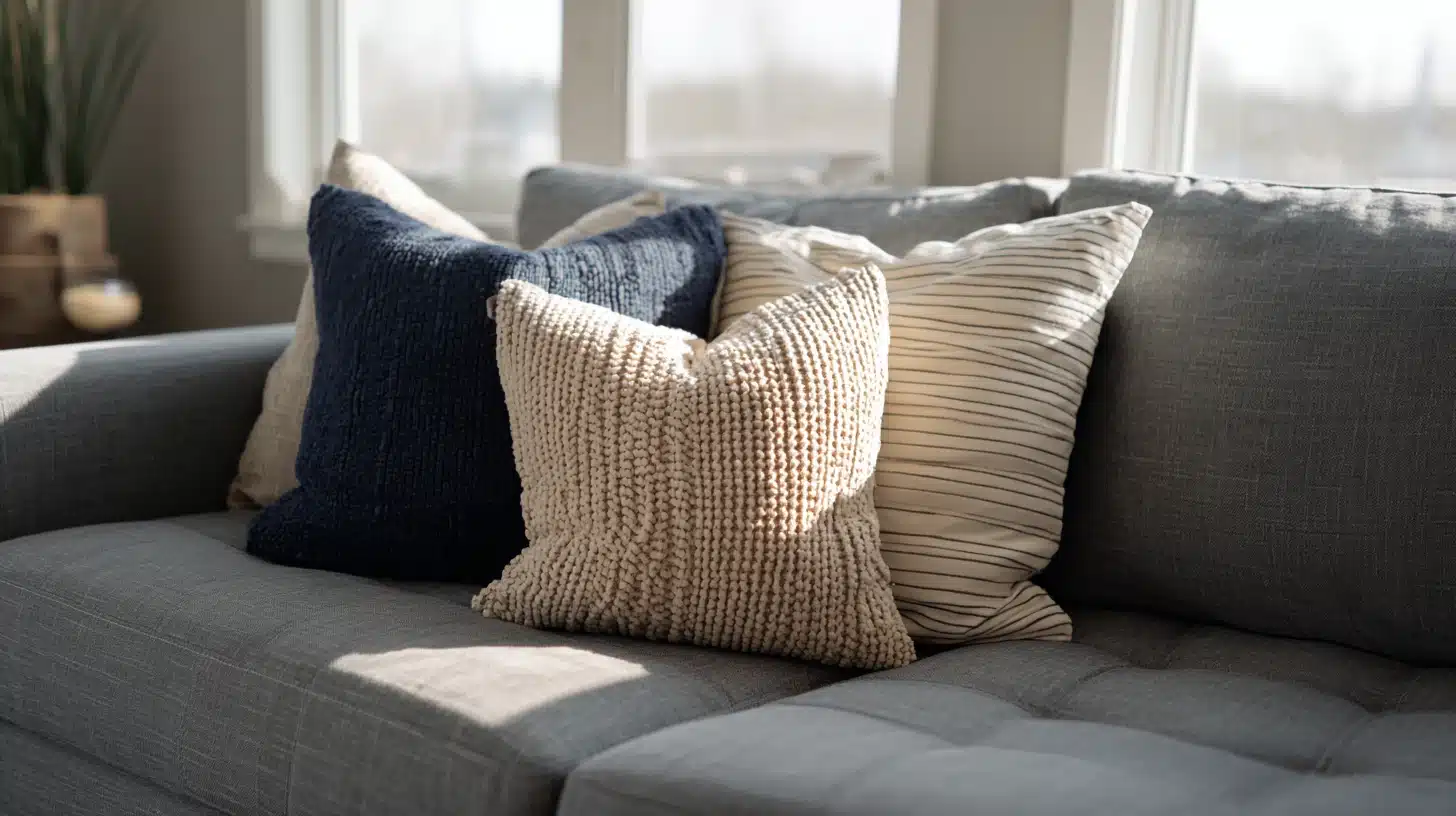

You bought pillows that you love individually, but the look doesn’t match the asthetic of your couch.
This post will show you how to style pillows on a couch.
These suggestions will help you turn a plain sofa into something you’ll love. Let’s get into it
The Core Principles of Styling Pillows
Get the basics right, and everything else falls into place. The result is what separates a couch that looks put together from one that just looks busy.
1. Size & Scale
Start with the big ones at the back.
Then layer in medium pillows in front. Finish with a small lumbar pillow at the center. That’s the formula.
The most common sizes are 22“, 20”, and lumbar, each playing a specific role.
The 22” anchors the couch. The 20” adds balance. The lumbar ties it all together. Skipping sizes or using the same size for all makes a couch look flat.
Always start with your largest pillow first. It sets the scale for everything that comes after.
2. Color Strategy
Stick to two or three colors.
More than that, and it starts to look cluttered. The easiest way to build a palette is to look around the room.
Pull a color from the rug, one from the curtains, or one from a piece of art on the wall.
That’s how you get a couch that feels like it belongs in the space. You’re not decorating the couch in isolation; you’re tying it into the whole room.
3. Texture Layering
Color gets a lot of attention.
But texture is what makes a couch feel rich and layered, even in a neutral room. Mix materials like linen, velvet, and knit together.
They catch light differently. They feel different to the touch. That contrast is what adds depth.
A couch with three pillows in the same fabric looks bare, even if the colors are good. Swap one out for something with a different finish.
4. The Odd Number Rule
Three pillows. Five pillows. Seven pillows. These numbers just work.
Even numbers feel too symmetrical, too stiff and formal. Odd numbers create a slight visual tension that the eye finds interesting.
It’s a small trick, but designers use it constantly.
Color Combinations That Always Work
Color is one of the easiest things to get wrong with pillows.
Too many colors, and the couch looks chaotic. Too few and it looks boring. The sweet spot is a combination that feels balanced.
To make it look warm without being loud, calm without being dull.
1. Neutral Couch (White or Off-White)
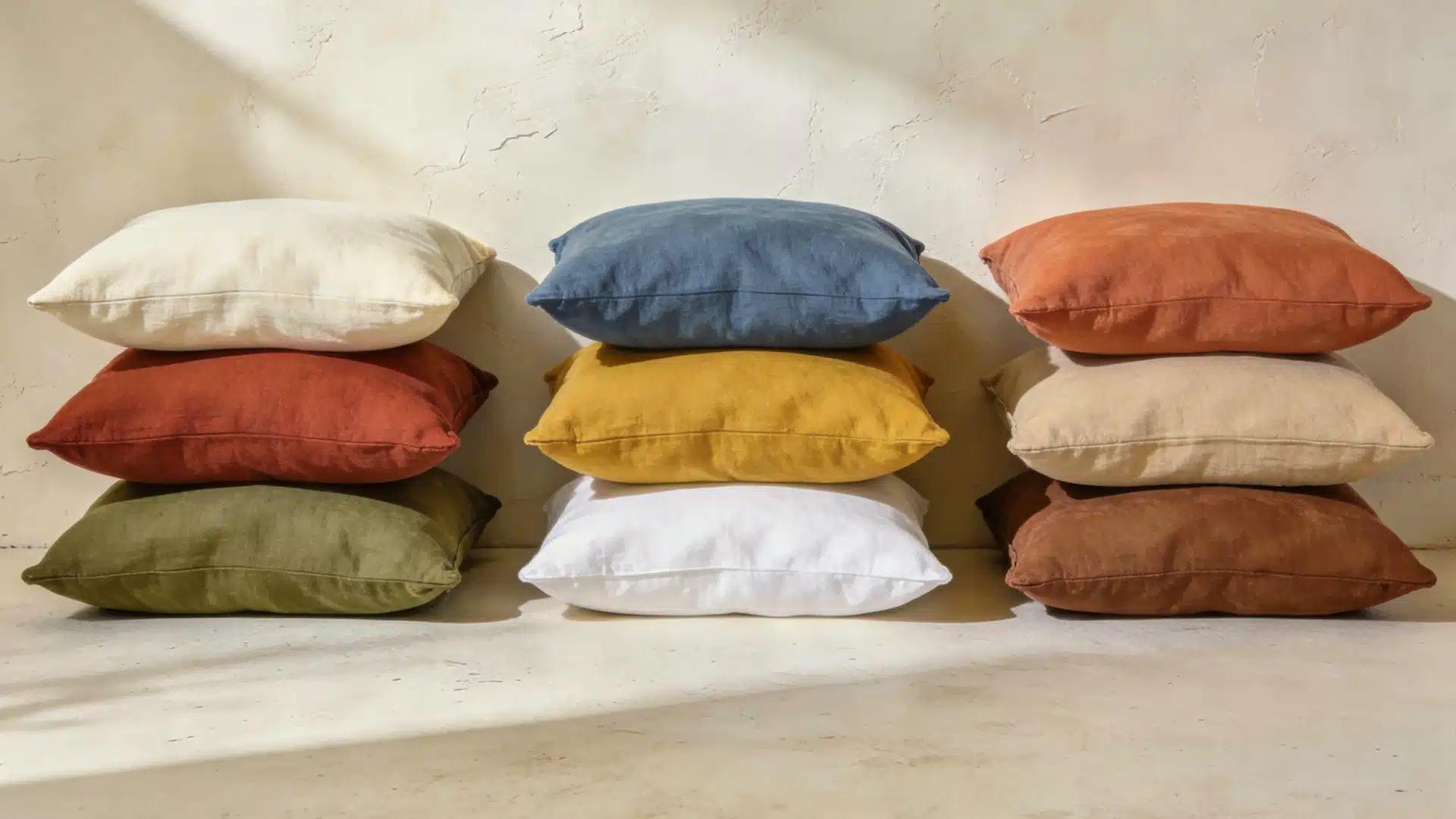
Pair your neutral couch with cream, rust, and olive tones, as warm tones add depth without overpowering a light couch.
Rust brings energy, olive grounds the look, and cream keeps everything soft and balanced.
2. Grey Couch
Try blue, mustard, and white pillows on a grey couch.
Grey works as a cool, neutral base. Blue keeps that cool tone going, mustard adds warmth, and white keeps the whole look fresh and clean.
3. Beige Couch
Stick to earthy tones like terracotta, sand, and brown for a beige couch. They layer naturally without clashing, giving your couch a refreshing feel.
How to Style Pillows on a Couch Based on Sofa Type
Not every type of couch is different, and not every styling approach works the same way.
The size, shape, and depth of your sofa all affect the number and placement of your pillows.
Loveseats
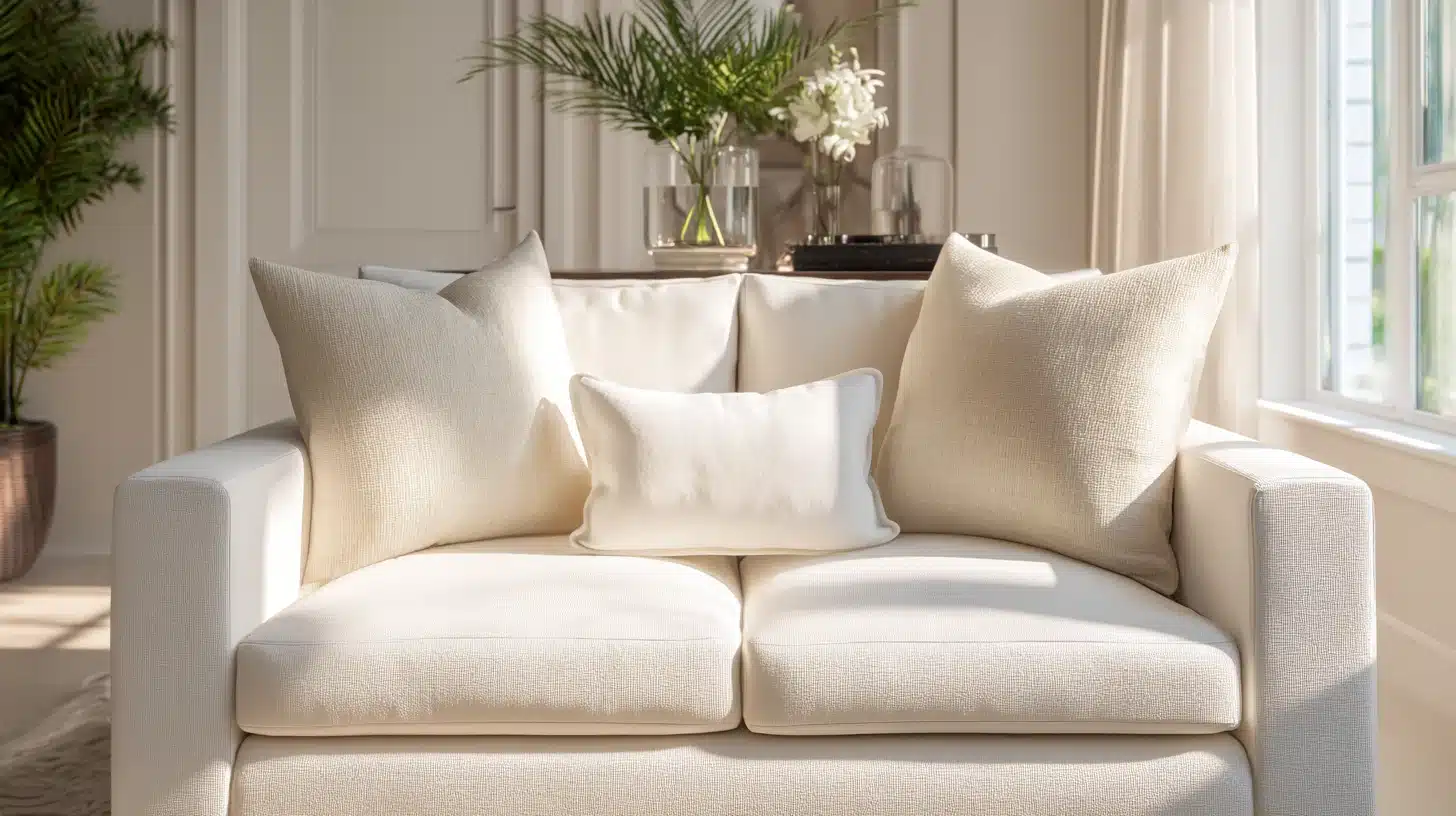
A loveseat is compact, so less is more.
Two to three pillows is the limit, any more and the sofa starts to look swallowed up. Go with one larger pillow on each end and a small lumbar in the middle if you want a third.
Keep the sizes proportional to the sofa.
Avoid oversized pillows on a loveseat make it look smaller than it is.
3 Seater Sofas
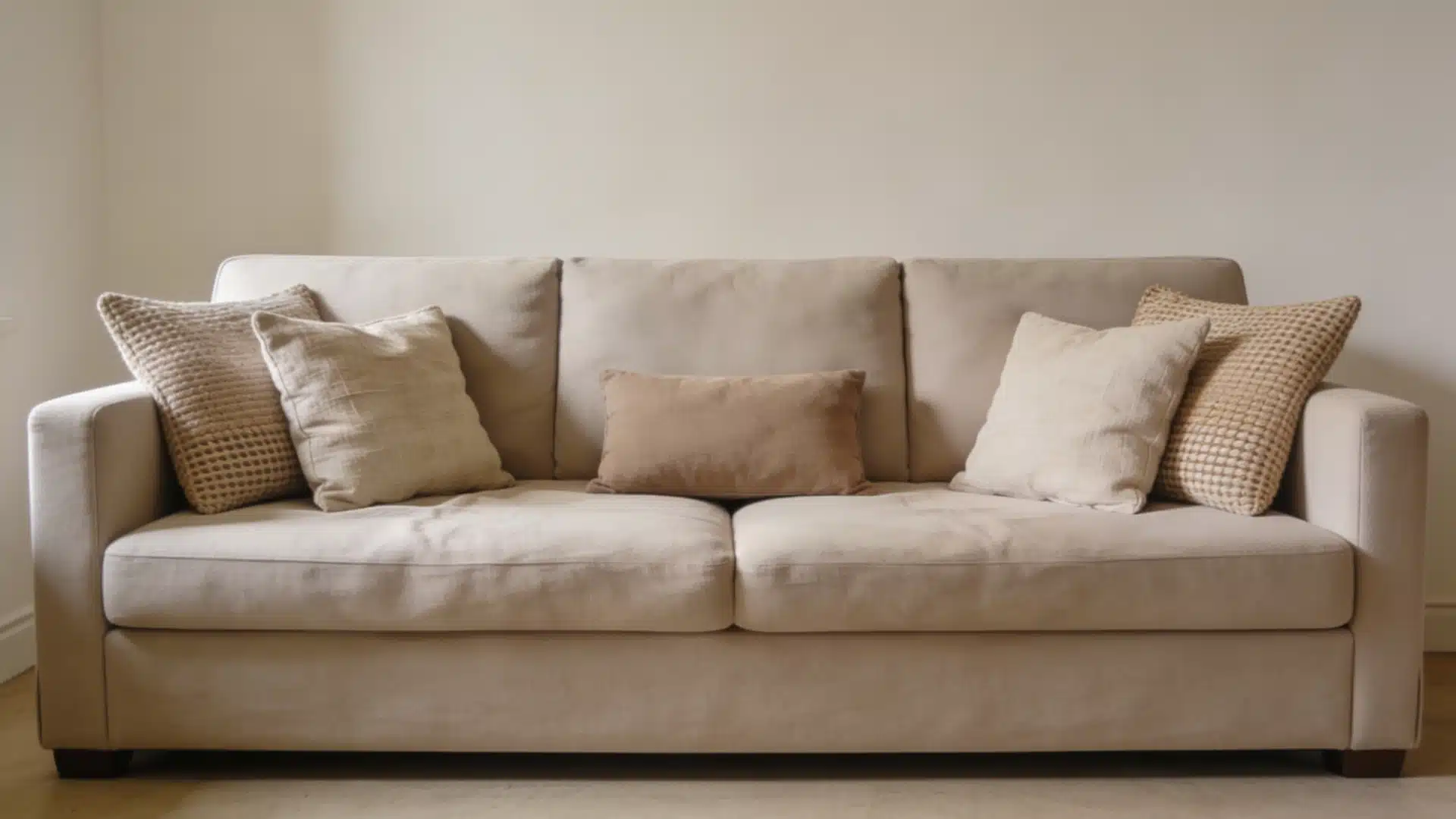
A three seater gives you two options:
You can go symmetrical, two pillows on each end, one in the middle. It looks clean and intentional.
Or you can go asymmetrical, different sizes and textures grouped loosely. That feels more relaxed and lived in.
Neither is wrong. It comes down to the mood you want and what looks the best.
A formal living room suits symmetry. A casual, everyday space suits the looser approach.
Sectionals

Sectionals are large, so the corner is your best friend.
Cluster your pillows at the corner junction, that’s where the eye naturally goes first. Use your largest pillows at the back of the corner and layer smaller ones in front.
This keeps the rest of the section from looking cluttered.
You don’t need pillows spread all the way across. Concentrate them at the corner and let the rest of the sofa breathe.
On a sectional, the corner is your anchor point. Style that well, and the rest takes care of itself.
Deep Sofas

Deep sofas are comfortable but tricky to style.
The extra depth means you actually need more pillows, not just for looks, but for back support too.
Mix functional pillows with decorative ones.
Place larger, firmer pillows at the back for support. Then layer softer, decorative ones in front. This way, the couch looks stylish but also works well when you sit down.
The mix of function and decoration is what makes it work.
A deep sofa needs pillows that earn their place. Half the job is support, the other half is style.
Styling by Interior Design Style
The way you style your pillows should match the overall feel of your room.
1. Modern / Minimalist
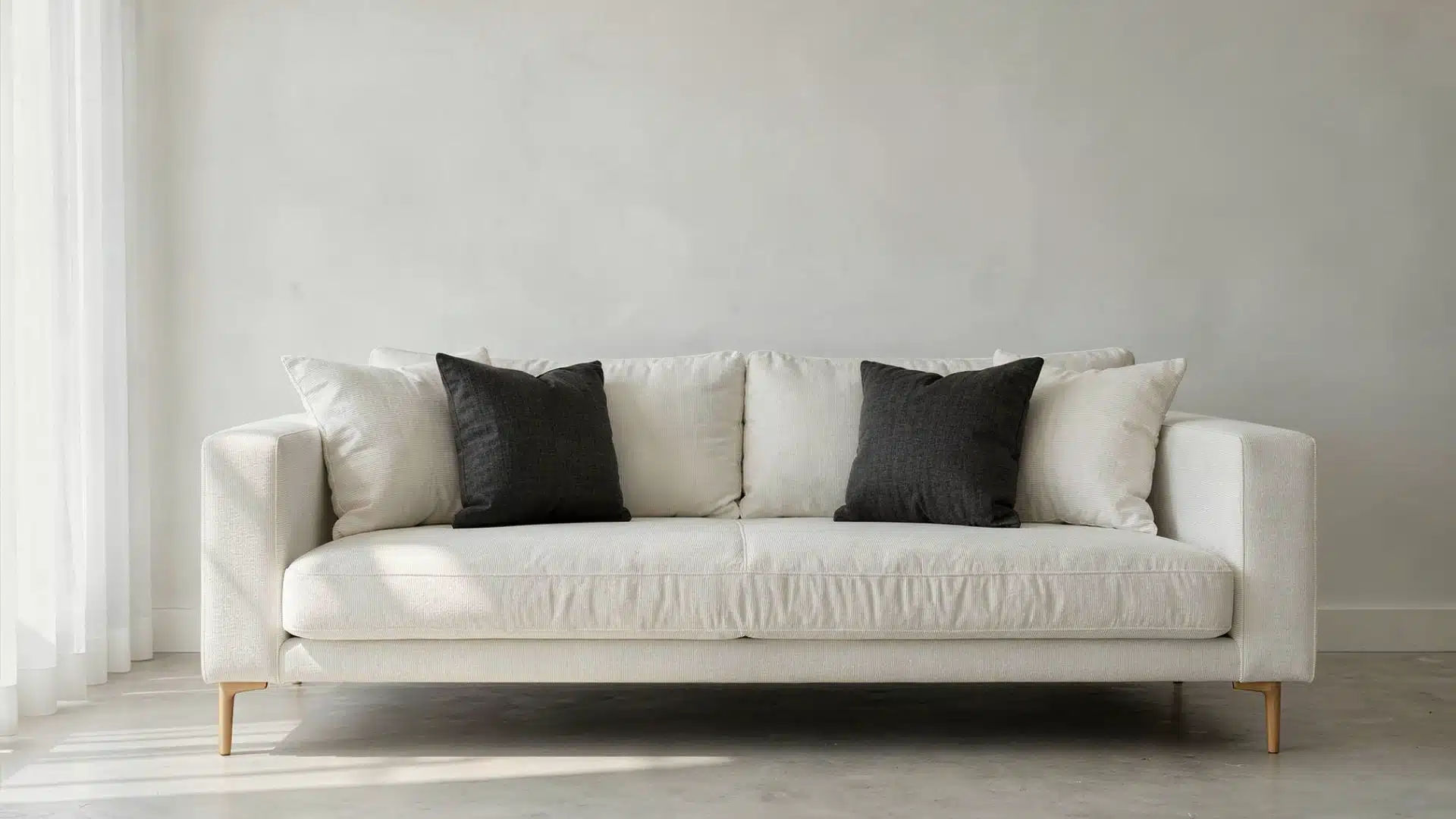
Less is more here.
Stick to three or four pillows maximum. Choose solid colors, no loud prints, no heavy patterns. Neutral tones like white, grey, charcoal, or black work best.
The focus is on clean lines and open space.
A chunky-knit or simple linen pillow adds just enough texture without breaking the calm, uncluttered feel.
Resist the urge to add more.
In a minimalist space, restraint is the style. Two well chosen pillows will always beat five average ones.
2. Boho
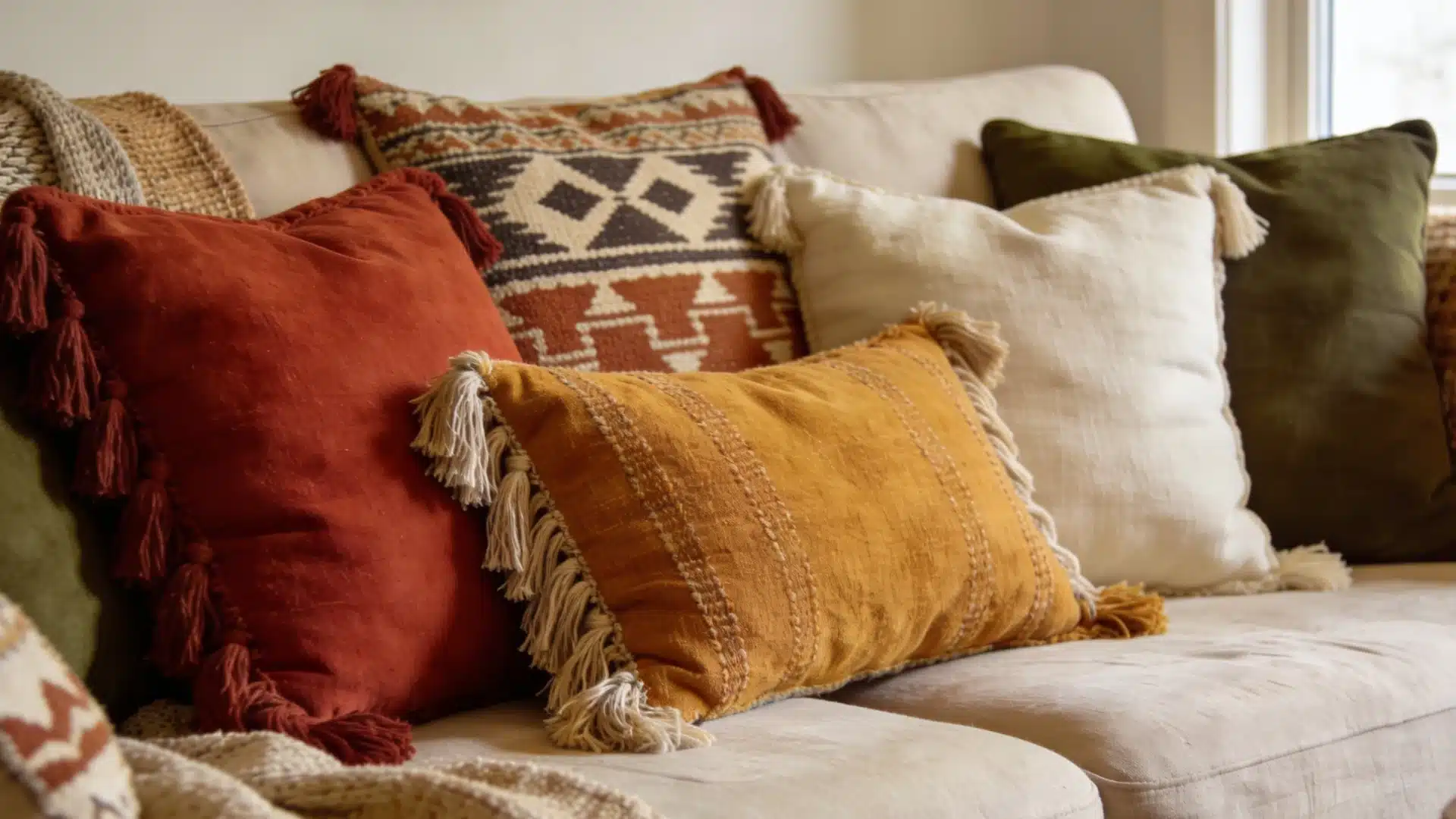
Boho is where you get to have fun.
Layer textures freely, think tassels, fringe, macramé, and woven fabrics. Mix global patterns like ikat, mudcloth, or block prints.
Boho styling is about collected, personal, slightly mismatched charm.
The key is to keep the colors within a warm, earthy range so it doesn’t look chaotic. Terracotta, rust, mustard, and deep green all work well together.
3. Traditional
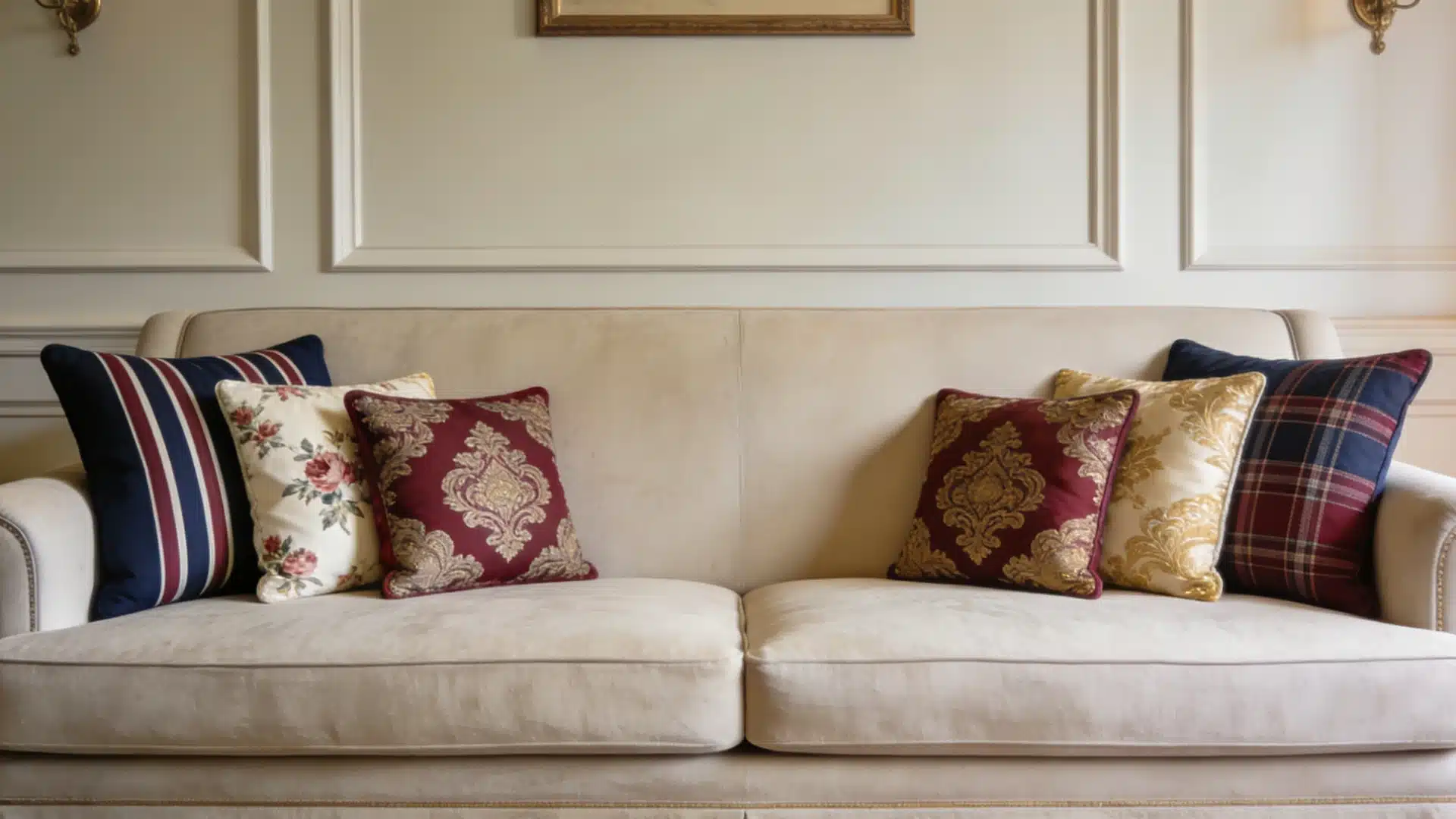
Traditional interiors call for symmetry and structure.
Place matching pillows on each end of the sofa. Use classic prints, think stripes, florals, damask, or plaids.
Rich, deep colors like navy, burgundy, and gold complement a traditional room well.
The arrangement should look intentional and balanced. Avoid mixing too many different patterns.
In traditional design, symmetry is everything. If one side has it, the other side needs it too.
The Big Don’ts of Pillow Styling
Even with the best intentions, a few small mistakes can make a couch look off.
Most people don’t realize they’re making them.
The fixes are simple once you know what to look for. Before you buy another pillow or rearrange what you have, it’s better to keep the mistakes to avoid in mind.
- Using pillows that are too small: Makes the whole setup look cheap and unfinished.
- Matching everything perfectly: The couch looks more like a display than a living space.
- Ignoring texture: A couch with pillows in the same fabric falls flat.
- Overcrowding the couch: Too many pillows leave no room to actually sit.
- Choosing style over comfort: A pillow that looks great but feels stiff is a bad choice.
Final Thoughts
How to style pillows on a couch comes down to two things.
How it looks and how it feels. You don’t have to get it perfect on the first try. Pillows are one of the easiest things to swap out and restyle.
Try a new combination. Switch up a texture. Move things around.
There’s no real risk. The goal is a couch that looks good and feels great to sit on. Start small, trust the process, and adjust as you go.
Frequently Asked Questions (FAQs)
1. How Many Pillows Should You Put on Your Couch?
A 3 seater works best with three to five pillows. A loveseat needs just two to three. Always use an odd number; it looks more natural.
2. What Makes a Luxury Pillow?
High-quality fill, a well-made cover fabric like velvet or linen, and a proper insert that holds its shape. The feel matters just as much as the look.
3. What is the Highest Rated Pillow on the Market?
This changes often based on trends and reviews. Check current ratings on Amazon or home décor sites like Wayfair for the most up-to-date options.