
Designing a mid-century modern house might feel like a big project.
Clean lines, big windows, that warm retro feel. But turning that vision into a real home is where you might feel stuck.
This blog breaks down everything, from choosing the right materials to getting the layout spot on.
What is a Mid-Century Modern House?
It became popular between the 1940s and 1970s.
It was built around one simple idea that a good design should be functional, and not just something that impresses the eye.
These homes are known for their clean lines, open floor plans, and large windows.
There’s no unnecessary clutter, no over-the-top details, just honest, well-thought-out spaces that feel good to live in.
This style is just as popular today as it was decades ago.
Origins of Mid-Century Modern Design
Mid-century modern design didn’t appear out of nowhere.
It grew out of a very specific moment in history, years after World War II, when soldiers came home, families expanded, and the demand for housing shot up fast.
Builders needed to construct homes quickly and affordably.
And that pushed designers toward simplicity, leading to mass production as the answer to the high demand.
Architects like Frank Lloyd Wright made significant contributions.
They had already been championing open, nature-connected spaces for years, and those ideas fit perfectly into this new way of building.
The result was a clean break from heavy, traditional homes.
Elements that define a Mid-Century Modern Home
Every design choice serves a purpose, and nothing is added just for show but to create open spaces.
Once you know what to look for, you’ll spot them everywhere.
1. Large Glass Windows
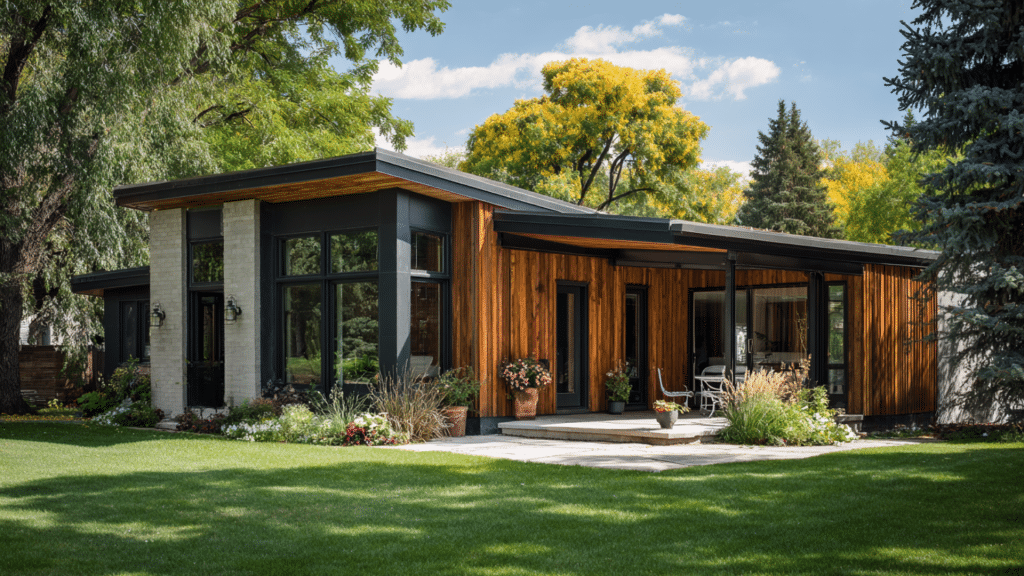
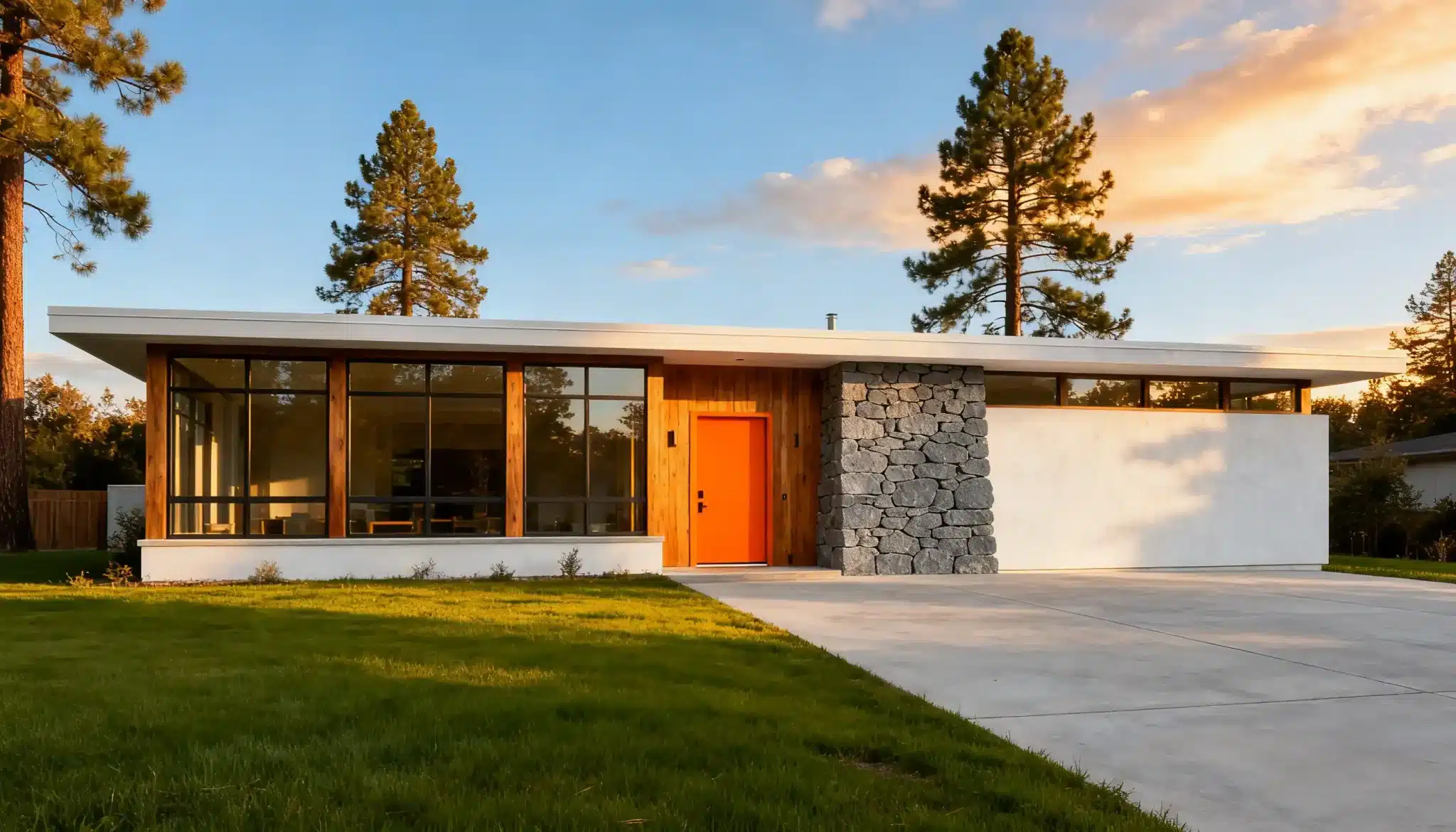
Large windows are among the most recognizable features of this style.
They pull in natural light and give every room a bright, airy feel. But they do more than just look good.
They blur the line between indoors and outdoors.
Maintaining them is very important. Clean them often to keep the light coming in clear and bright. Check the seals and frames every year for any gaps or wear.
2. Open Floor Plans
It rarely has walls dividing every room.
Instead, the living, dining, and kitchen areas flow naturally into one another, creating an open layout that makes the home feel bigger and more connected.
It also makes everyday living easier.
Families can move through the space without feeling boxed in. It’s a simple idea, but it changes how a home feels entirely.
3. Minimal Ornamentation
In these houses, less is always more.
There are no carved details, no heavy moldings, and no decorative extras that don’t serve a purpose.
Every element earns its place.
Focusing on simplicity keeps the home looking clean, and the quality of the materials and the strength of the layout are of good quality.
4. Flat or Low-Pitched Roofs
Traditional homes often had steep, decorative roofs.
Mid-century modern design went the other way. Flat or low-pitched roofs became a signature feature, giving these homes their clean, horizontal look.
They also made construction more straightforward and cost-effective.
Which mattered a lot during the post-war building boom, as the roofline wasn’t just a style choice.
It was a practical decision that also happened to look sharp.
Popular Colors for Mid Century Modern Interiors
Color plays a big role in making a mid-century modern house feel right.
The palette is warm, grounded, and full of character, but never overdone, so that it feels familiar and comfortable.
The trick is in the balance between these colors.
1. Olive Green
Olive green brings the outdoors inside. It pairs well with wood tones like teak and walnut. This color works great on an accent wall or as a sofa color.
2. Mustard Yellow
Mustard yellow is a classic mid-century color. It adds a cheerful, retro feel to any room. It works well as a cushion color, a throw, or even a full feature wall.
3. Burnt Orange
Burnt orange feels grounded. It was very popular in homes from the 1950s to the 1960s. Use it in small doses, like in rugs or chair upholstery.
4. Warm White or Cream
Warm white keeps walls clean and simple. It lets the furniture and natural wood do the talking, and helps reflect light, making rooms feel open.
5. Teal or Turquoise
Teal adds a bold pop of color. It pairs well with natural wood and white walls. Use it on a single chair or as a bedroom accent wall.
Room by Room Mid Century Modern House Design Ideas
Every room in a mid-century modern house should be kept simple and functional.
But each space has its own personality, and small design choices can really bring out the best in each room.
Living Room
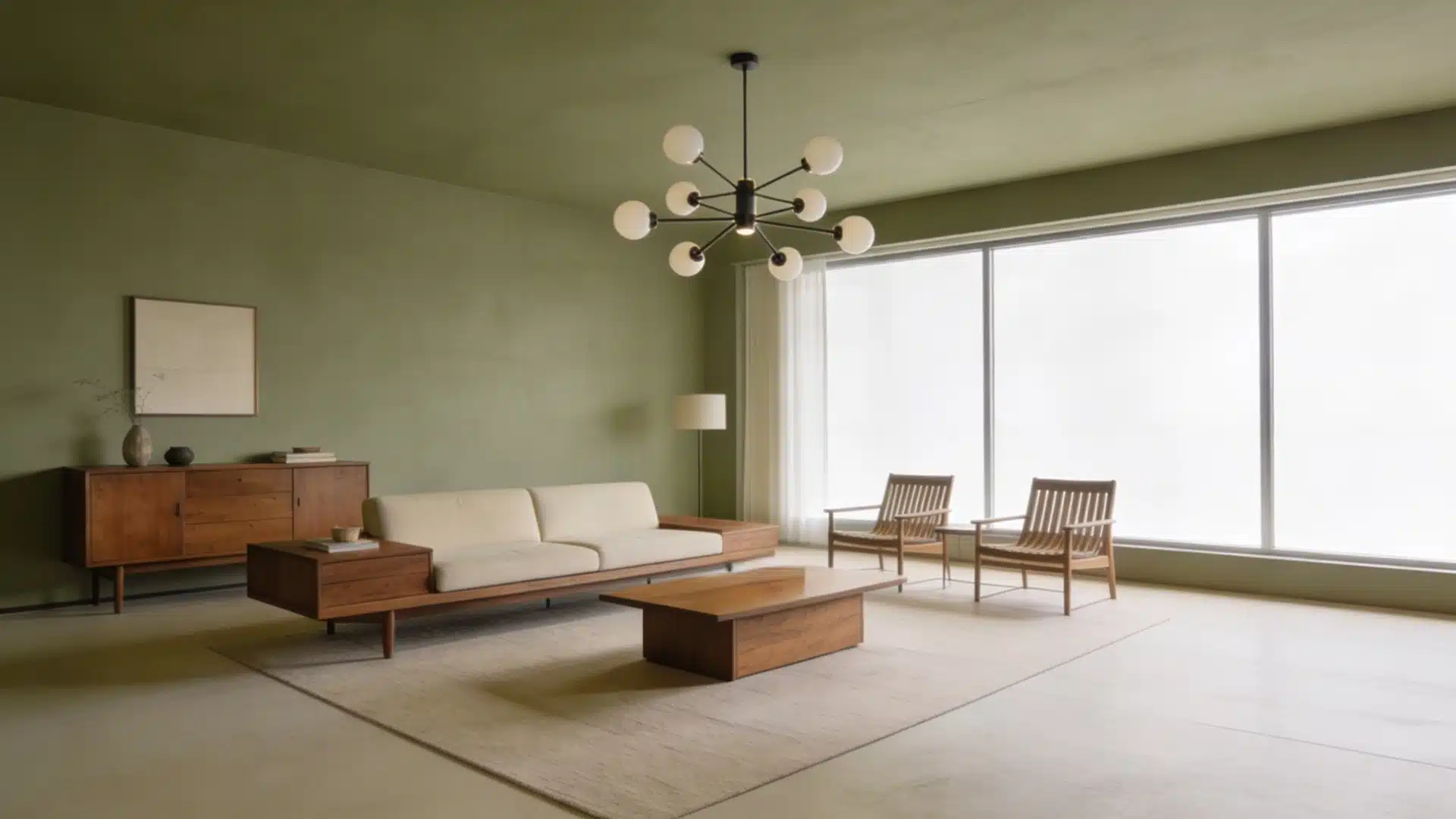
The living room is where low-profile furniture sets the tone.
Sofas and chairs sit close to the ground, giving the space that clean, horizontal feel the style is known for.
Teak and walnut bring in natural warmth without overcomplicating things.
For lighting, a sputnik chandelier works beautifully; it adds character and draws the eye without trying too hard.
Keep the decor minimal. A few well placed pieces will always do more than a room full of clutter.
Bedroom
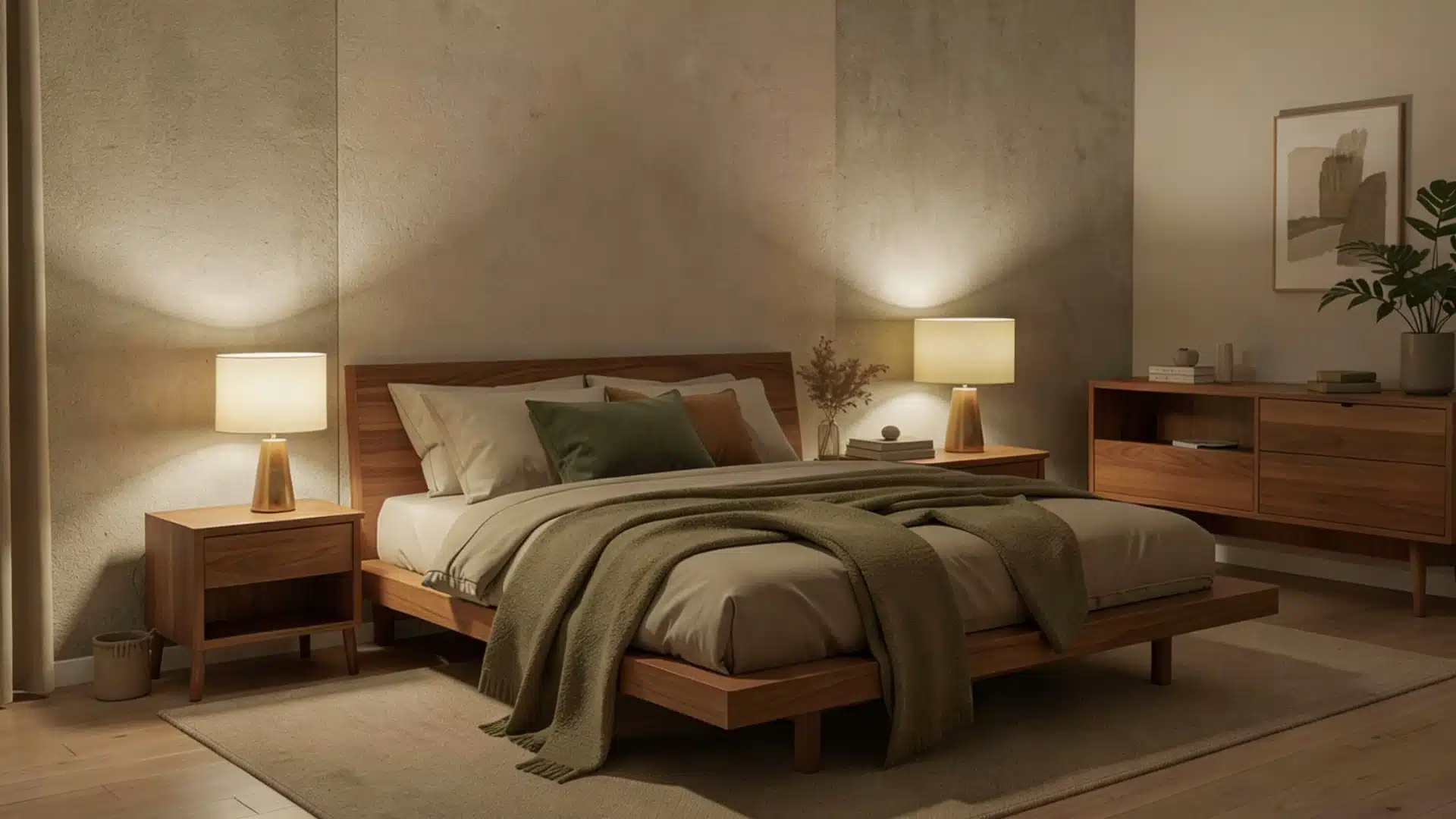
A mid-century modern bedroom should feel restful and unbusy.
Platform beds are the natural starting point, low, simple, and grounded; they set the right mood from the moment you walk in.
Keep surfaces clear and furniture straightforward.
Warm lighting in the evening makes a real difference, creating a calm and comfortable atmosphere.
If you want to add some depth, an accent wall in a bold color or with an interesting texture is a good choice.
Kitchen
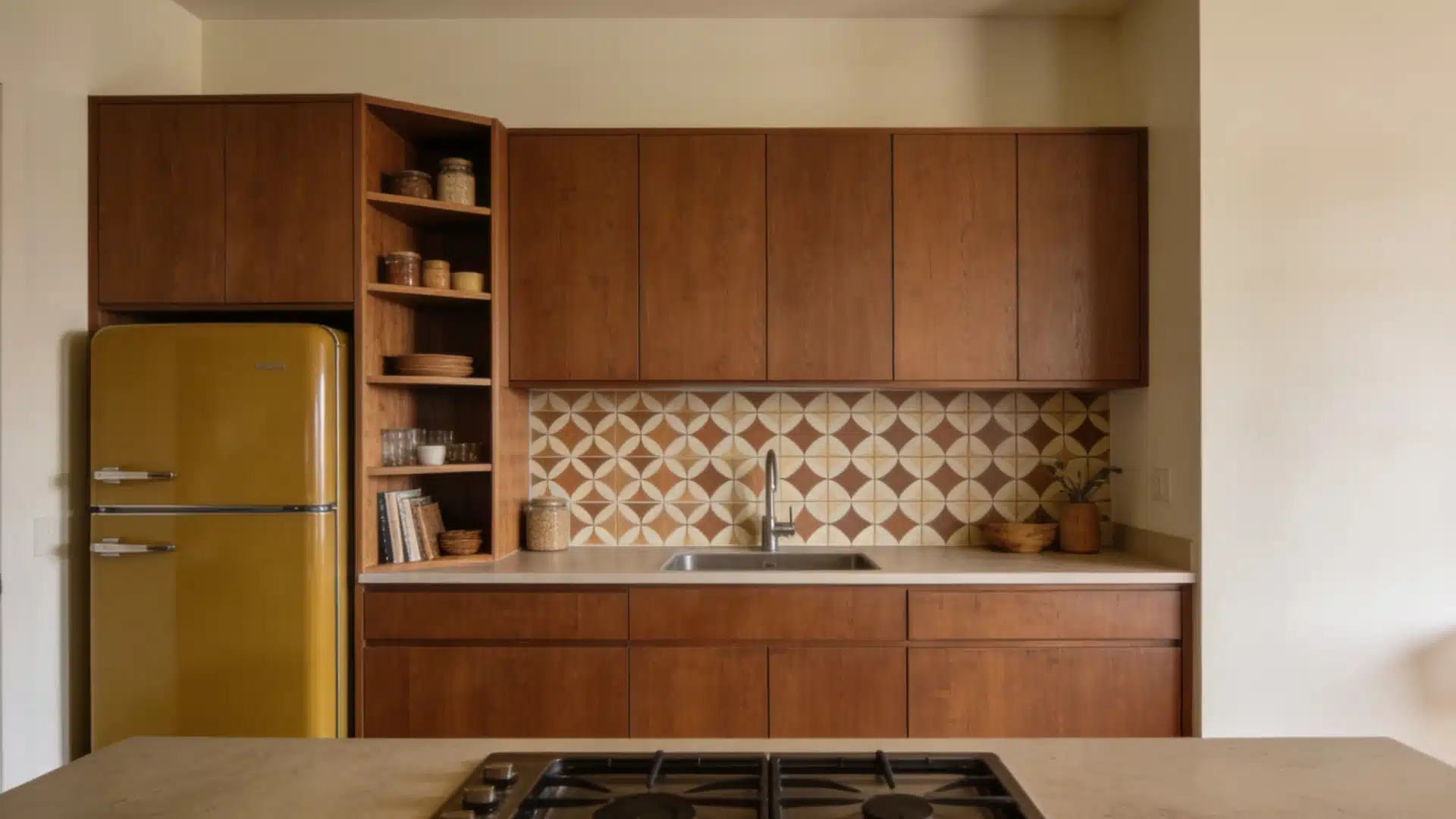
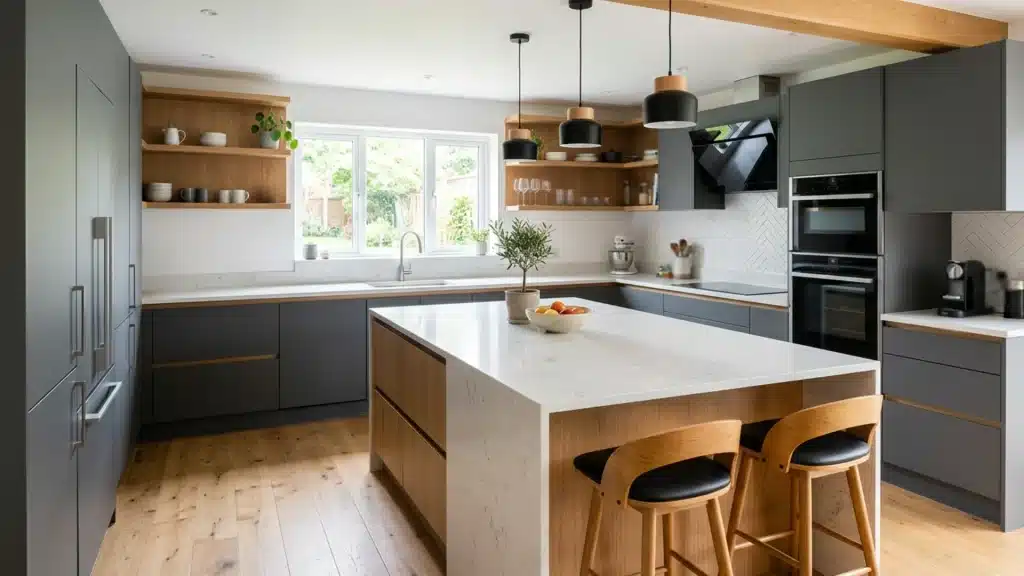
The kitchen works best with flat-panel cabinets.
Sleek and clean, they keep the space looking sharp. Retro-style appliances, or modern ones with a retro finish, add a fun, nostalgic touch that fits the style well.
Open shelving keeps things feeling light and practical at the same time.
And for the backsplash, geometric patterns in classic shapes bring just enough personality to the space without going overboard.
Dining Room
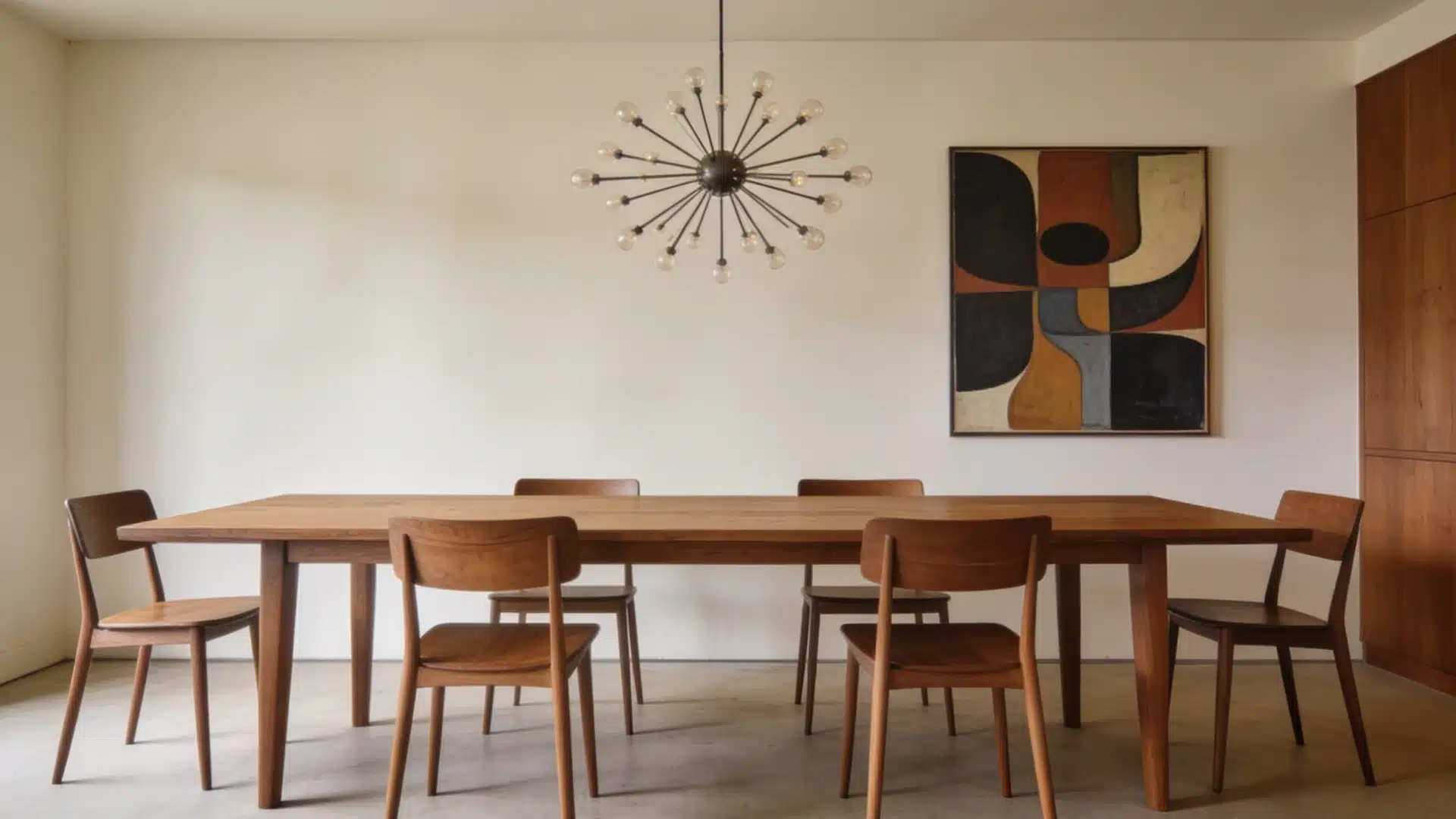
The dining room works best with a long, low table in natural wood.
Pair it with chairs that have thin legs and simple shapes. A statement light above the table, like a sputnik pendant, pulls the whole look together.
Keep the walls simple; one bold piece of wall art is all you need.
For the furniture in the dining room, regular polishing will help prevent it from drying out and losing its natural color.
Bathroom
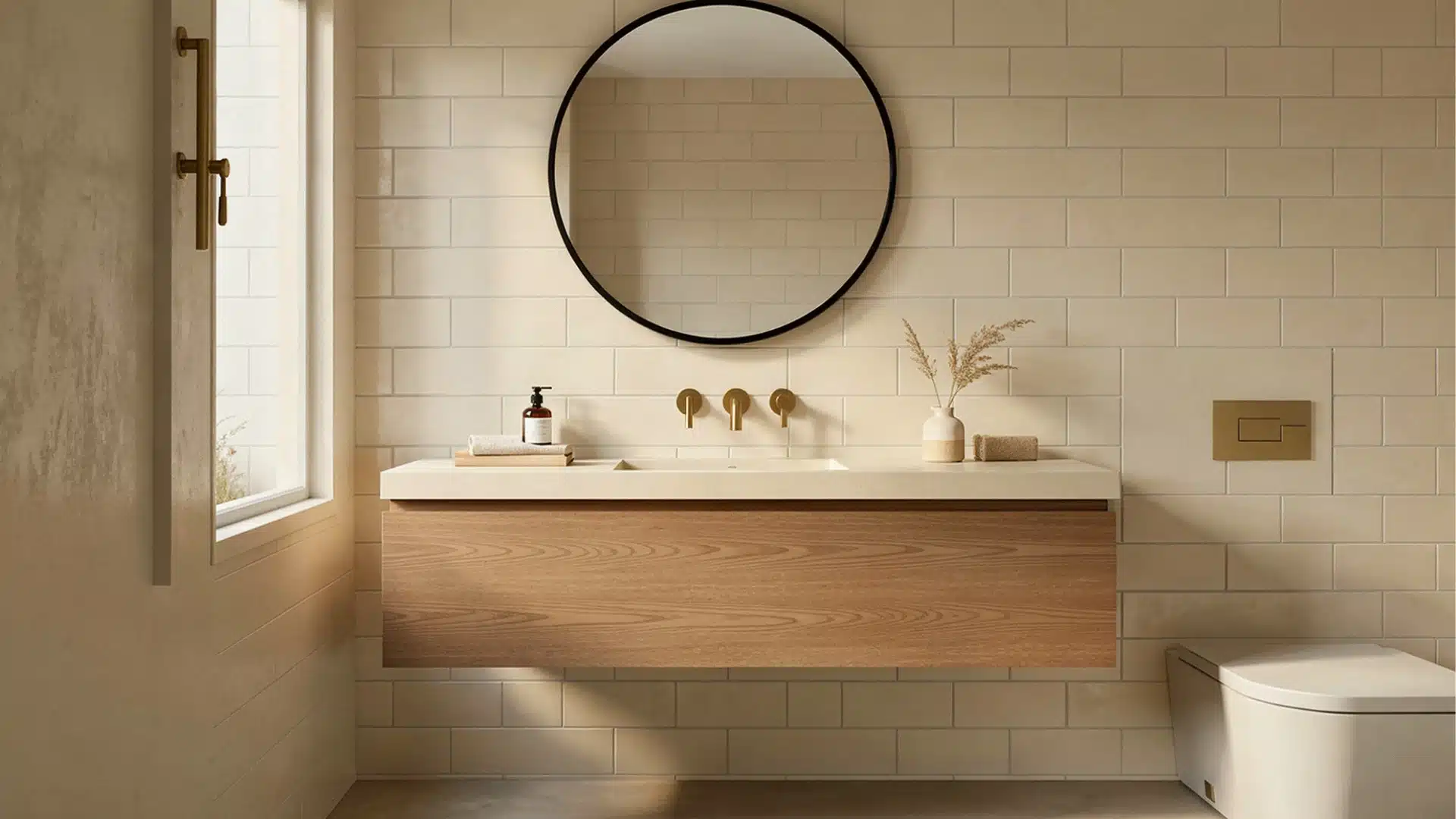
The bathroom should feel clean and well-thought-out.
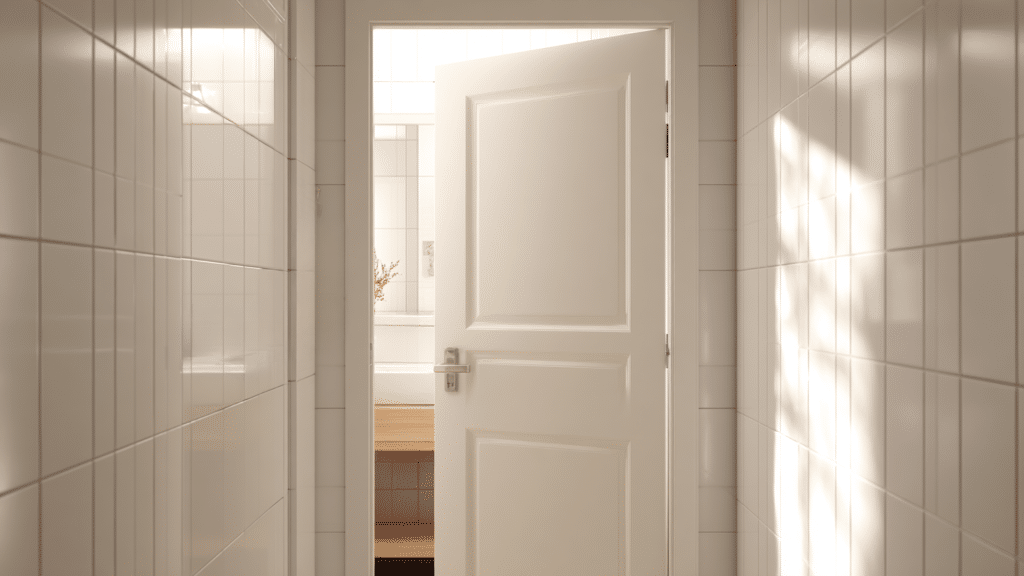
Stick to simple rectangular tiles in neutral tones, such as white, cream, or light grey. A wooden vanity unit adds warmth and ties in with the rest of the home.
Keep hardware simple, brushed brass or matte black both fit the style.
Avoid too many products on the counter. Less is always more in this space.
Home Office
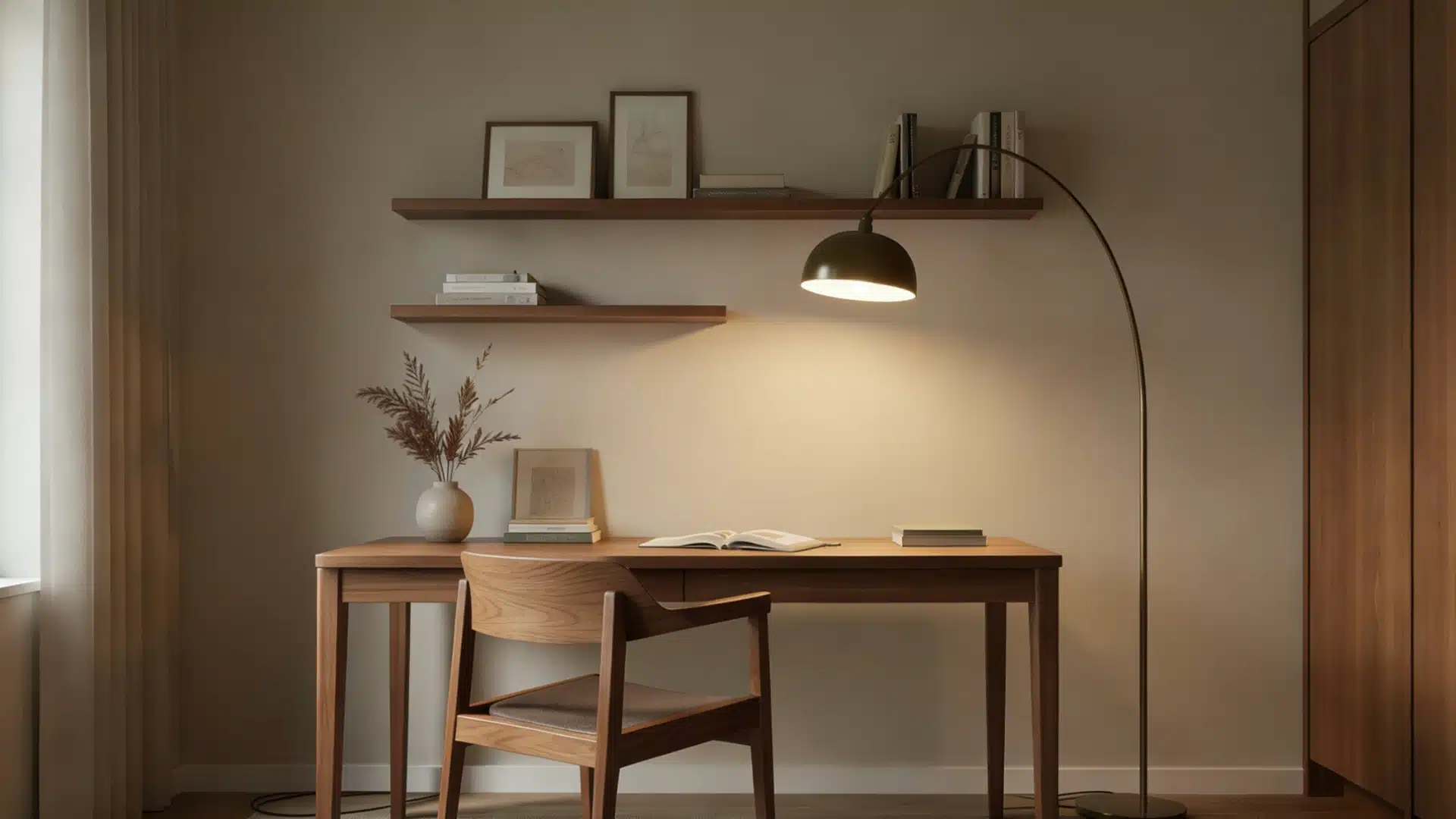
A mid-century modern home office should feel focused and calm.
Start with a simple wooden desk; teak or walnut works best. Keep the top clear and clutter-free. A low-back chair with clean lines fits the style well.
Add one arc floor lamp for warm, focused light.
Avoid too many accessories. One small plant and a simple shelf are more than enough.
Decor Ideas for a Mid-Century Modern House
Decor in these houses is all about being intentional.
Every piece you bring in should earn its place. Nothing goes in just to fill a gap, and following this style doesn’t require much.
| Decor Element | How It Works |
|---|---|
| Wall Art (Abstract, Geometric) | Bold shapes and abstract prints add visual interest without cluttering the walls. |
| Indoor Plants (Snake Plant, Fiddle Leaf Fig) | Greenery brings life and a natural touch that complements the style’s love of nature. |
| Lighting (Arc Floor Lamps, Sputnik Chandeliers) | Statement light fixtures double as decor, adding character and a warm glow to any room. |
| Mirrors with Simple Frames | Clean-framed mirrors open up the space and reflect light without drawing too much attention. |
| Vintage Accessories | Small retro touches, like a ceramic vase or a vintage clock, add warmth and a sense of history. |
Final Thoughts
A mid-century modern house is more than just a design style.
It’s a way of thinking about space. Keep things simple, let natural materials shine, and make sure every piece serves a purpose.
That’s really all it takes.
Start small if you need to. The right space doesn’t happen all at once, but it does come together. Follow a style that suits your personality, and that’s it.
Frequently Asked Questions (FAQs)
1. Is the Mid-Century Modern House Still Popular in 2026?
Yes, very much so. Clean lines, open spaces, and natural materials never really go out of style. More homeowners are drawn to this look today than ever before.
2. What Devalues a House the Most?
Poor maintenance is the biggest factor. Damaged flooring, outdated kitchens, poor lighting, and clutter can all pull the value down fast, even in a well-located home.
3. What Years are Considered Mid-Century Modern Homes?
Mid-century modern homes were built roughly between 1945 and 1969. This period followed World War II, when demand for affordable, well-designed housing grew rapidly across the country.