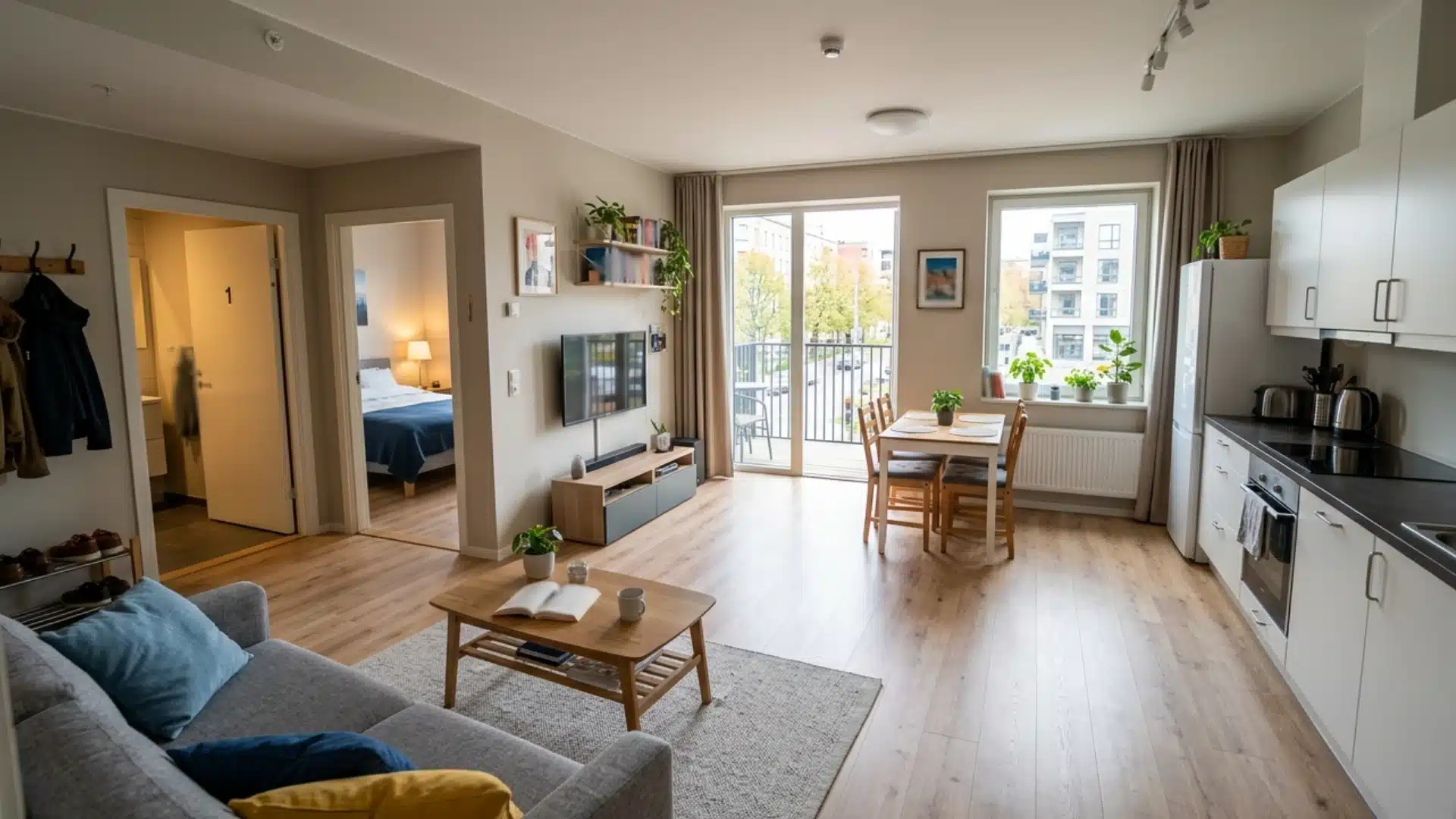

Your two-bedroom apartment is a good size, affordable, and in a great location.
Then you walk in, and something feels off. The layout just doesn’t work. One room is tucked away in an awkward corner. The living area feels cramped. Suddenly, that great deal doesn’t feel so great anymore.
A bad layout can make even a spacious apartment feel tight and frustrating to live in.
That’s why understanding two-bedroom apartment layouts matters before you commit.
Knowing what works and what doesn’t can be the difference between a home you love and one you tolerate.
What Defines a Two-Bedroom Apartment Layout?
A two-bedroom apartment layout is more than just two rooms and a bathroom.
It’s the way every space connects.
How you move from the kitchen to the living area, where the bedrooms sit in relation to each other, and how much breathing room you actually get. Some layouts keep both bedrooms side by side.
Others place them on opposite ends for more privacy.
The size of the hallways, the position of windows, and even where the front door opens all shape how the apartment feels to live in day to day.
Standard Dimensions and Space Guidelines
Every two-bedroom apartment comes in a different size, but most layouts fall into standard ranges.
Here’s a quick look at what to expect:
| Layout Type | Total Size (sq ft) | Bedroom Size (sq ft) | Living Area (sq ft) | Kitchen (sq ft) |
|---|---|---|---|---|
| Compact | 650 – 800 | 90 – 110 each | 150 – 180 | 60 – 80 |
| Mid-Range | 900 – 1,100 | 120 – 150 each | 200 – 250 | 80 – 100 |
| Spacious | 1,200 – 1,500 | 150 – 200 each | 280 – 350 | 100 – 130 |
Guidelines:
- Bedroom doors need at least 32 inches of clear width for easy movement.
- A shared bathroom should be located between the two bedrooms, not at one end.
- The kitchen and dining area work best when placed close together.
- Natural light matters; at least one window per room is a must.
- Leave 36 inches of walking space around beds and major furniture.
- Storage areas like closets should be built into the layout, not added as an afterthought.
Most Popular Two-Bedroom Apartment Floor Plans
Not all apartments are built the same. The floor plan affects privacy and the flow of space. Here are the most common types.
Side-by-Side Layout
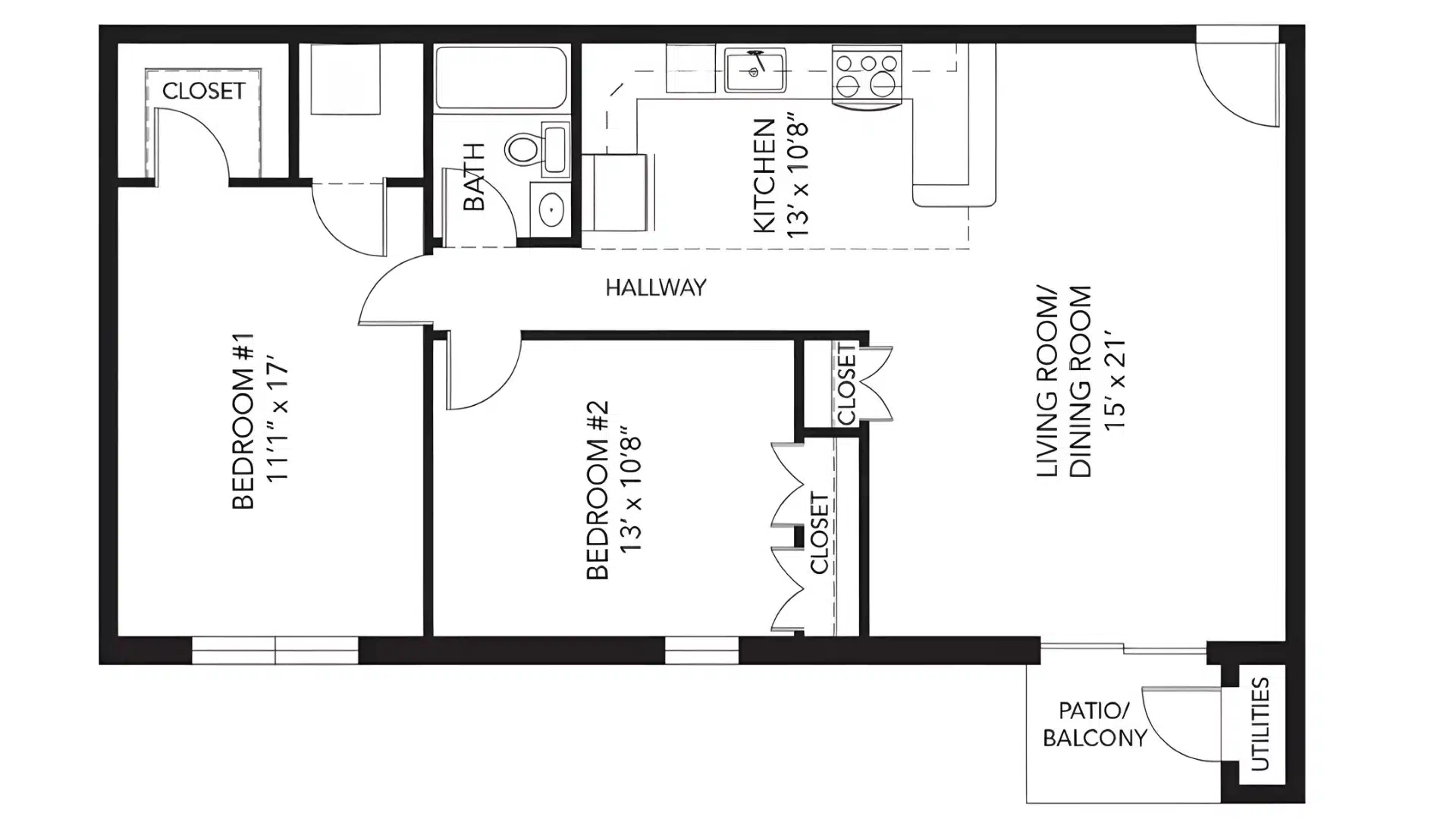
Both bedrooms sit next to each other, usually along the same wall.
It’s a clear plan that works well for families. The living and kitchen areas open up on the opposite side, giving the home a clear divide between private and shared spaces.
Split Bedroom Layout
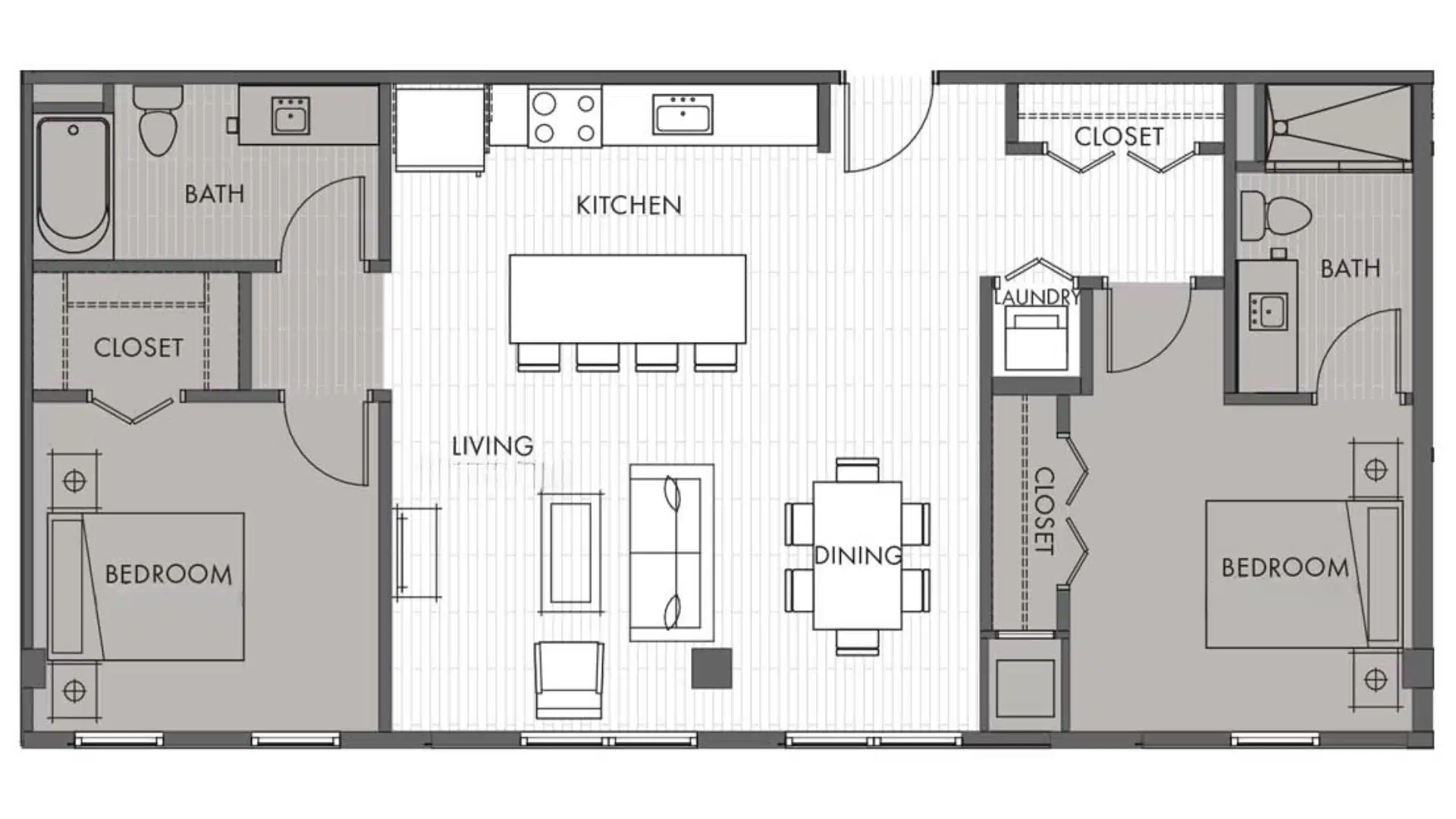
The two bedrooms sit on opposite ends of the apartment. This works well for roommates or anyone who values privacy.
There’s more distance between sleeping areas, and the living space sits comfortably in the middle.
Open-Plan Layout
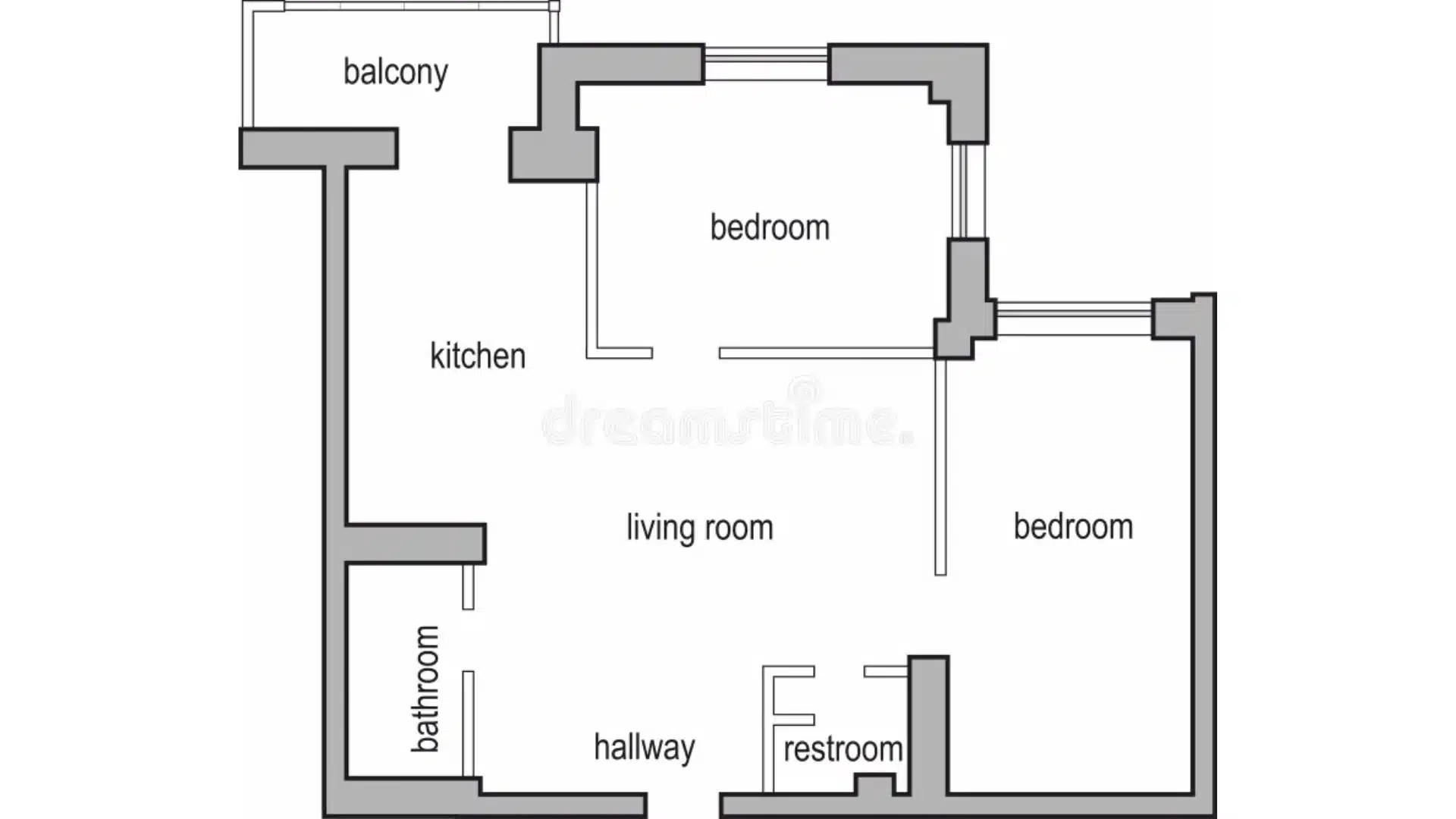
The kitchen, dining, and living areas share a single open space. The bedrooms are tucked away from the main area.
This plan makes smaller apartments feel bigger and keeps the shared spaces bright and connected.
L-Shaped Layout
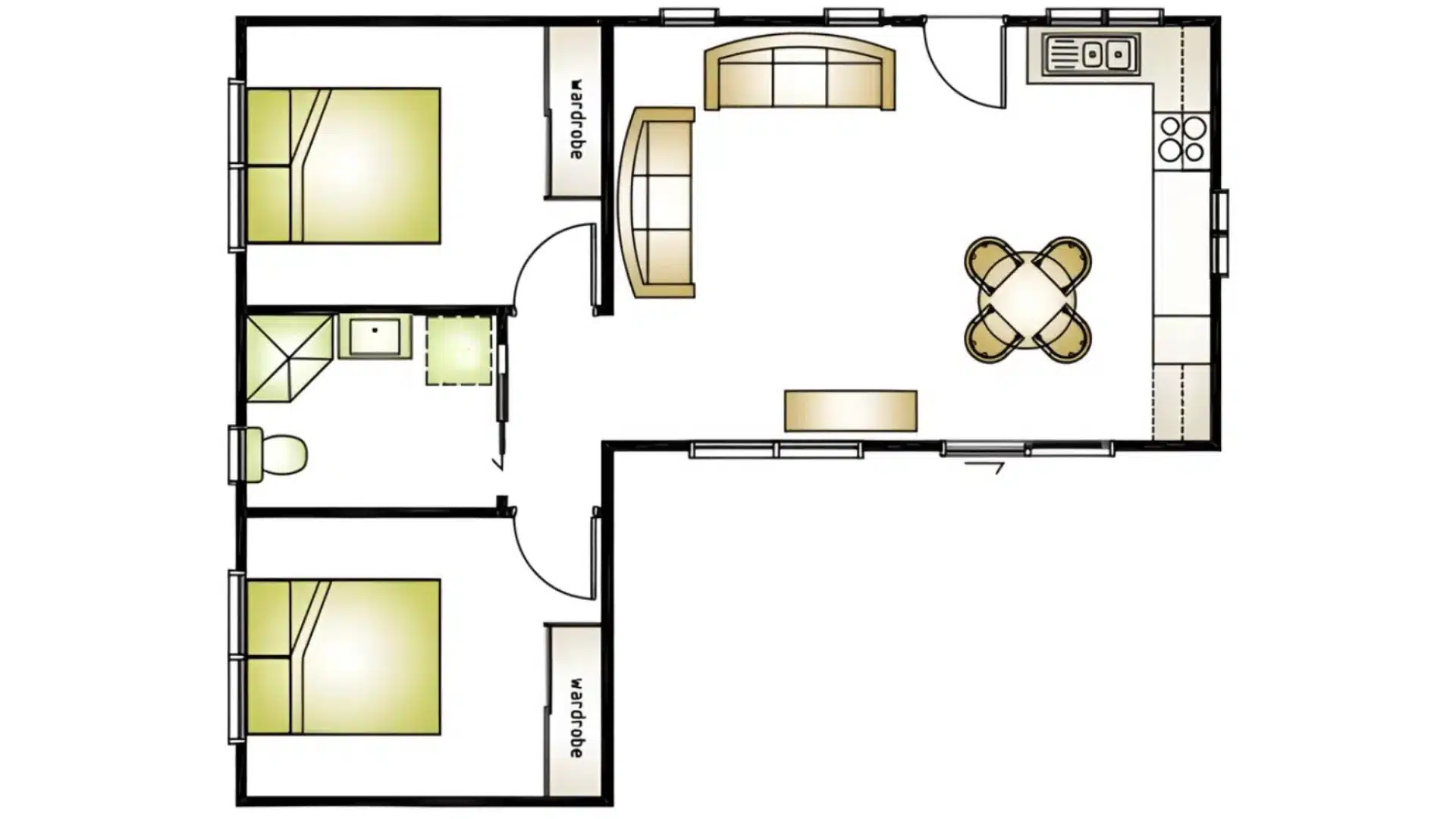
The apartment is L-shaped, with bedrooms along one arm and living spaces along the other.
It creates a natural separation between private and shared areas without needing extra walls or corridors.
Corridor Layout
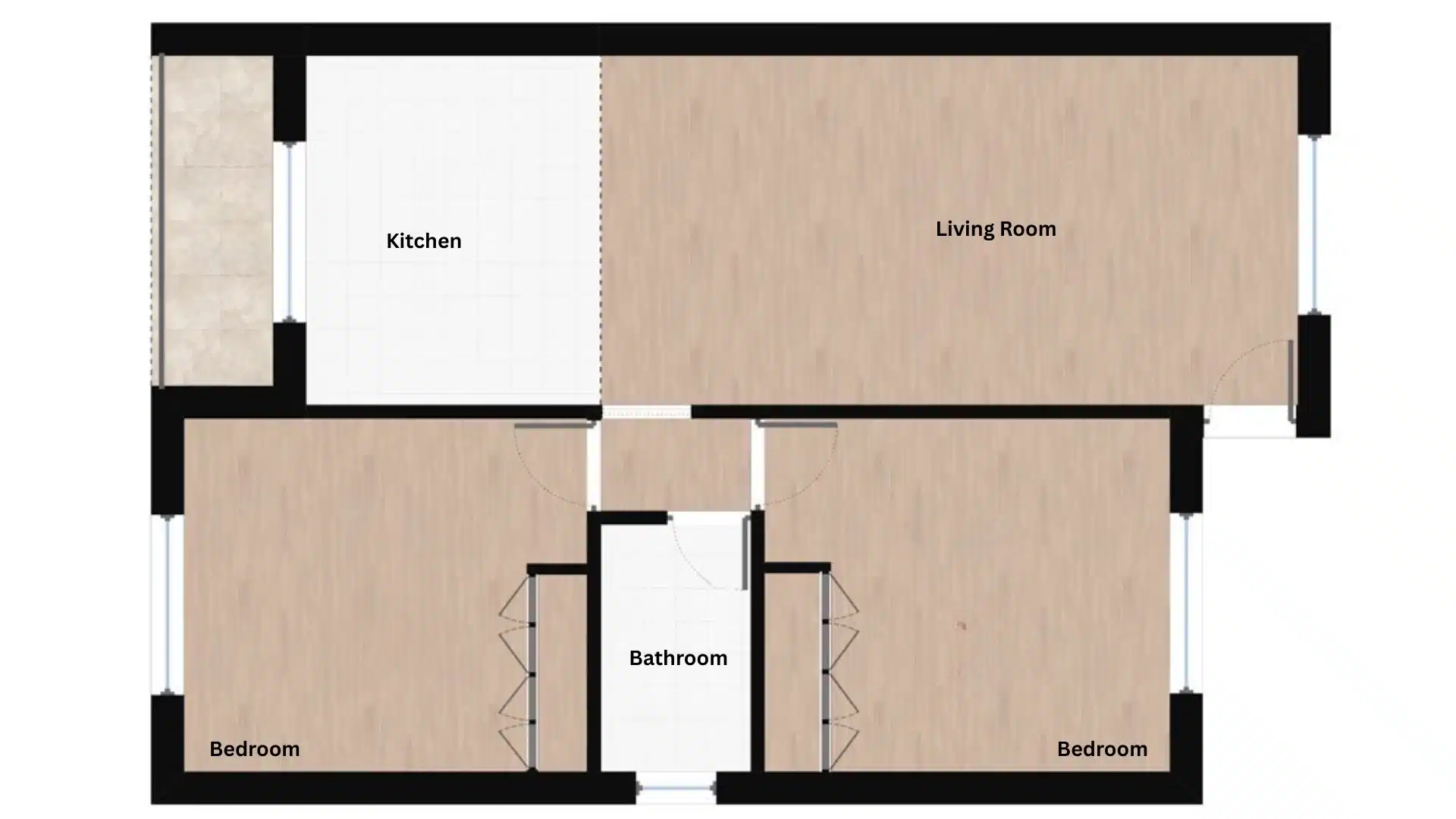
A long hallway runs through the middle, with rooms branching off on either side.
It’s a practical plan for narrower buildings.
Storage and bathrooms usually line the corridor, keeping the main rooms clear and functional
Best Two-bedroom Apartment Layout Ideas by Lifestyle
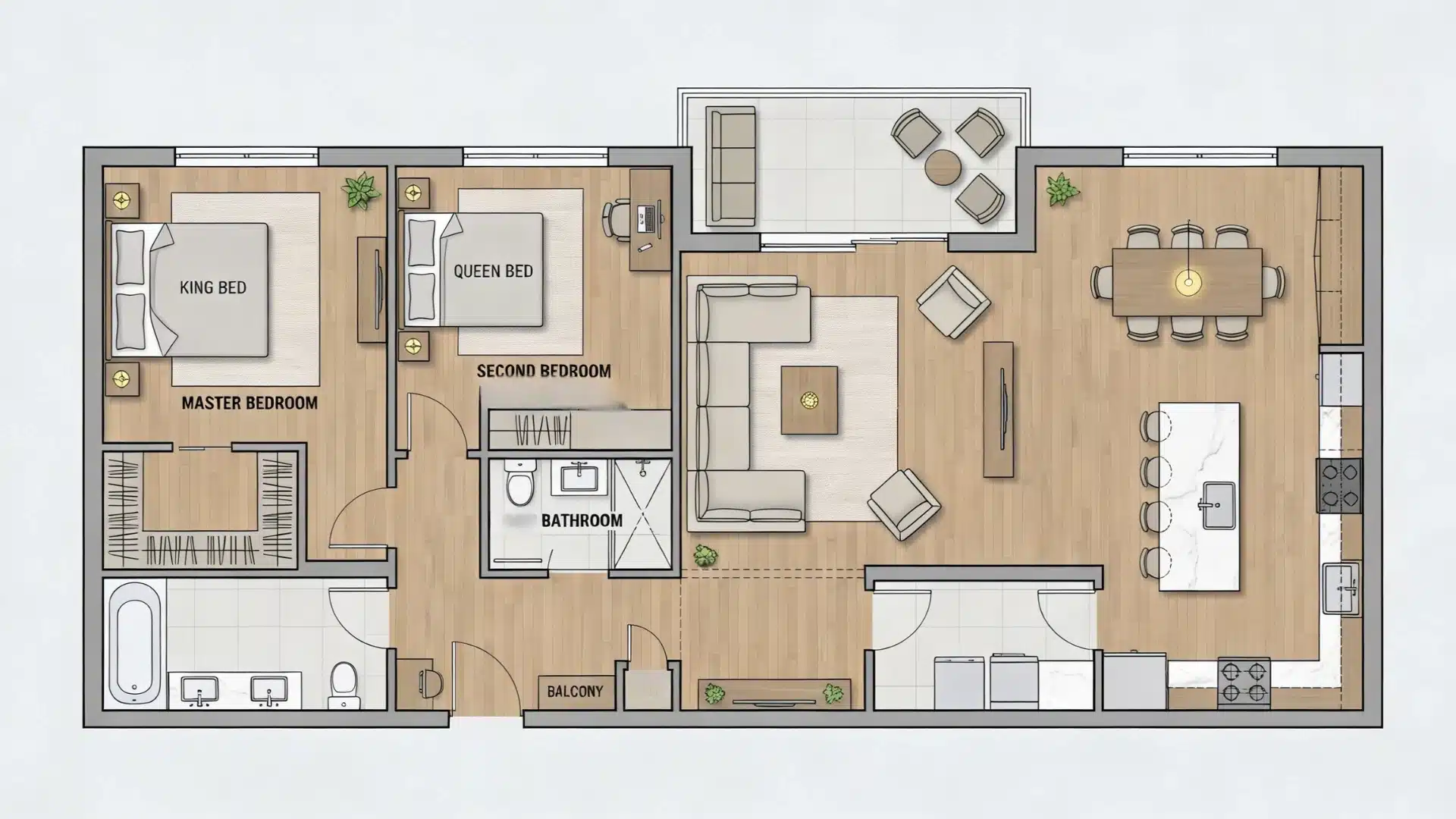
The best layout depends on how you live. Young couples, families with kids, or remote workers have different needs.
Here are layout ideas for various lifestyles.
1. For Young Couples
A split-bedroom layout with an open living and kitchen area works well, keeping shared spaces connected while giving each person their own space.
Compact size is fine if the flow feels natural.
2. For Families with Kids
Side-by-side bedrooms help monitor young children.
A separate dining area offers practicality for meals and homework. Built-in storage manages family clutter.
3. For Roommates
A split bedroom layout is ideal, offering private spaces at opposite ends and neutral shared areas like the kitchen and living room for comfortable everyday living.
4. For Remote Workers
One bedroom is a sleeping space, the other a workspace. Good natural light in both helps.
Keeping the home office away from the main area separates work from rest time.
5. For Those Who Love to Entertain
An open-plan layout with a large living and kitchen area takes center stage here.
The bedrooms stay private while the shared spaces do all the heavy lifting. More floor space in the main area means more room for guests without things feeling tight.
Choosing the Right Two-Bedroom Apartment Layout
Choosing the right layout comes down to your daily routine.
Think about who you live with, how you use each room, and what bothers you most in a shared space.
- Do you need quiet in the mornings?
- Do you cook and socialize at the same time?
Walk through the space before committing. Check where the light falls, how the rooms connect, and whether the storage works for your needs.
Smart Design Tips for Two-Bedroom Apartment Layouts
- Place the sofa against the longest wall to keep the center of the living area open and easy to move through.
- Use light colors on walls to make smaller rooms feel more open without any structural changes.
- Mirrors placed opposite windows bring in more natural light and make tight spaces feel wider.
- Built-in shelving along corridors turns wasted wall space into useful storage.
- A foldable or extendable dining table saves floor space in smaller kitchen and dining areas.
- Keep bedroom furniture minimal: a bed, one side table, and a wardrobe go a long way.
- Sliding doors between rooms take up less space than swing doors and improve the overall flow.
Budget vs Premium Layout Ideas
Budget and premium layouts can both work well; the difference lies in the finishes, space, and features you get for the price.
| Feature | Budget Layout | Mid-Range Layout | Premium Layout |
|---|---|---|---|
| Total Size | 650 – 850 sq ft | 900 – 1,100 sq ft | 1,200 – 1,500 sq ft |
| Bedroom Size | 90 – 110 sq ft each | 120 – 150 sq ft each | 150 – 200 sq ft each |
| Living Area | 150 – 180 sq ft | 200 – 250 sq ft | 300 – 350 sq ft |
| Kitchen Type | Galley or closed kitchen | Semi-open kitchen | Open-plan kitchen with island |
| Storage | Basic built-in wardrobe | Built-in wardrobes, extra shelving | Walk-in closets and built-in shelving |
| Bathroom | One shared bathroom | One full bathroom/one half bath | One ensuite, one shared bathroom |
| Flooring | Laminate or basic tile | Mid-grade tile or vinyl plank | Hardwood or premium tile |
| Layout Type | Corridor or side-by-side | Open-plan or side-by-side | Split bedroom or L-shaped |
Final Thoughts
A good two-bedroom apartment layout does more than just fit your furniture; it fits your life.
From understanding standard dimensions to matching a floor plan with your lifestyle, every detail adds up.
The right layout makes daily routines feel easy, and living feel comfortable. Take your time, ask the right questions, and don’t settle for a space that doesn’t work for you.
Found this helpful?
Share it with someone currently flat-hunting; it might save them from making a costly mistake.
If you’re ready to plan your space, start with the layout first.
Frequently Asked Questions (FAQ’s)
1. How Much to Build a 2 Bedroom Apartment?
A 2-bedroom apartment typically costs between $100,000 and $300,000, depending on location and materials.
2. Is 600 Square Feet Small for a 2 Bedroom Apartment?
Yes, 600 square feet is on the smaller side for two bedrooms.
3. What is the Ideal Apartment Layout?
The ideal layout balances privacy, natural light, good flow, and smart storage.
4. Is it Cheaper to Build or Buy an Apartment Complex?
Buying is usually cheaper upfront, but building gives you more control overall.
5. What is a Good Size for a 2 Bed Flat?
A comfortable 2-bedroom flat sits between 900 and 1,100 square feet.