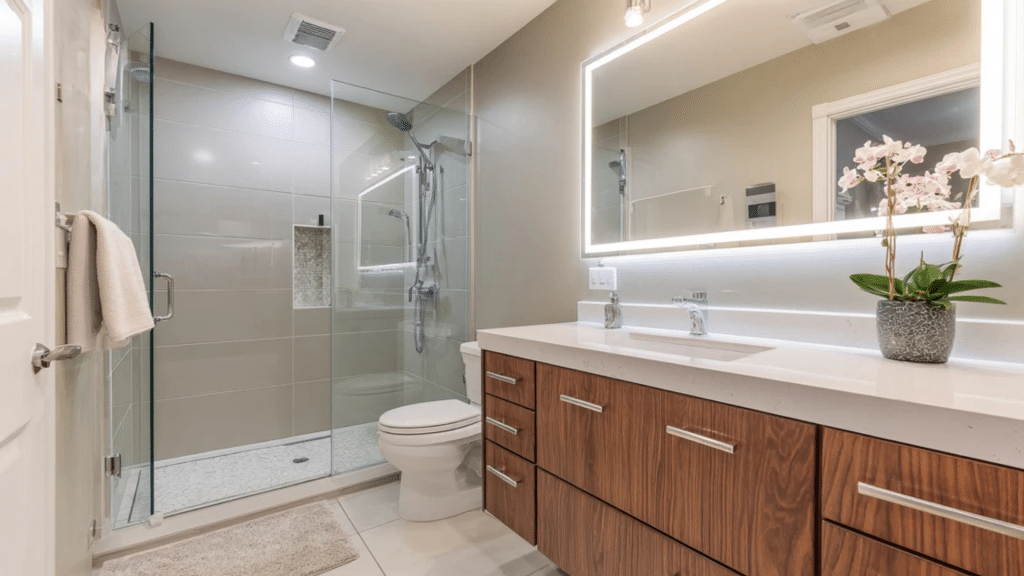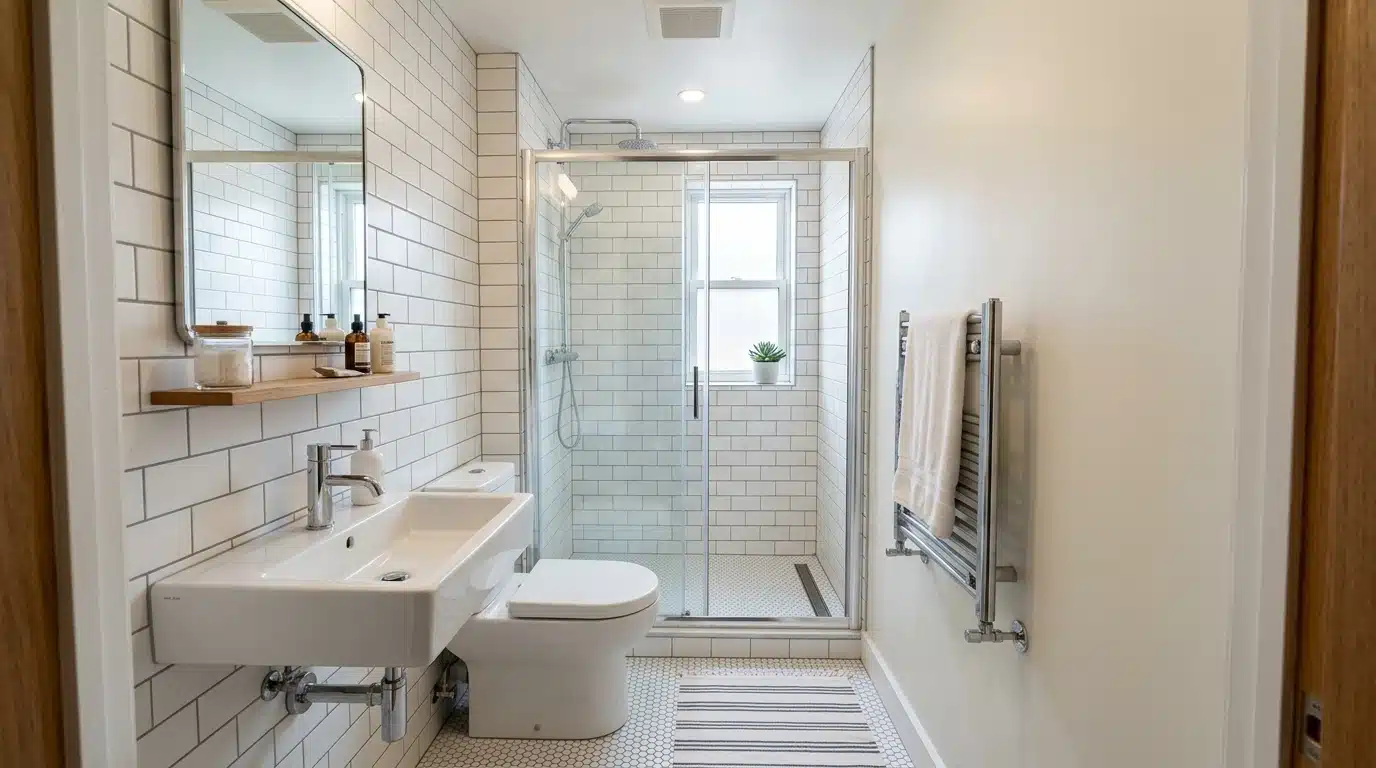

A 5-foot-wide bathroom. A door that swings into the sink. And zero room to turn around.
A narrow bathroom feels like a daily battle.
What people don’t know is that a tight layout doesn’t have to stay frustrating. With the right plan, even the smallest bathroom can feel open and work better for you.
This blog walks you through ideas that make a narrow small bathroom layout more practical.
You’ll learn what to move, what to swap out, and what small changes actually make a real difference.
What Defines a Narrow Small Bathroom Layout?
A narrow bathroom typically measures under 5 feet wide. That’s not much space to work with.
Most of these bathrooms follow a single-wall layout, with everything lining up on one side.
The toilet, sink, and shower all share one straight path.
The length can vary, but the width stays tight. That’s what makes it tricky.
You can’t just rearrange things and hope for the best. Every fixture needs a specific spot. Small and narrow aren’t always the same thing. A bathroom can be small but still feel open.
A narrow one feels cramped no matter the length. That’s the real challenge with this layout.
In most residential projects, anything under 4 feet starts requiring custom fixture sourcing.
Key Principles for a Small Bathroom Design
Designing a narrow bathroom requires more than choosing tiles. These core principles can improve the space.
1. Keep the Layout Linear
Stick to a single-wall or galley setup. Place the toilet, sink, and shower in a straight line.
This keeps movement easy and stops the space from feeling blocked or chaotic.
2. Choose the Right Fixture Sizes
Standard fixtures eat up space fast. Go for compact versions, a wall-hung sink, or a shorter toilet.
Smaller fixtures give you breathing room without changing how the bathroom works.
3. Control Visual Weight
Heavy colors and large patterns close a space in. Light tones and simple designs make walls feel further apart.
What your eye sees directly affects how the room feels.
4. Plan Your Door Swing
A door that swings inward can block fixtures.
A sliding or pocket door solves this instantly. It frees up floor space and makes the bathroom easier to use daily
Small Bathroom Layout Dimensions
Getting the dimensions right is half the battle. These numbers give you a solid starting point. Your actual layout may shift slightly based on local building codes and fixture sizes.
Here’s a quick look at standard measurements for different narrow bathroom layouts.
| Layout Type | Minimum Width | Minimum Length | Best For |
|---|---|---|---|
| Single-Wall Layout | 3.5 ft | 6 ft | Very tight, straight spaces |
| Galley Layout | 5 ft | 8 ft | Two-wall fixture placement |
| L-Shaped Layout | 5 ft | 7 ft | Corner toilet or shower fit |
| Wet Room Layout | 4 ft | 6 ft | No shower enclosure needed |
| Half Bath (Powder Room) | 3 ft | 6 ft | Toilet and sink only |
| Full Bath (Tub + Shower) | 5 ft | 8 ft | Families needing full function |
The International Residential Code requires a minimum of 21 inches of clear floor space in front of a toilet and sink.
A Quick Word Before You Start Planning
Before changing anything, measure your bathroom twice.
Write down the width, length, ceiling height, and door clearance. Most layout mistakes occur because people work from memory rather than actual measurements. Also, check where your existing plumbing sits.
Moving pipes adds cost fast. Know what you’re working with before buying a single fixture.
A clear picture of your space saves you time, money, and a lot of frustration later.
Narrow Small Bathroom Layout Ideas
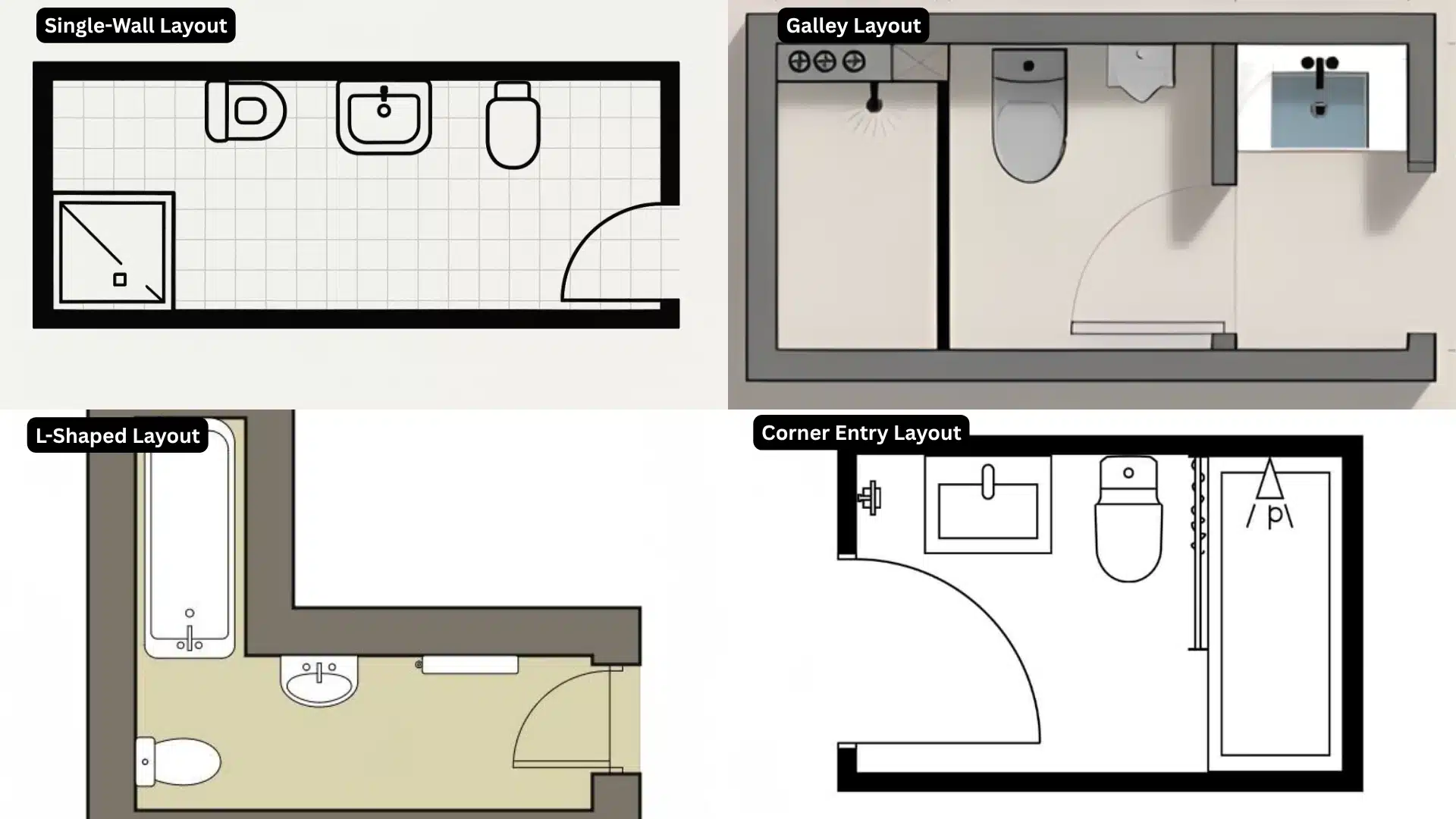
Starting with the right layout sets everything else up. Here are some approaches that work well in tight spaces.
Single-Wall Layout
Everything lines up along one wall: sink, toilet, and shower in a straight row.
This is the easiest option for very tight spaces. There’s only one path through the room, so traffic flows freely.
No fixtures block your way, and the opposite wall stays completely clear.
Galley Layout
Fixtures are split across two facing walls. One side holds the sink and toilet, the other holds the shower or tub.
This works well when you have a little more width to play with. The two-wall setup gives each fixture its own dedicated space without crowding.
L-Shaped Layout
Fixtures run along two connecting walls rather than a single straight line. The toilet or shower sits at the corner turn, while the sink stays near the entry.
This layout works best when one end of the bathroom has a bit of extra space.
Corner Entry Layout
Place the entry point at a diagonal corner of the bathroom. Both side walls stay fully free for fixtures and storage.
It feels less confined than a straight entry and gives the room a more open, usable flow throughout
Narrow Small Bathroom Layout With Tub
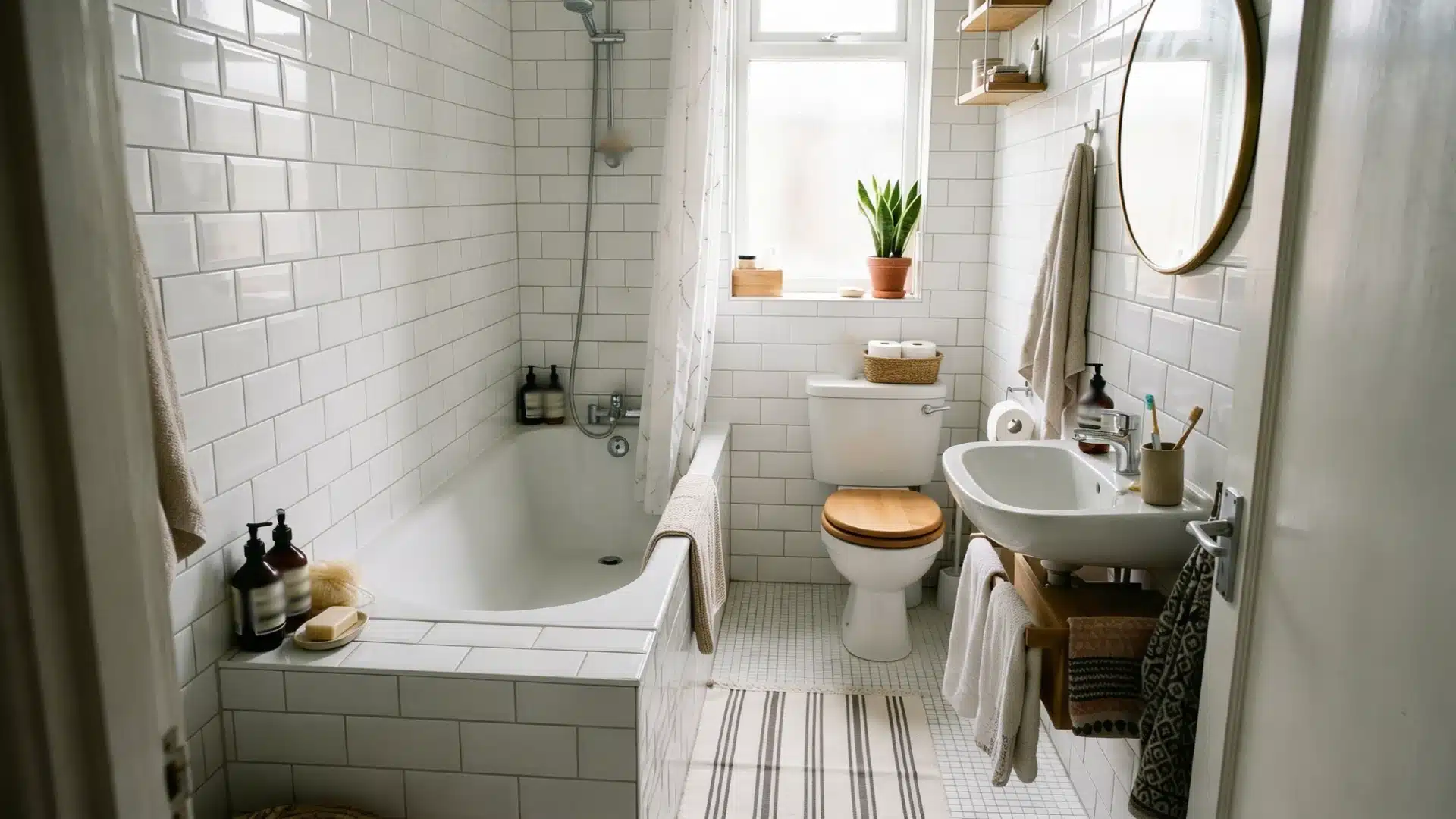
Fitting a tub into a narrow bathroom sounds tricky. But with the right placement and size, it works better than most people expect.
Place the Tub Along the Long Wall
The longest wall is your best option for a standard tub.
It keeps both ends of the bathroom clear and leaves room for a sink and toilet opposite.
Try a Compact Soaking Tub
Some soaking tubs start at just 48 inches long.
You still get a full bath experience without sacrificing the whole room to a single fixture. Worth considering seriously.
Add a Tub Surround With a Built-In Ledge
A tiled surround with a built-in ledge keeps shampoo, soap, and accessories within reach.
No separate shelf needed. The tub area stays clean and well-organized.
Combine Tub and Shower in One
One space, two functions. A tub-shower combo cuts down on fixtures and keeps the layout tight.
Use a sliding door or a simple curtain to contain water.
Position the Tub at the Far End
Push the tub to the far end. This creates a clear separation between the tub and vanity area.
The bathroom feels organized and easy to navigate.
Narrow Small Bathroom Layout With Shower
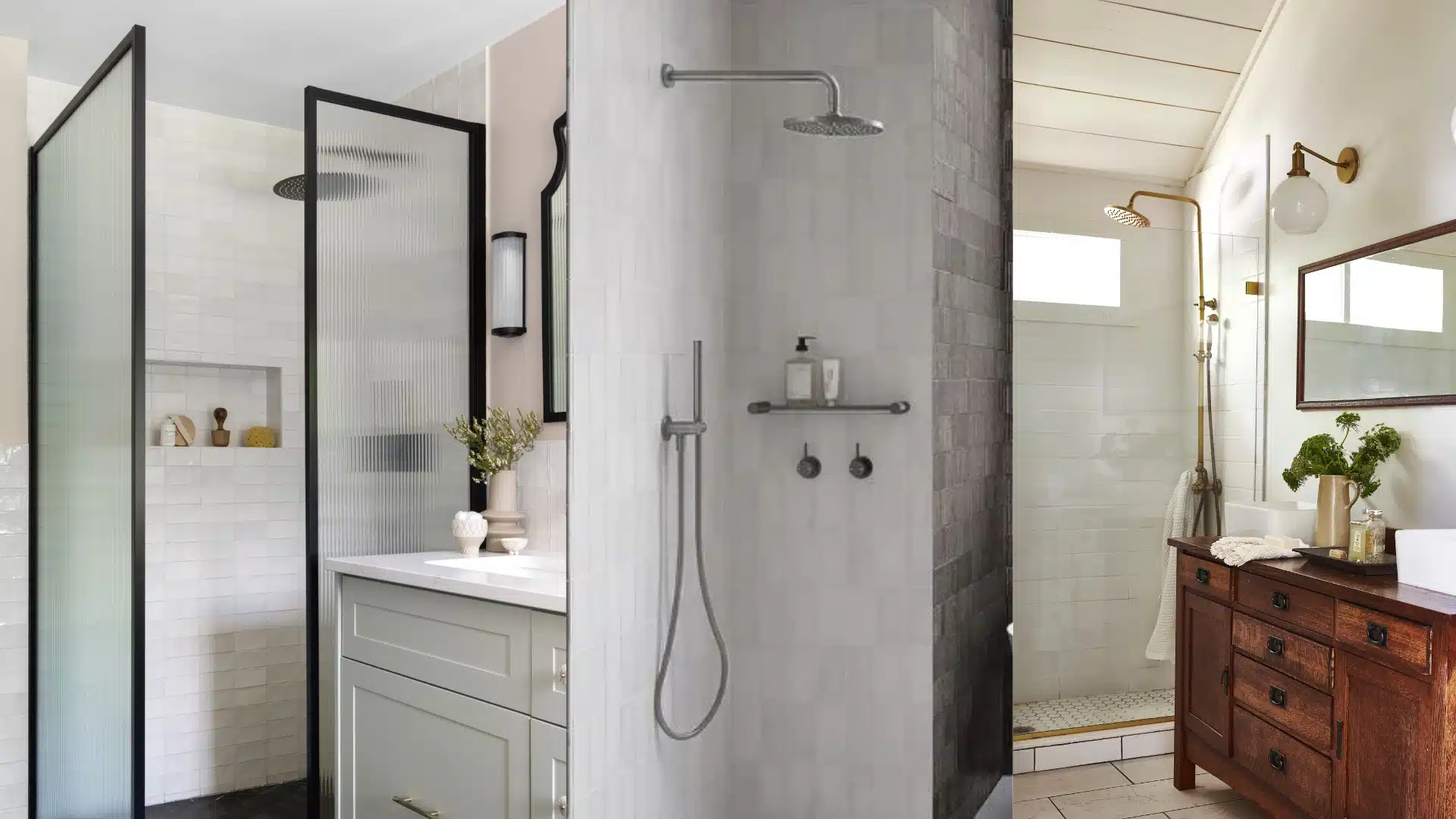
The shower is usually the biggest space-taker in a narrow bathroom. These ideas help you fit one in without making the room feel swallowed up.
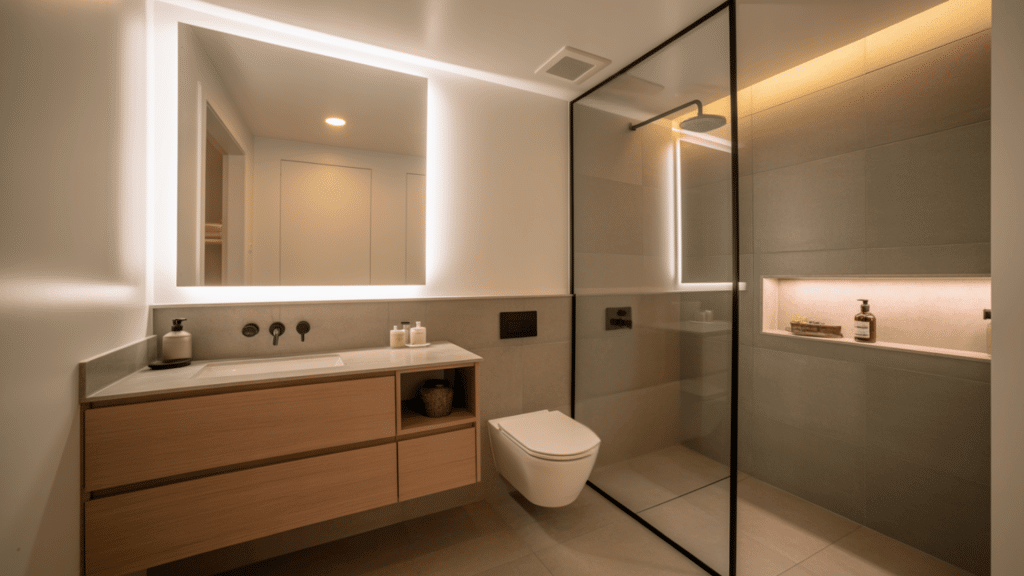
Use a Walk-In Shower
No door swing. No frame. Just clean lines and more visual space.
A doorless walk-in works well in tight spaces, and it’s best to mount the showerhead on the end wall for optimal results.
Go for a Narrow Shower Tray
A shower tray as slim as 27 inches can fit without eating up the whole room.
Pair it with a sliding glass panel. Simple, practical, and space-saving.
Add a Niche Inside the Shower
Cut a recessed shelf into the shower wall for bottles and soap. No extra floor space needed.
It keeps things tidy and the walls looking clean.
Install a Corner Shower
Tuck the shower into a corner at the far end. Use a curved or angled door.
This keeps the center of the bathroom free and easy to move through.
Use a Fixed Glass Panel
Skip the full enclosure. A single fixed glass panel keeps water contained while making the shower feel open.
The room instantly looks bigger and less cluttered.
Narrow Small Bathroom Storage Ideas
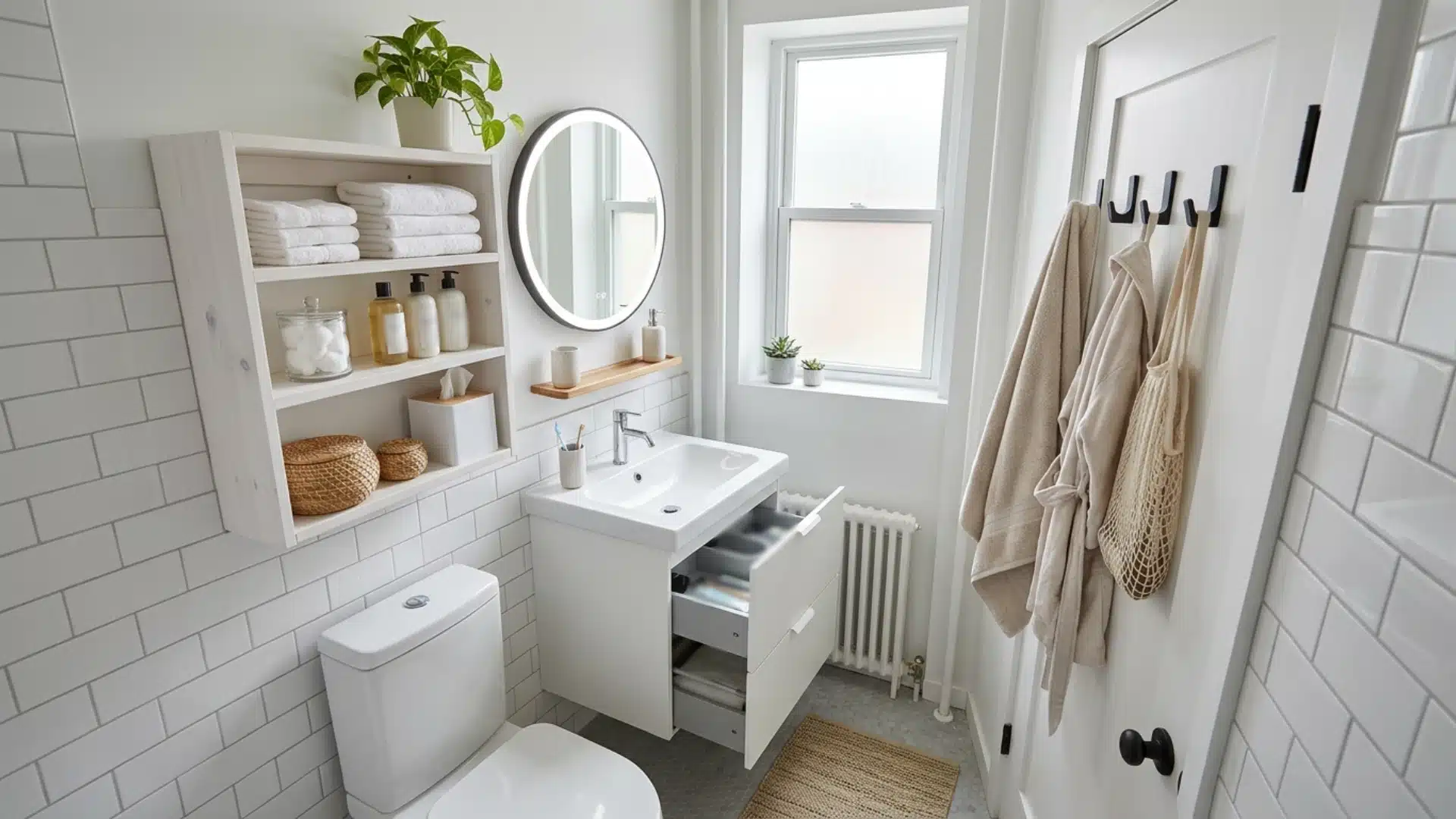
Storage is always a challenge. The right spots are already there; you just need to use them better.
Vertical Shelves: Tall, slim shelving units use wall space rather than floor space, without crowding the walkway.
Use the Space Above the Toilet: A slim over-toilet unit or floating shelves here can hold a surprising amount. It’s wasted wall space in most bathrooms; put it to work.
Add Drawer Units Under the Sink: Choose a wall-hung vanity with built-in drawers.
It keeps the floor visible, reduces clutter, and gives you proper storage right where you need it most.
Install Hooks on the Back of the Door: Towels, robes, bags, the back of the door handles them all.
A few hooks here can replace a whole towel rail, freeing up an entire wall.
Budget vs Premium Design Options
Here’s a quick breakdown of what budget and premium options look like side by side.
| Element | Budget Option | Budget Cost | Premium Option | Premium Cost |
|---|---|---|---|---|
| Shower Enclosure | Curtain rod with rings | $15–$40 | Frameless fixed glass panel | $400–$900 |
| Sink | Pedestal sink | $80–$150 | Wall-mounted vessel sink | $300–$700 |
| Storage | Open wire shelving unit | $20–$60 | Built-in recessed cabinetry | $500–$1,500 |
| Flooring | Vinyl plank tiles | $1–$3 per sq ft | Porcelain large-format tiles | $8–$20 per sq ft |
| Lighting | Single ceiling fixture | $20–$60 | Recessed LED downlights | $200–$600 |
| Mirror | Basic flat wall mirror | $25–$70 | Backlit framed mirror | $200–$500 |
| Toilet | Close-coupled standard toilet | $100–$250 | Wall-hung tankless toilet | $700–$1,800 |
| Shower Tray | Acrylic shower tray | $80–$200 | Wet room flush floor tray | $400–$1,000 |
| Taps & Fittings | Chrome basin mixer tap | $30–$80 | Matte black wall-mounted tap | $200–$600 |
| Ventilation | Standard exhaust fan | $20–$50 | Silent humidity-sensing fan | $150–$400 |
Flooring and lighting give you the best return on a tight budget. These two alone shift the whole room’s feel.
Smart Fixture Choices for Narrow Small Bathroom Layout
Designing a narrow bathroom can feel limiting at first, but the right fixture choices can completely change how the space functions.
Focusing on compact, space-saving elements simplifies creating an open, practical, and comfortable daily layout.
- A wall-hung toilet takes up less floor space than a standard one and makes cleaning easier.
- A corner sink fits into otherwise wasted space and works well in very tight entry areas.
- A sliding shower door never swings into the room, keeping the floor area completely clear.
- A compact vanity unit under 18 inches deep provides storage without encroaching on the walkway.
- A tankless toilet has a slimmer profile and sits closer to the wall than a standard model.
- A fold-down shower seat tucks flat when not in use, adding comfort without taking up permanent space.
- A ceiling-mounted showerhead keeps wall space free and works well in narrow shower enclosures.
These thoughtful fixture upgrades help maximize both movement and usability.
With the right selections, even the narrowest bathroom can feel organized, efficient, and surprisingly comfortable.
Key Takeaway
A narrow small bathroom layout is a problem, and every problem has a solution.
You now have the fixtures, the dimensions, the storage ideas, and the budget options to work with. The hard part isn’t the space. It’s knowing where to start.
Pick one area that bothers you most and fix that first.
A better door swing. A slimmer sink. A shelf above the toilet. Small changes add up fast.
Your bathroom doesn’t need to be big to work well. It just needs a plan that fits the space you actually have.
Frequently Asked Questions (FAQ’s)
1. Is 4 Feet Too Narrow for a Bathroom?
No, a 4-foot-wide bathroom can work well with the right fixture layout.
2. What Does a 0.5 Bathroom Look Like?
A half bath holds just a toilet and a sink, nothing more.
3. Is 5X8 Too Small for a Bathroom
Not at all; a 5×8 bathroom comfortably fits a toilet, sink, and shower.
4. What is the Narrowest a Bathroom Can Be?
Most building codes allow a minimum bathroom width of around 36 inches.
5. What is the Most Common Narrow Bathroom Design Mistake?
Choosing oversized fixtures that eat up floor space and block natural movement.