
Ever slammed a door and wondered why it feels so solid?
Most homeowners pick doors based on looks alone. They focus on color, style, and design. But people miss out that the thickness of a door matters just as much.
A thin door won’t keep out noise. It won’t hold up against the weather. And it definitely won’t last long.
The right door thickness affects your home’s safety, energy bills, and peace of mind. Standard door thickness varies based on where you use it.
Interior doors differ from exterior ones, and residential doors aren’t the same as commercial ones.
Understanding Standard Door Thickness
Door thickness is the measurement from one face of the door to the other. It’s measured in inches or millimeters.
Most people don’t think about it until they need to replace a door or install new hardware. But it affects how well hardware fits, whether the door sits properly in the frame, and how long it will last.
Standard Door Thickness in a Residential Home
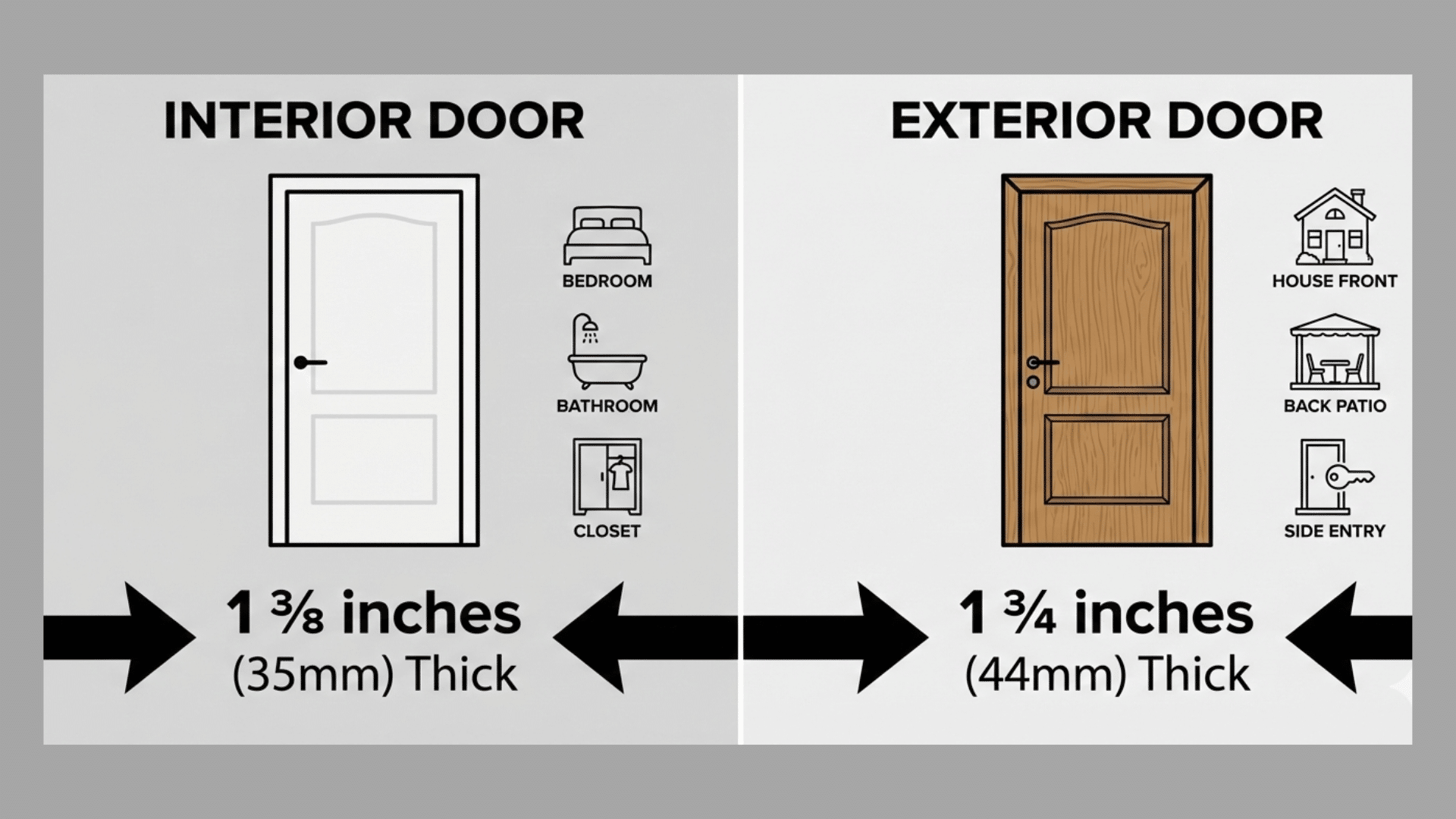
Residential homes use two main standards.
Interior doors measure 1⅜ inches (35mm) thick. This works for bedroom doors, bathroom doors, and closet doors.
Exterior doors measure 1¾ inches (44mm) thick. Front doors, back doors, and side entries all use this measurement for better insulation and security.
Standard Door Thickness in a Commercial Building
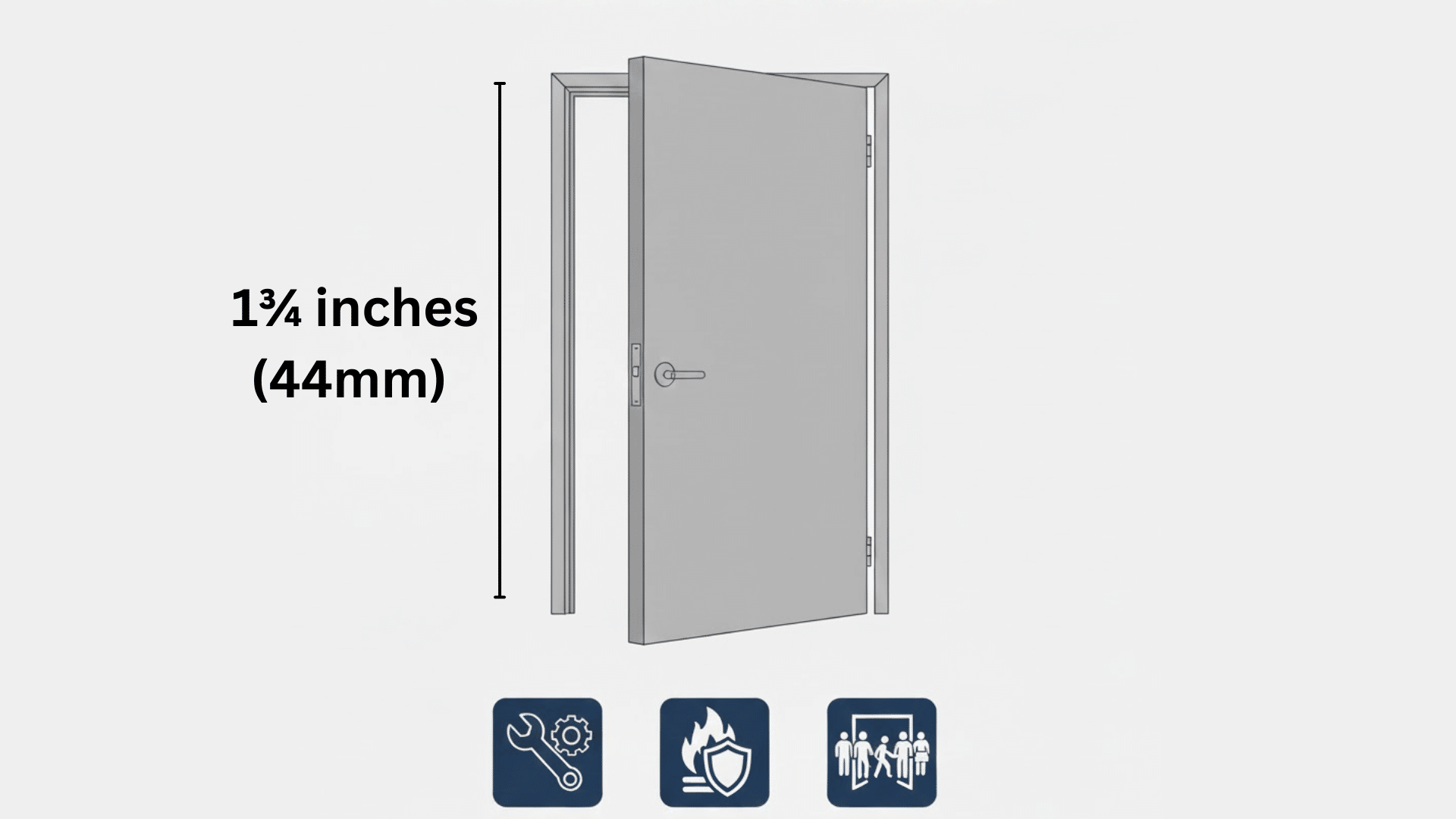
Commercial spaces typically use thicker doors than homes.
The most common thickness is 1¾ inches (44mm) for office doors, retail entrances, and restaurant doors.
High-traffic areas and fire-rated doors often measure 2 inches or more. Some security doors can reach 2¼ to 3 inches, depending on building code requirements.
Door Thickness by Type
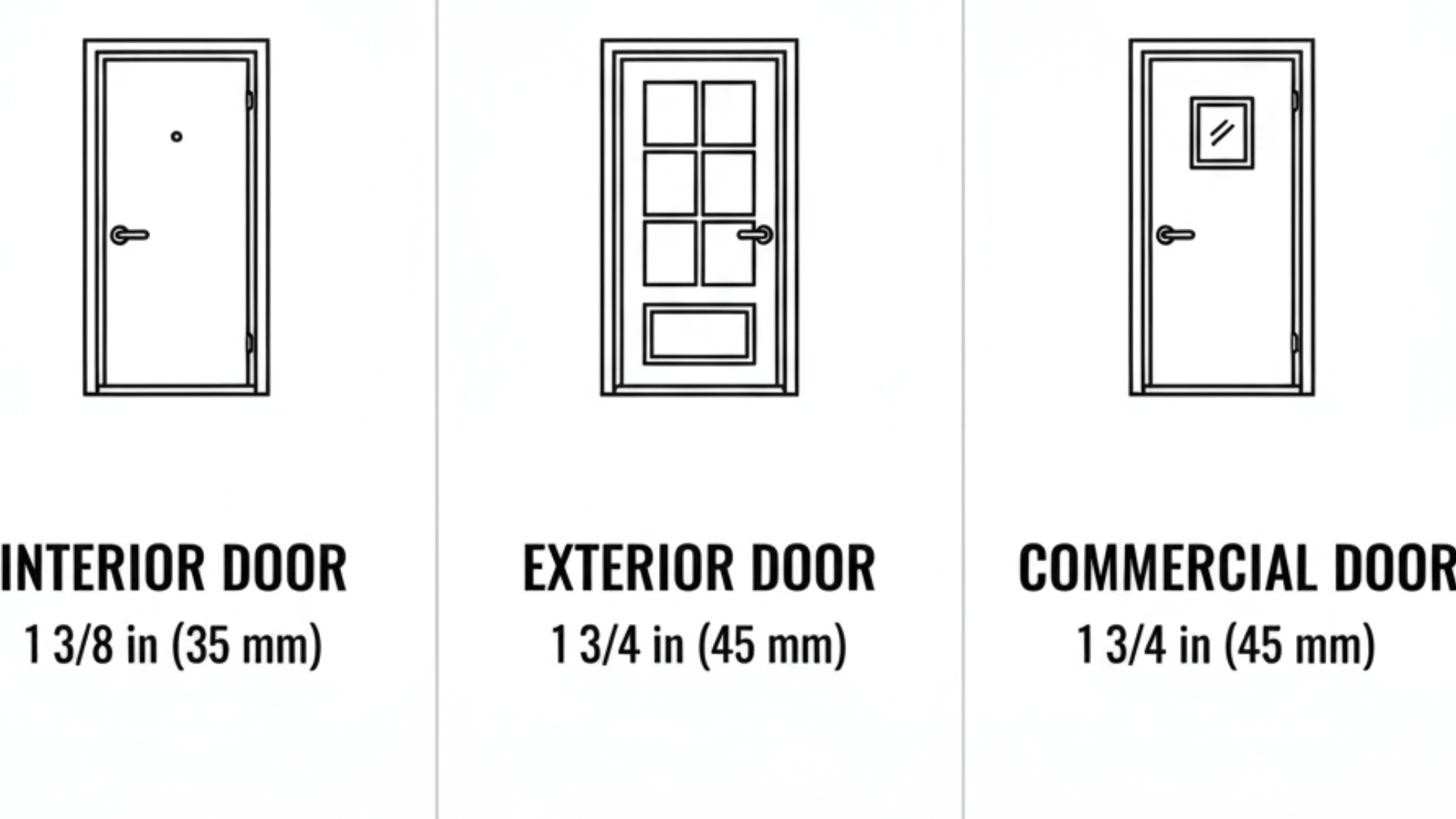
These are the standard door thicknesses for different door requirements.
Interior Doors
Interior doors are the thinnest option. They measure 1 3/8 inches (35mm) thick in most homes.
These doors work for bedrooms, closets, and bathrooms. The lighter weight makes them easy to open and close. They don’t need heavy-duty hinges either.
- Standard interior door width is 30 or 32 inches. Height typically reaches 80 inches. The 1 3/8-inch thickness pairs with these dimensions.
- Hollow-core interior doors are common. They cost less and weigh very little. Solid core options offer better sound blocking but stay the same thickness.
Exterior Doors
Exterior doors need more strength. They measure 1 3/4 inches (45mm) thick as standard.
This thickness handles weather changes. It keeps the rain and wind out. The extra material also improves home security.
Most exterior doors measure 36 inches wide. Height matches interior doors at 80 inches. The 1 3/4-inch thickness works with these standard sizes.
Commercial Doors
Commercial doors match exterior door thickness at 1 3/4 inches (45mm). Some go thicker for specific needs.
Office buildings and stores use these doors daily. They face more wear than home doors. The thickness helps them last longer.
Commercial door width often reaches 36 inches or more. Height can go up to 84 inches for larger openings. Fire doors in commercial spaces can reach 2 inches thick. Safety codes require this extra material for fire protection.
Door Thickness by Material Type
The material affects how thick a door needs to be.
1. Wood Doors: Wooden doors typically measure 1 3/8 inches for interiors. Exterior wood doors go up to 1 3/4 inches. Solid wood needs this thickness for strength.
2. Steel Doors: Steel doors measure 1 3/4 inches thick. The metal skin wraps around a foam core. This combination provides security and insulation.
3. Fiberglass Doors: Fiberglass matches steel at 1 3/4 inches. The material resists weather damage. It holds up better than wood in wet conditions.
4. Composite Doors: These doors range from 1 3/8 to 1 3/4 inches. The mix of materials determines the final thickness. They blend durability with cost savings.
5. Glass Doors: Glass doors vary widely. Sliding glass doors can be thinner. But the glass itself often measures 1/4 inch or more for safety.
6. Aluminum Doors: Commercial aluminum doors typically measure 1 3/4 inches. The frame holds glass panels. These work well for storefronts.
Measuring Door Thickness the Right Way
Follow these simple steps for accurate measurements.
Step 1: Access the Door Edge
Open the door slightly to expose the edge. This makes measuring easier and more accurate.
Step 2: Position the Tape Measure
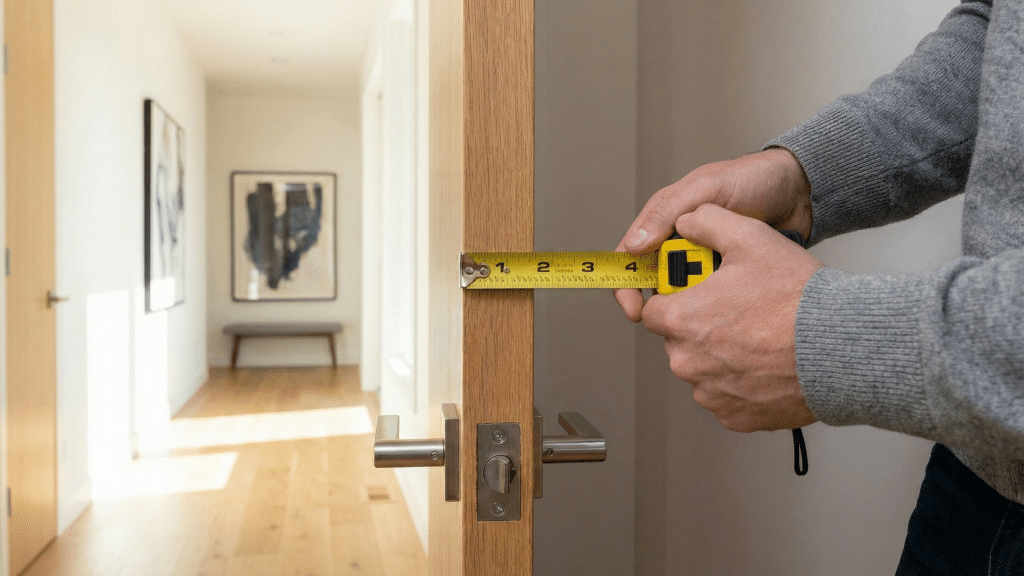
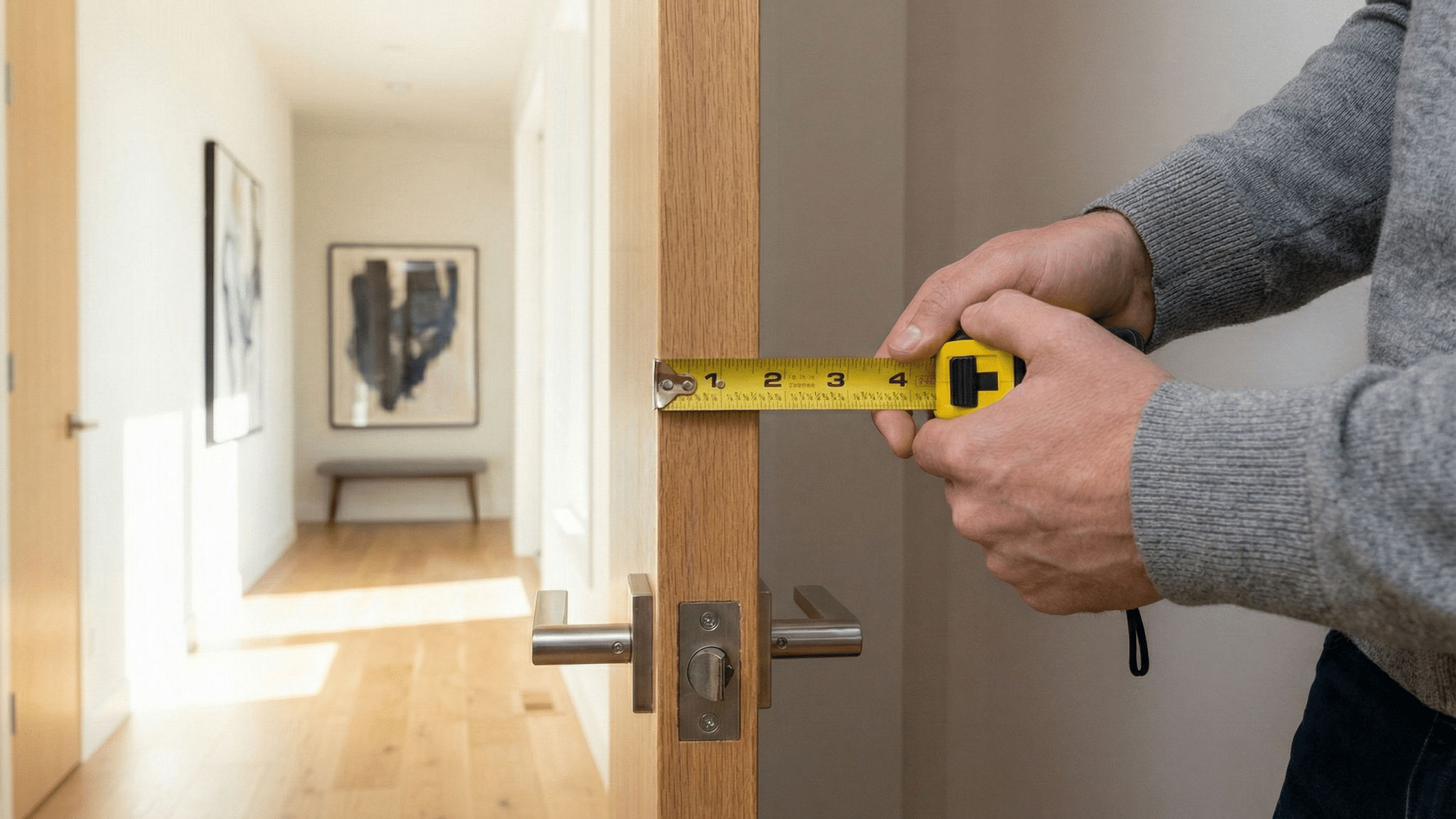
Place a tape measure flat against one face of the door. Extend it straight across to the opposite side. Keep it perpendicular, not angled. Tilted measurements give false readings.
Step 3: Read and Record
Check where the tape meets the other face. Read the measurement carefully. Write it down right away so you don’t forget.
Step 4: Verify the Reading
Measure at two or three different spots. Try the top, middle, and bottom. Most doors stay consistent throughout. But older doors might vary slightly.
Step 5: Handle Beveled Edges
Some doors have angled or beveled edges. Always measure at the thickest point. This gives the true door thickness, not the tapered edge.
Signs Your Door Thickness is Wrong
The following are the warning signs to watch for. These signs mean the door needs adjustment or replacement.
- Gaps around the frame: Light shows through the edges when the door is closed.
- Hinges don’t fit properly: Hardware sits loose or won’t install correctly.
- Locks won’t align: The latch doesn’t line up with the strike plate.
- Door rattles constantly: It shakes in the frame even when latched.
- Excessive noise transfer: Sounds pass through easily from room to room.
- Warping or bending: The door doesn’t stay flat and straight.
- Drafts come through: Air flows constantly around the door edges.
Choosing the Right Door Thickness for Your Needs
Getting the right door thickness prevents problems later.
Match the Location
Use 1 3/8-inch doors for interior rooms. Bedrooms and closets don’t need more. Exterior doors need 1 3/4 inches for weather protection and security.
Consider Noise Levels
Thin doors let sound through easily. Bathrooms and home offices benefit from solid-core doors. They block noise better at the same thickness.
Think About Climate
Cold regions need thicker exterior doors for insulation. Hot climates also benefit from the extra thickness. It keeps cool air inside.
Check Building Codes
Fire-rated doors have specific thickness requirements. Some areas require thicker doors between the garage and the house. Commercial spaces have stricter rules, too.
Plan for Hardware
Door thickness affects what locks fit. Standard thickness works with most hardware. Verify deadbolt compatibility before buying.
Conclusion
Standard door thickness isn’t just a minor detail. It affects security, noise control, and energy efficiency.
Interior doors work well at 1 3/8 inches. Exterior doors need 1 3/4 inches for better protection. Each material has its own benefits, too.
Measure carefully before buying replacements. Check for signs like gaps, rattling, or poor sound blocking. These mean something’s off.
Getting the right thickness saves money and frustration. It ensures hardware fits, and the door lasts longer.