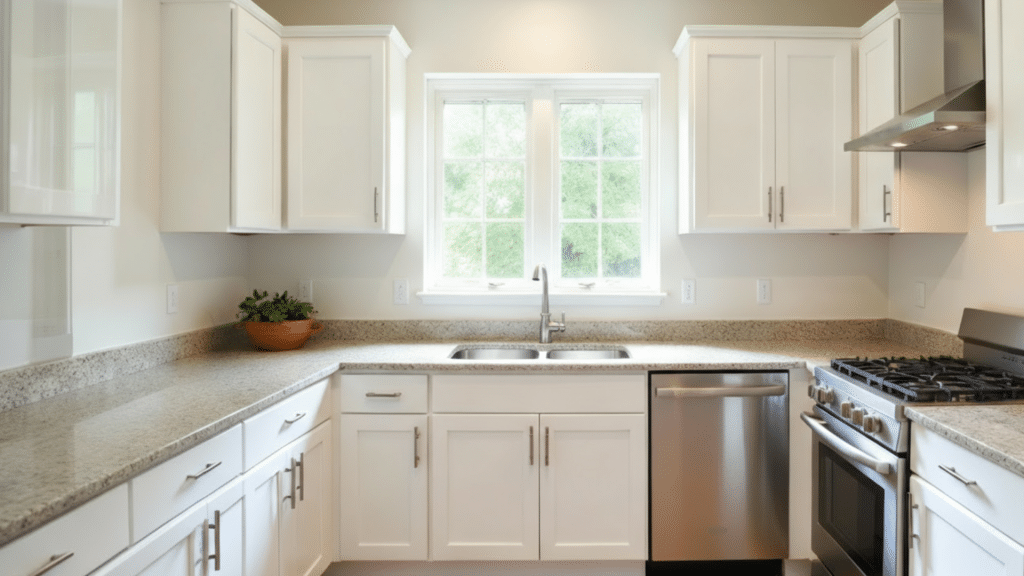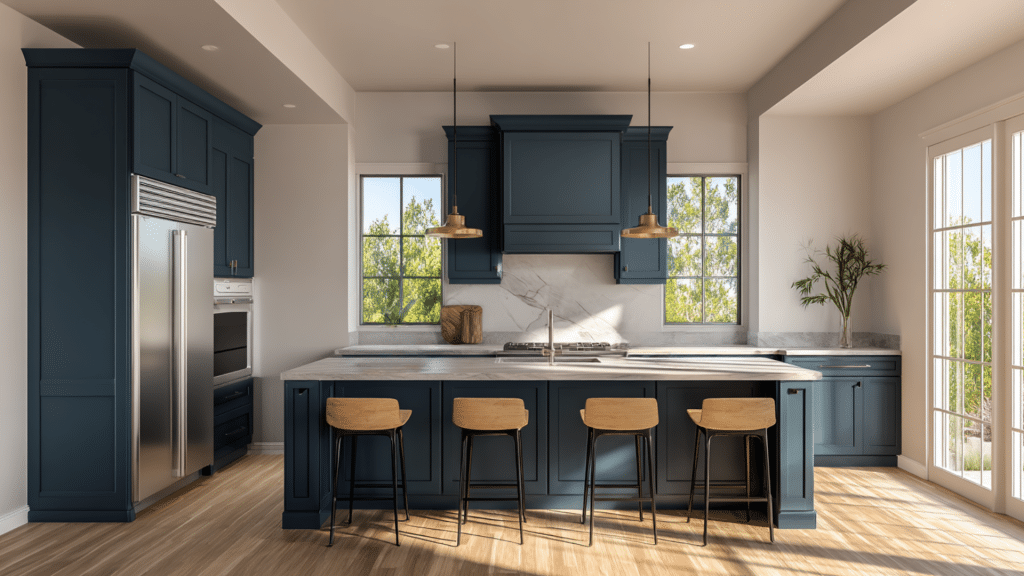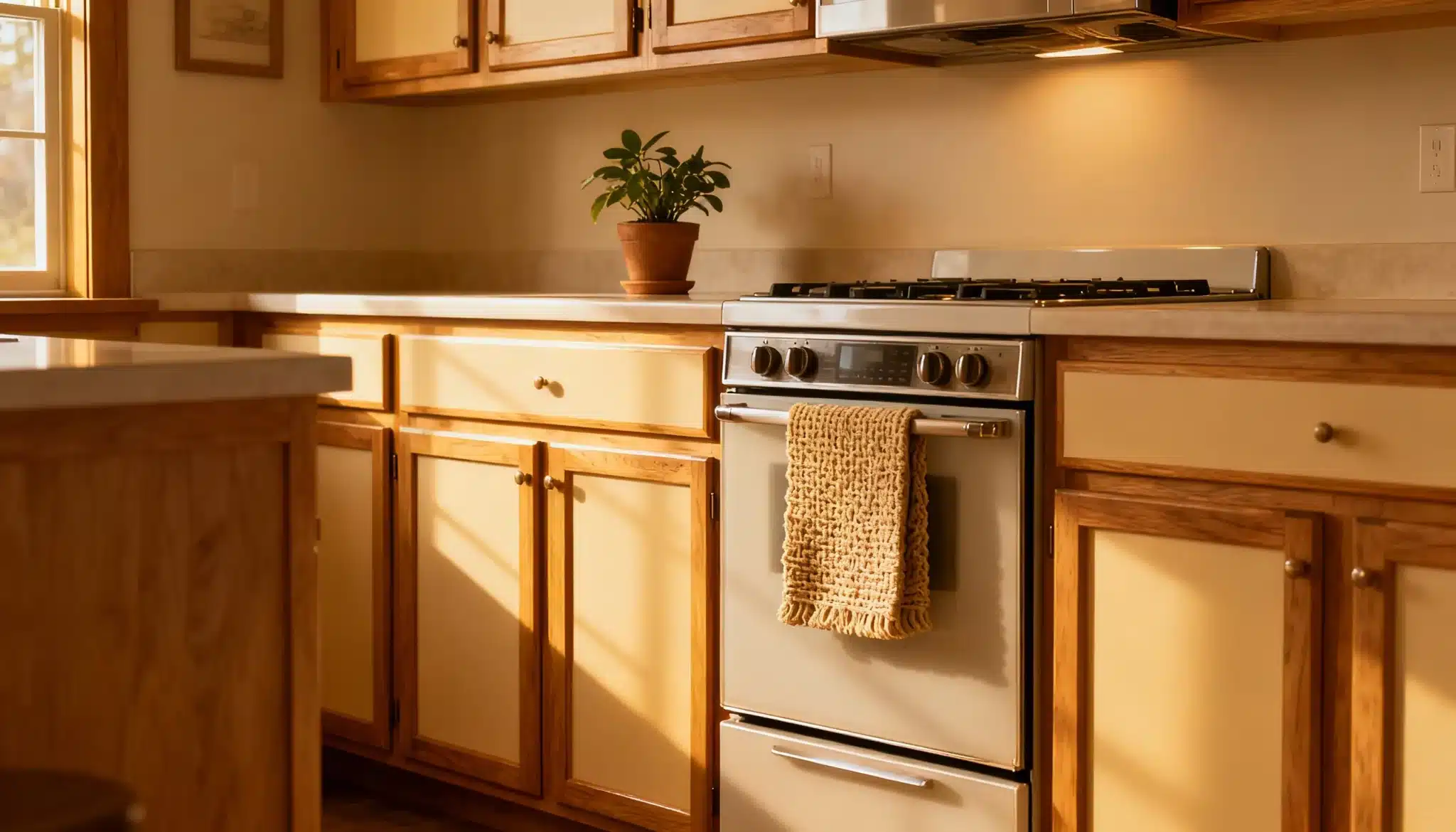

Cabinet shopping is the most stressful part of kitchen shopping.
And once you enter the store, a question comes in, “Do you want a face frame cabinet or frameless?”
People have no idea what it actually means, and neither did I the first time I renovated my kitchen. It’s not only for the kitchen aesthetics but also for functionality.
So which one is actually worth it? That depends on your kitchen, your budget, and how it makes your life easier.
Let’s get into it.
What is a Face Frame Cabinet?
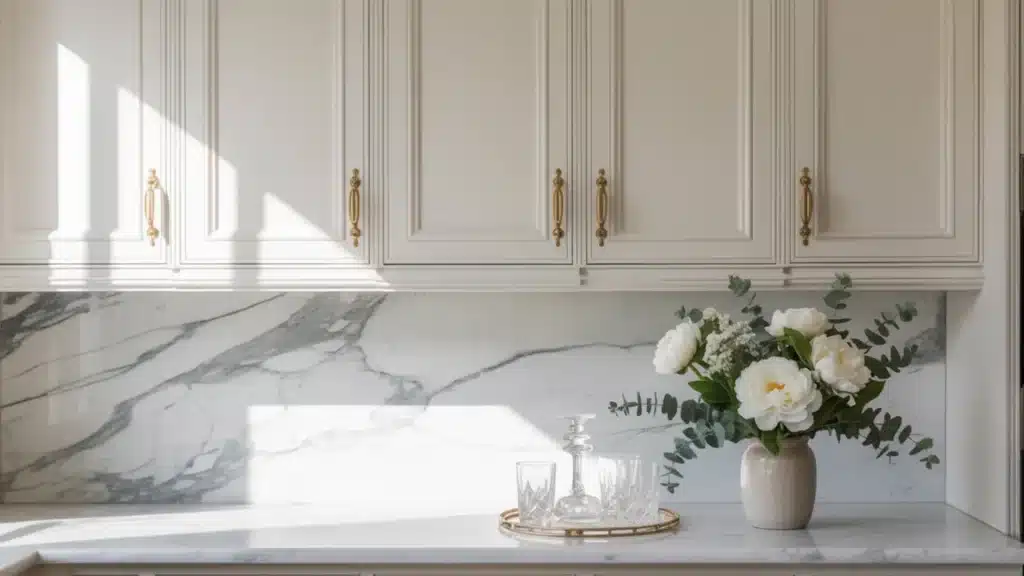
A face-frame cabinet has a solid wood frame composed of vertical stiles and horizontal rails attached to the front of the cabinet box.
That frame is what you see when you look at the cabinet head-on.
It gives the cabinet its finished look, adds structural support to the front of the box, and, of course, the aesthetic is amazing.
The doors and drawers either sit within that frame or overlap it slightly, depending on the hinge style.
They use traditional overlay or inset doors, which give them that classic, built-in look.
According to the National Kitchen and Bath Association, face frame construction has been the dominant cabinet style in North America for decades, and most custom and semi-custom cabinet lines still default to it today.
How is a Frameless Cabinet Different?
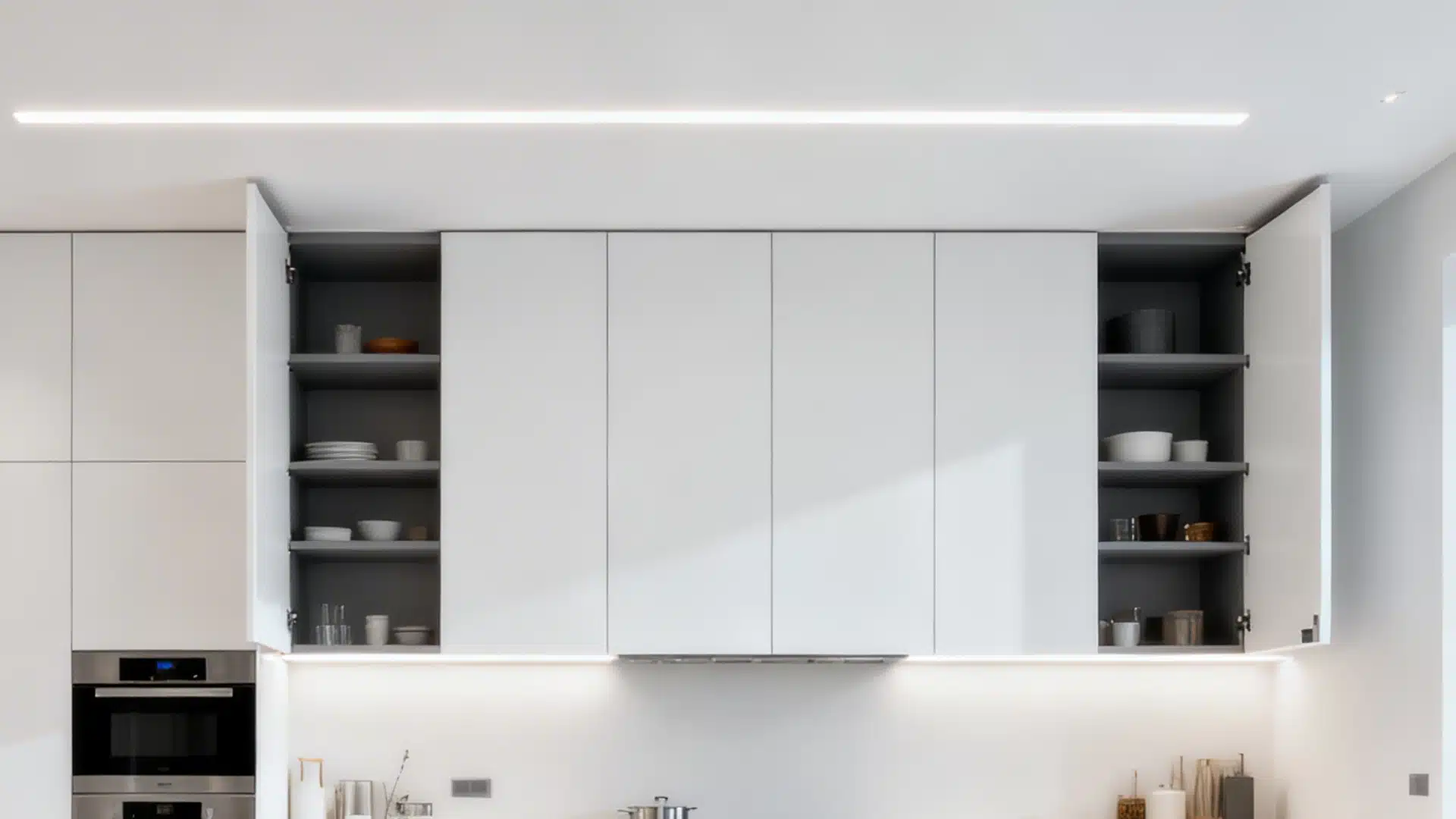
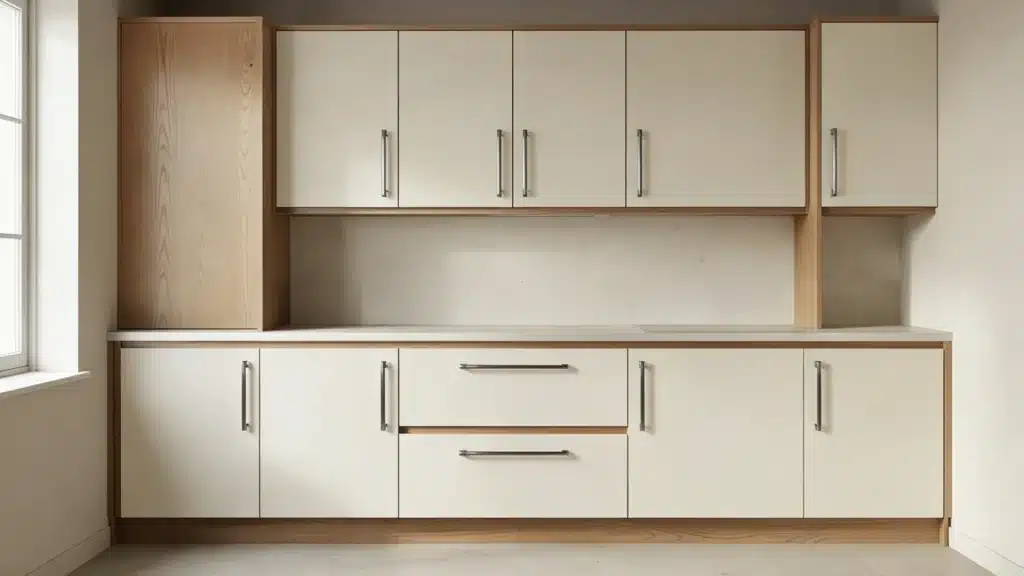
A frameless cabinet, which is also called a European-style cabinet, skips the wood frame entirely.
The doors and drawers attach directly to the cabinet box itself, which means the full interior width is usable storage space.
No frame eating up the space. And it’s functional. It gives a cleaner, more minimal look with flush doors that sit at the edge.
Sleek, handleless aesthetic you see in many modern and contemporary kitchens? Almost always frameless.
Frameless cabinets became popular in Europe after World War II as an efficient, resource-saving construction method.
They caught on in the U.S. later, mostly through the rise of modern kitchen design.
Structurally, frameless cabinets rely on the box itself for rigidity, making panel thickness more important than in face-frame construction.
Quick Overview Table: Face Frame vs Frameless Cabinets
| Feature | Face Frame Cabinet | Frameless Cabinet |
|---|---|---|
| Front Structure | Solid wood frame on the front | No frame, doors attach to the box directly |
| Interior Access | Slightly narrower due to the frame | Full-width access, more usable space |
| Door Style | Overlay, inset, or partial overlay | Full overlay only |
| Look and Feel | Classic, traditional, built-in | Modern, sleek, minimal |
| Hinge Type | Standard exposed or concealed hinges | Concealed European hinges |
| Structural Support | The frame adds rigidity to the front | Box panels carry all the structural load |
| Cost | Slightly higher for inset styles | Generally more affordable at mid-range |
| Durability | Very durable with a solid wood frame | Durable if the panel thickness is adequate |
Pros and Cons of a Face Frame Cabinet
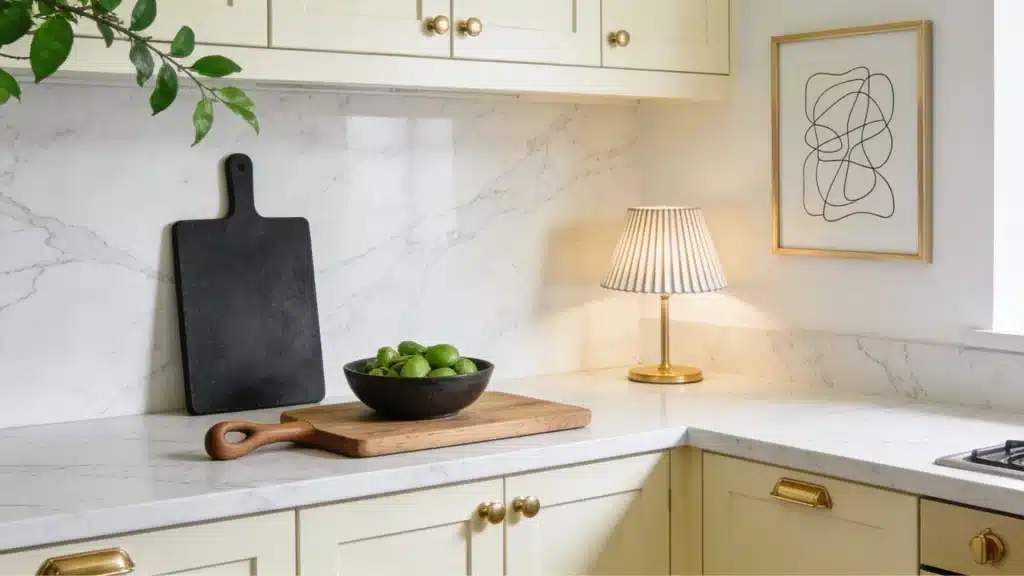
Face frame cabinets have been the go-to choice in American kitchens.
They are the best examples of craftsmanship and design flexibility, hard to find, especially in traditional, transitional, or farmhouse-style spaces.
But it does come with a few setbacks as well.
Pros
- The solid wood frame gives face frame cabinets a built-in, furniture-like appearance.
- Face frame construction supports overlay, partial overlay, and inset doors, making it flexible.
- The wood frame adds structural rigidity to the front of the cabinet.
- It gives installers more room to scribe and fit cabinets against walls, making it a practical choice for kitchens that are not perfectly square.
- Most U.S. cabinet manufacturers, from stock to fully custom lines, build in face frame style, so options are plentiful across every budget.
Cons
- The frame reduces the usable width of the interior.
- Inset face frame cabinets are expensive.
- The added wood frame increases the total weight of the cabinet.
- It can feel visually very heavy if your kitchen aesthetic is minimal.
Pros and Cons of a Frameless Cabinet
Frameless cabinets have become increasingly popular, especially among homeowners with modern or minimalist kitchen designs.
The clean lines and efficient use of space make them a compelling option.
Pros
- Without a frame blocking the opening, the full width of the cabinet box is accessible.
- The door style gives it a clean look and is best suited to contemporary and European-inspired kitchens.
- Concealed European hinges used in frameless cabinets are easy to install and adjust.
- Without the added material and labor of a face frame, it becomes much more affordable.
- The full-width opening makes it easier to fit pull-out organizers, drawer inserts, and other interior accessories.
Cons
- Frameless cabinets rely entirely on the box for structure, so walls and floors need to be reasonably level and square.
- Full overlay is basically the only door style here, which limits design flexibility compared to face frame.
- Since there is no frame adding rigidity, the cabinet box itself needs to be built from thicker, higher-quality panels to remain sturdy over time.
- In kitchens with a classic or transitional design, it can look out of place without careful styling.
- Without a frame to cover them, the edges of the cabinet box are exposed.
So, Which one to go For?
Choose face frame if your kitchen leans traditional, you want inset doors, or your walls are slightly out of square – the frame gives you wiggle room during installation.
Choose frameless if the design is modern, storage efficiency matters, and the budget is tighter.
Neither is objectively better. The right cabinet is the one that fits the kitchen you actually have.
Conclusion
A Face frame cabinet makes your space look classy and sturdy, and they are customizable.
And you can easily find it in American kitchens.
Frameless cabinets bring the clean lines, extra storage space, and modern edge that a lot of homeowners are genuinely drawn to right now.
Pick based on the space, the budget, and what feels right when standing in the kitchen, imagining it finished.
And if you’re still unsure, consulting a certified kitchen designer would be perfect.
Frequently Asked Questions (FAQs)
1. What Cabinet Color is Outdated?
All-white and gray cabinets are outdated. Many homeowners are now moving toward warmer, more character-driven tones.
2. What Color is Replacing Gray?
Warm neutrals like greige, taupe, and soft sage are replacing gray in a big way.
3. What is the Most Popular Cabinet Style Right Now?
Shaker-style cabinets remain the most popular choice across the U.S.