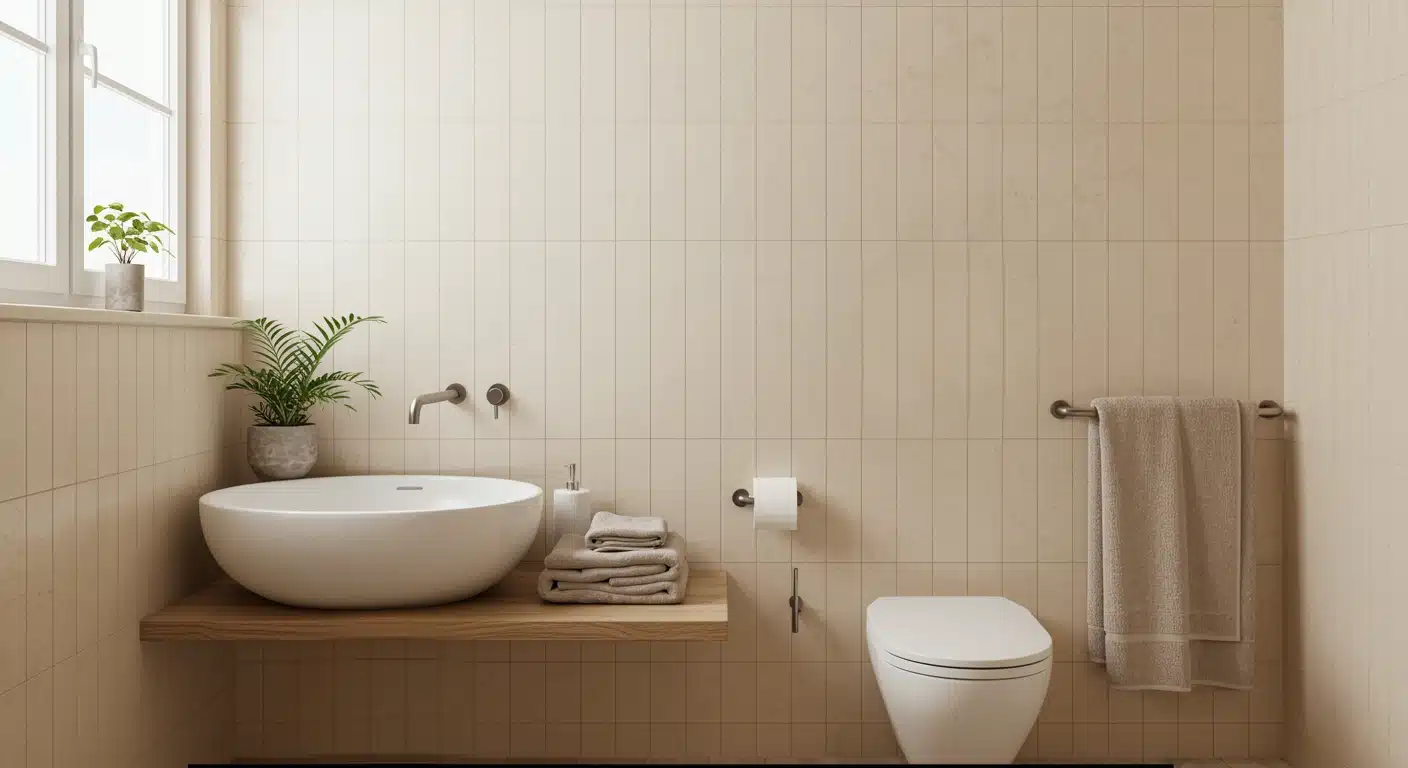

Bathroom trends always shift, but some, like the Porcelain shower walls, are always there.
Do you think porcelain shower walls are still relevant?
Actually, yes, they are. They tolerate the daily heat, steam, hard water, and cleaning products, all before 9 a.m. And when it comes to the Designers and homeowners, this trend is not going away.
The reasons you ask?
It’s a combination of durability, low maintenance, and a visual range that ceramic and stone can’t match on an everyday basis.
What is a Porcelain Slab?
A porcelain slab is a large-format tile made from dense, fired clay mixed with feldspar and other minerals, pressed and kiln-fired at extremely high temperatures.
And the outcome is a surface that’s harder, less porous, and more uniform than standard ceramic tile. That’s interesting, to be very honest.
Traditional tiles typically max out at 24 inches. And porcelain slabs? They can run anywhere from 48 inches to over 120 inches in length.
That size difference is what makes them so appealing for shower walls: fewer cuts and fewer grout lines.
Most slabs measure between 6mm and 12mm thick, making them light enough to work on walls.
Brands like Laminam, Neolith, and Atlas Concorde have pushed this format into mainstream renovation territory.
And Why are Porcelain Slabs Used in the Shower Wall?
Contractors and designers started recommending Porcelain slabs because they solve problems that the smaller tiles and other materials cannot.
The moisture infiltration, grout maintenance, and visual continuity, Porcelain slabs do all of it.
It is the perfect combination of performance and aesthetics, especially in a space that gets used every single day.
1. Zero Water Absorption
Porcelain has a water absorption rate of less than 0.5%, which is much lower than that of others.
In a shower, that means moisture stays on the surface rather than working its way into the material over time.
2. Minimal Grout Lines
Large-format slabs reduce the number of joints in a shower enclosure. Fewer grout lines mean fewer places for mold, mildew, and soap residue to settle in.
And hence reduces cleaning difficulties.
3. Durability
Porcelain shower walls resist scratches, staining, and surface wear far better than ceramic or natural stone.
The hardness comes from the firing process, which makes the material dense enough to withstand decades of use without degrading.
4. Low Maintenance
Unlike natural stone, porcelain slabs don’t require sealing. A wipe-down with a non-abrasive cleaner is all it takes to keep the surface looking clean.
5. Design Flexibility
Porcelain slabs are manufactured in finishes that replicate marble, travertine, concrete, and wood.
They come in matte, polished, and satin finishes, giving homeowners a wide range of aesthetic directions to work with.
But Porcelain Shower Walls Have Some Downsides
Porcelain slabs are hard to beat due to their efficiency, performance, and flexibility.
- Cost: Porcelain slabs costs are expensive than ceramic tile, both in material and labor costs.
- Installation: Requires experienced installers since mistakes can be expensive and difficult to reverse.
- Weight: Thicker slabs add considerable load to wall substrates, which may need reinforcement.
- Limited DIY Scope: Cutting and handling large slabs without professional tools risks cracking the material.
- Repair Difficulty: Matching a damaged slab after installation is complicated.
So, How Much do Porcelain Slabs Cost?
Porcelain slabs aren’t cheap. It can make some homeowners rethink their decisions, but the cost is worth it and makes so much sense.
| Cost Category | Range | Notes |
|---|---|---|
| Mid-Range Material | $10 – $30 per sq ft | Covers most standard porcelain slab options |
| Premium Material | $50 – $100 per sq ft | Brands like Neolith and Laminam, specialty finishes |
| Installation Labor | $10 – $40 per sq ft | Varies by slab size, wall prep, and location |
| Total (Mid-Range, ~60 sq ft) | $1,500 – $4,500 | Fully installed, average shower enclosure |
| Total (Premium, ~60 sq ft) | $8,000 – $10,000+ | Complex installation, high-end slab selection |
Ceramic Tiles vs Porcelain Shower Slabs
Both materials get used in showers, but they aren’t equals. Ceramic tiles aren’t a bad choice if you’re on a tight budget, but the performance gap becomes obvious, specifically in a shower.
The high moisture exposure, daily cleaning, and steam buildup put pressure on every weak point the ceramic has.
| Feature | Ceramic Tiles | Porcelain Slabs |
|---|---|---|
| Water Absorption Rate | 3%-7% | Less than 0.5% |
| Grout Lines | Many | Minimal to none |
| Durability | Moderate | High |
| Scratch Resistance | Low to moderate | High |
| Maintenance | Regular grout cleaning is required | Wipe-down only, no sealing |
| Requires Sealing | Sometimes | No |
| Weight | Light | Moderate to heavy |
| Cost | Budget-friendly | Mid to high range |
| Installation Complexity | DIY-friendly | Requires professional installation |
| Lifespan | 10-20 years | 30+ years |
How to Clean the Porcelain Shower Walls?
Porcelain is easy to maintain, but a few habits can help you keep it for the long term.
Daily
After each shower, a quick squeegee or wipe-down prevents hard water spots and soap film from building up on the surface.
It takes thirty seconds and saves a lot of scrubbing later.
Weekly
Use a pH-neutral, non-abrasive cleaner with a soft cloth or sponge.
Avoid anything with bleach, vinegar, or acidic ingredients; these won’t damage the porcelain itself, but they can gradually break down the grout.
Monthly
Check the grout lines and sealant around fixtures for any early signs of discoloration or cracking.
Catching buildup early is far easier than removing it once it’s set.
A few things to avoid entirely is using steel wool, abrasive scrub pads, and high-pressure steam cleaners aimed directly at grout joints. Porcelain shower walls don’t need aggressive cleaning.
Final Thoughts
See, not every bathroom style is popular, but Porcelain shower walls are not the one to go away anytime soon.
Yes, the upfront cost stings a little, but they’re efficient.
Yes, you’ll need a professional installer who knows what they’re doing. But once those slabs are up, you’re set for decades.
Whether you’re mid-renovation or just deep in a Pinterest rabbit hole at midnight, porcelain slabs for shower walls are worth serious consideration.
Frequently Asked Questions (FAQs)
1. What Tile Colors Make a Room Look Bigger?
Light colors like white, cream, and soft gray reflect more light, making a space feel larger and more open.
2. Is Dawn Dish Soap Safe for Porcelain Tile?
Yes, diluted Dawn dish soap is safe for cleaning porcelain tile. It’s gentle enough to lift grease and soap scum without damaging the surface.
3. Which is Better for Shower Walls, Porcelain or Quartz?
Quartz is harder, more scratch-resistant, requires no sealing, and holds up better against prolonged moisture and daily temperature fluctuations.