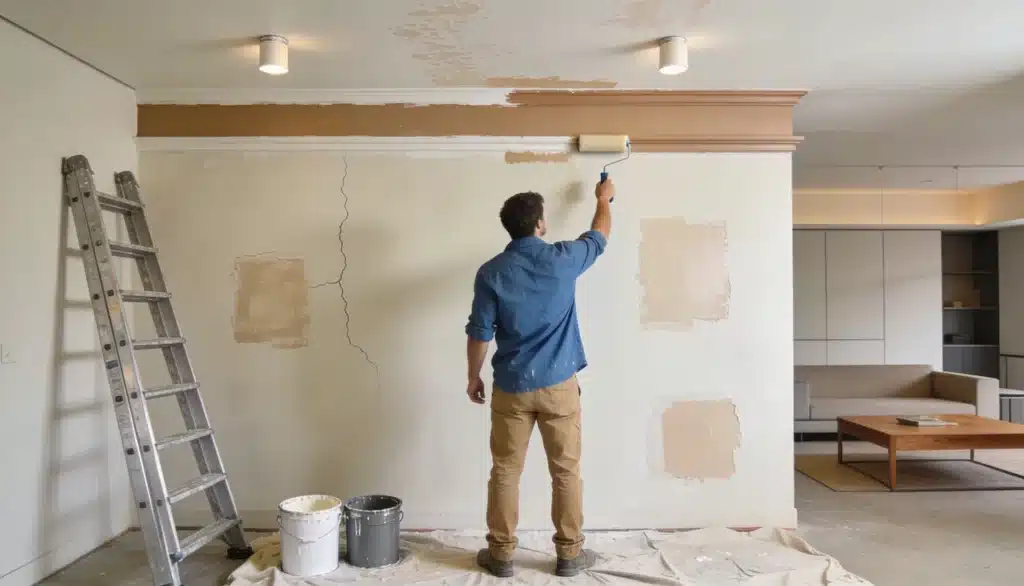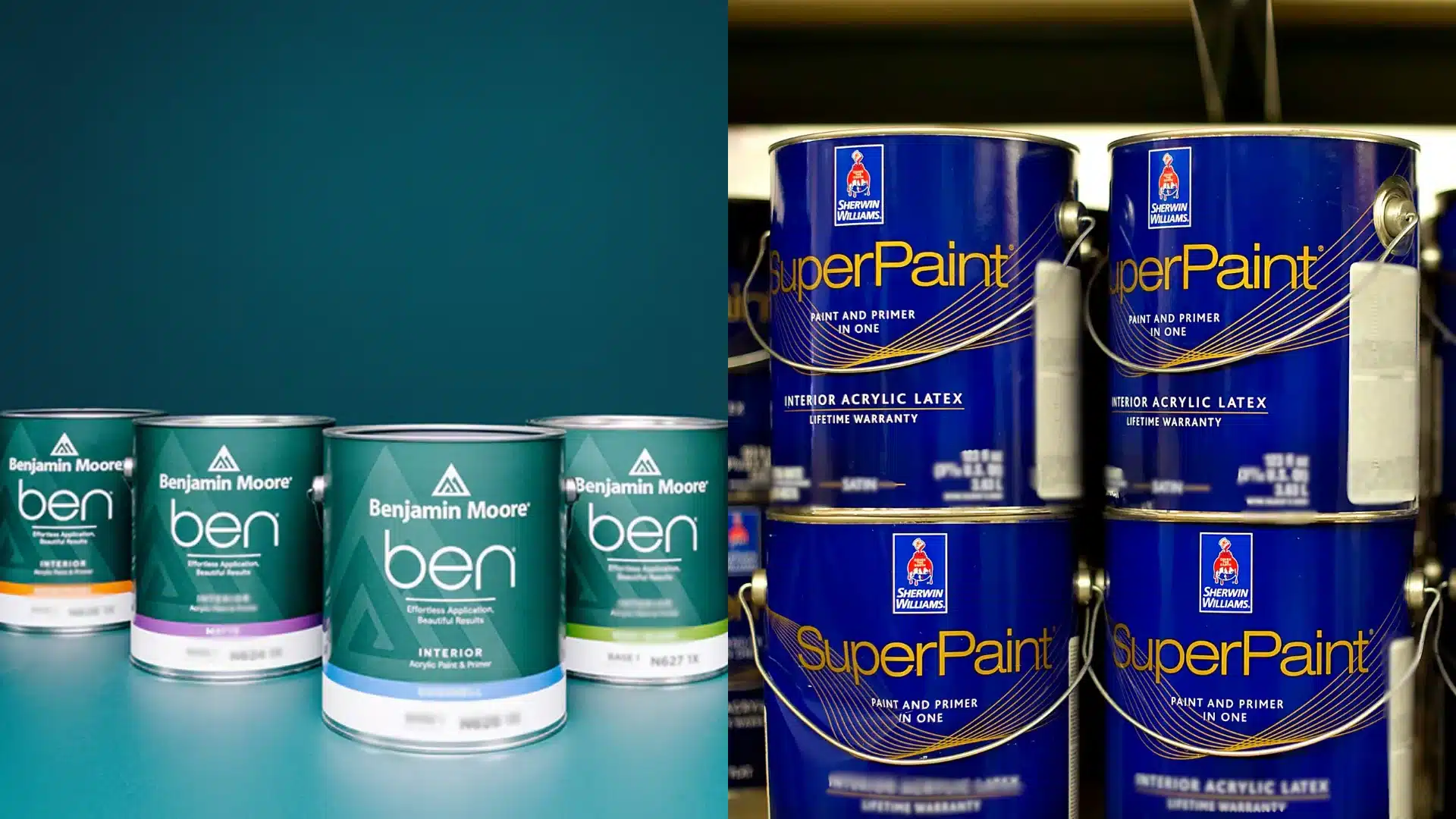

I repainted my kitchen last spring and stood in the store holding two paint cards.
One from Benjamin Moore, one from Sherwin-Williams. Same color family, but already looking different.
Chantilly Lace felt crisper. Cheviot looked warmer.
That small difference mattered a lot once paint hit the walls. I had heard Benjamin Moore gave better color depth in fewer coats. And Sherwin-Williams covered faster but needed more color-matching visits.
I eventually did go for cheviot for painting kitchen cabinets, but both brands have strong points and a real trade-off.
This Benjamin Moore vs Sherwin Williams breakdown covers coverage, finish quality, price, and color accuracy to help you choose the right can.
What Makes Paint Color Last Longer?
Paint longevity comes down to three things: pigment quality, strength, and the number of coats applied to the wall.
Benjamin Moore uses a higher pigment concentration in most of its formulas.
That means the color stays true longer, even in rooms with direct sunlight.
Sherwin-Williams leans on strong binders that help the paint grip the surface better over time. Both approaches work, but in different conditions.
- High-traffic areas? Sherwin-Williams holds up well.
- Rooms with heavy light exposure? Benjamin Moore keeps its color longer.
Knowing this small but important difference helps you pick the right brand for each room.
Quick Comparison Table: Benjamin Moore vs Sherwin Williams
Here’s a side-by-side look at how both brands stack up across the key factors that matter most.
| Feature | Benjamin Moore | Sherwin-Williams |
|---|---|---|
| Price Per Gallon | $60 – $80 | $50 – $75 |
| Colour Accuracy | Very high | High |
| Coverage Per Coat | 1 – 2 coats | 2 coats |
| Pigment Concentration | Higher | Moderate |
| Binder Strength | Moderate | Strong |
| Best For | Light-exposed rooms | High-traffic areas |
| Finish Quality | Rich, deep finish | Smooth, even finish |
| Colour Range | 3,500+ shades | 1,700+ shades |
| Availability | Independent retailers | Dedicated stores |
Benjamin Moore
Founded in 1883, Benjamin Moore has built its name on color accuracy and premium pigment quality.
It sells only through independent retailers. That keeps quality control tight. Its Aura and Regal lines are well-regarded for rich, lasting color with minimal touch-ups
Sherwin-Williams
Started in 1866, Sherwin-Williams operates its own dedicated stores nationwide. It focuses on strong surface adhesion and fast coverage. Contractors and people both trust it for large spaces.
Its Duration and Emerald lines are popular for durability and wear resistance.
Paint Quality Comparison: Benjamin Moore vs Sherwin Williams
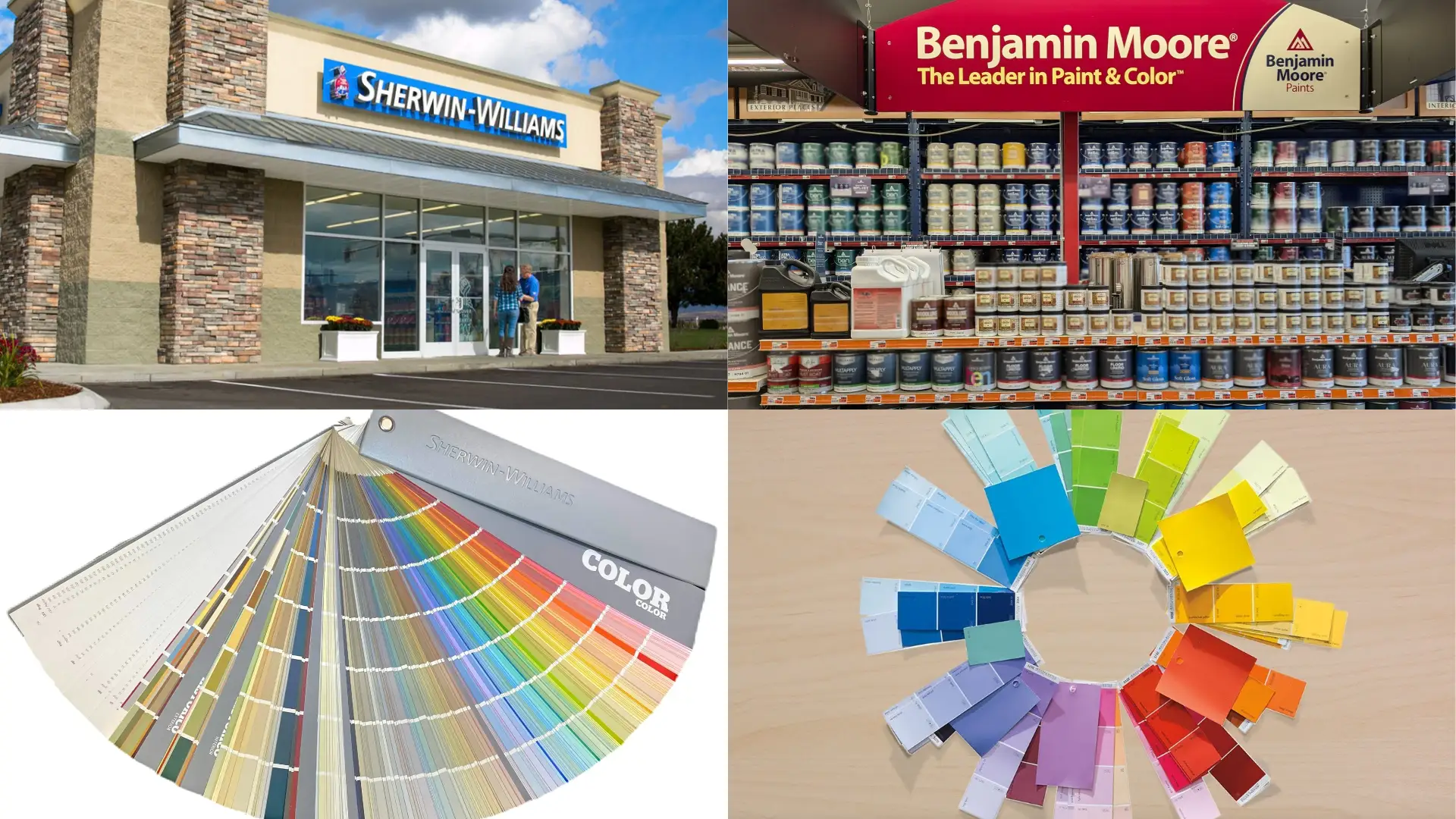
Both brands sit at the top of the market, but they earn that spot in different ways.
Here’s where they differ when put side by side on a real wall.
Coverage and Application
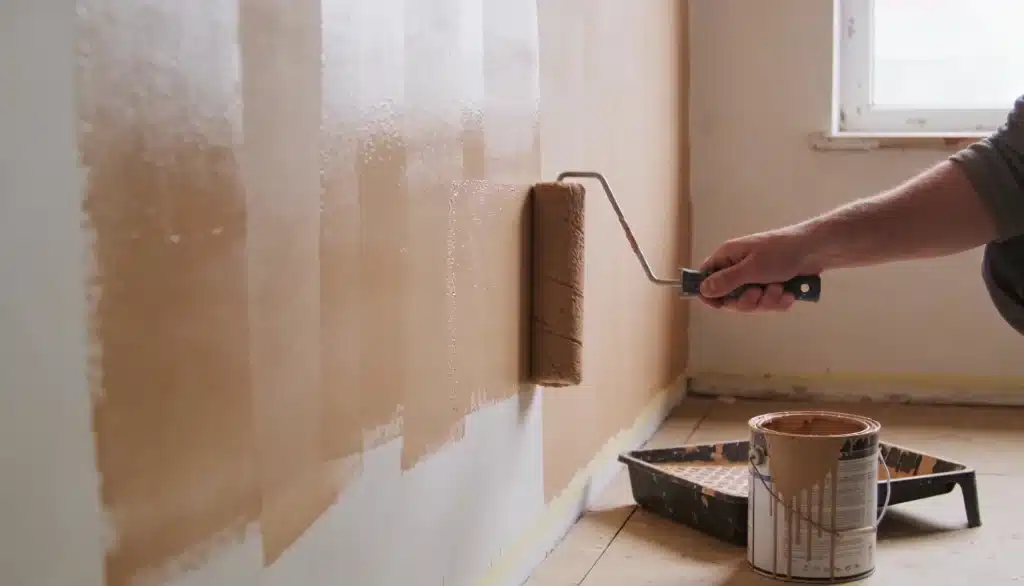
Benjamin Moore typically covers in one to two coats. Its thicker formula spreads evenly without streaking.
Sherwin-Williams is slightly thinner but goes on smoothly. Real users report needing an extra coat with Sherwin-Williams on darker colors.
Benjamin Moore saves time on walls needing a full color change.
Durability and Longevity
Sherwin-Williams holds up better in high-traffic areas like hallways and kids’ rooms.
Its strong binders resist scuffs and stains well. Benjamin Moore performs better against fading in sun-exposed rooms. Both brands last long, but in different conditions and spaces.
Finish and Appearance
Benjamin Moore delivers richer, deeper color with consistent sheen across the wall.
Sherwin-Williams gives a smoother, more uniform finish that works well in larger rooms.
For color richness, Benjamin Moore edges out the competition. For flat, even coverage across big surfaces, Sherwin-Williams is hard to beat.
Color Range and Accuracy
Benjamin Moore offers 3,500+ shades with very precise color matching.
The colors look almost identical to the swatch card on the wall. Sherwin-Williams has 1,700+ shades, but its color-matching technology is strong, too.
For those who need an exact, specific shade, Benjamin Moore is the safer pick.
Value for Money
Sherwin-Williams costs slightly less per gallon on average. But Benjamin Moore’s higher coverage per coat can quickly offset that price difference.
If a room needs two coats of Sherwin-Williams rather than one of Benjamin Moore, the cost gap closes quickly.
It comes down to what the specific project actually needs
VOC Content and Safety
Benjamin Moore has a strong lineup of zero-VOC and low-VOC paints.
Its Natura line is completely zero-VOC, making it a solid pick for bedrooms and kids’ rooms. Sherwin-Williams also offers low-VOC options, such as its Harmony line.
For households with children, pets, or allergy concerns, this factor matters more than most people realize.
Color Selection and Matching Accuracy
Picking the right color is half the battle. Here’s how both brands handle it.
Benjamin Moore
- Colors match the swatch card very closely on the wall.
- Proprietary Gennex colorant system delivers precise, consistent color.
- Aura and Regal lines hold color depth even after multiple washes.
- Independent retailers mix colors in-store for accurate results.
Sherwin-Williams
- The colorSnap tool lets you match colors from photos on your phone.
- Color accuracy is strong but can vary slightly across different store locations.
- Works well for standard color choices and popular neutral tones.
Availability and Convenience: Benjamin Moore or Sherwin Williams
Getting your hands on the paint matters just as much as the paint itself.
Benjamin Moore sells only through independent retailers and select hardware stores. Locations can be limited depending on where you live. Sherwin-Williams operates 4,900+ dedicated stores across North America.
That makes it far easier to find, especially on a weekend project run.
It also offers online ordering with in-store pickup. For pure convenience, Sherwin-Williams wins hands down.
Price Comparison
Price matters, but so does what you get for it.
| Product Line | Benjamin Moore | Sherwin-Williams |
|---|---|---|
| Entry-Level | $45 – $55/gallon | $40 – $50/gallon |
| Mid-Range | $60 – $70/gallon | $55 – $65/gallon |
| Premium Line | $75 – $85/gallon | $70 – $80/gallon |
| Coats Needed | 1 – 2 coats | 2 coats |
| Cost Per Project | Lower overall | Slightly higher |
| Sales & Discounts | Rare | Frequent |
| Contractor Pricing | Limited | Widely available |
What People Say About These Brands?
Based on discussions and experiences shared on online forums, people generally see both Benjamin Moore and Sherwin-Williams as reliable paint brands, though opinions vary by priorities.
Sherwin-Williams is popular due to its availability, discounts, and consistent shopping experience, making it convenient. Its paints are solid, though some believe quality varies by product line.
On the other hand, Benjamin Moore is commonly viewed as a premium option, praised for rich colors, strong interior performance, and high-end finishes.
Many users believe its top-tier products outperform competitors, even at a higher price.
Overall, most agree that both brands deliver good results, with the choice often coming down to budget, accessibility, and specific project needs.
Best Use: When To Choose Each Brand
Both brands have their strengths. The right pick depends on what the project actually calls for.
Choose Benjamin Moore When:
- Color accuracy is non-negotiable: ideal for accent walls or statement rooms needing exact shade matching.
- Working with sun-exposed rooms: holds color depth longer under direct light.
- Fewer coats matter: saves time on full color changes or dark-to-light transitions.
- Air quality is a concern: Natura line offers a completely zero-VOC formula for sensitive spaces.
- A premium finish is the priority: it delivers richer depth in feature walls and living spaces.
Choose Sherwin-Williams When:
- Covering large areas quickly: strong adhesion makes it faster on large surface spaces.
- Budget flexibility is needed: frequent sales and contractor pricing keep costs manageable.
- Working on high-traffic zones: hallways, stairwells, and kids’ rooms benefit from its wear resistance.
- Convenience is key: 4,900+ store locations make last-minute runs easy.
- Digital color matching is useful: the ColorSnap tool works well for on-the-spot color decisions.
Final Thoughts
Benjamin Moore vs Sherwin Williams really comes down to what your project needs.
For rich color, fewer coats, and precise shade matching, Benjamin Moore is worth every extra dollar. For large spaces, tight budgets, and easy store access, Sherwin-Williams gets the job done well.
Neither brand is a bad choice.
They just serve different needs. Before buying, think about the room, the light, and how much time you have.
Pick the one that fits your project, not just your budget.
And if you’re still unsure, grab sample pots from both and test them on the wall first.
Frequently Asked Questions (FAQ’s)
1. Why do Contractors Prefer Sherwin-Williams Paint?
Contractors choose Sherwin-Williams for its wide availability, contractor pricing, and strong surface adhesion.
2. What are the Three Paint Colors that Will Never Go out Of Style?
White, grey, and navy blue remain classic, timeless choices across all home styles.
3. Is Sherwin-Williams Paint Worth the Extra Money?
Yes, its durability, coverage, and wear resistance make it worth the cost.
4. What is the 3 Color Rule?
Use three colors per room: one dominant, one secondary, and one accent.
5. What Paint Colors are Outdated?
Terracotta, mauve, and golden yellow have largely fallen out of favor in modern homes.