
That dark spot on your bathroom wall is it dangerous black mold or just mildew?
Many people see the two and assume the worst.
They are not the same thing, and treating them the same way can cost you time, money, and peace of mind. Black mold can cause serious health problems, while mildew is far easier to handle. Knowing the difference matters.
This blog breaks down black mold vs mildew, how to spot each, and what to do about them.
Importance of Identifying Black Mold and Mildew
Both can show up in the same spots, your bathroom, basement, or kitchen.
And both look similar enough to confuse anyone. Getting this wrong can hit you hard.
Black mold has been linked to breathing problems, allergies, and long-term health issues. Mildew, on the other hand, stays on the surface and causes far less harm.
Both can spread fast in damp spaces, which is why so many people mix them up.
Getting them mixed up could mean you’re under-treating something serious or overspending on something simple.
What is Black Mold?
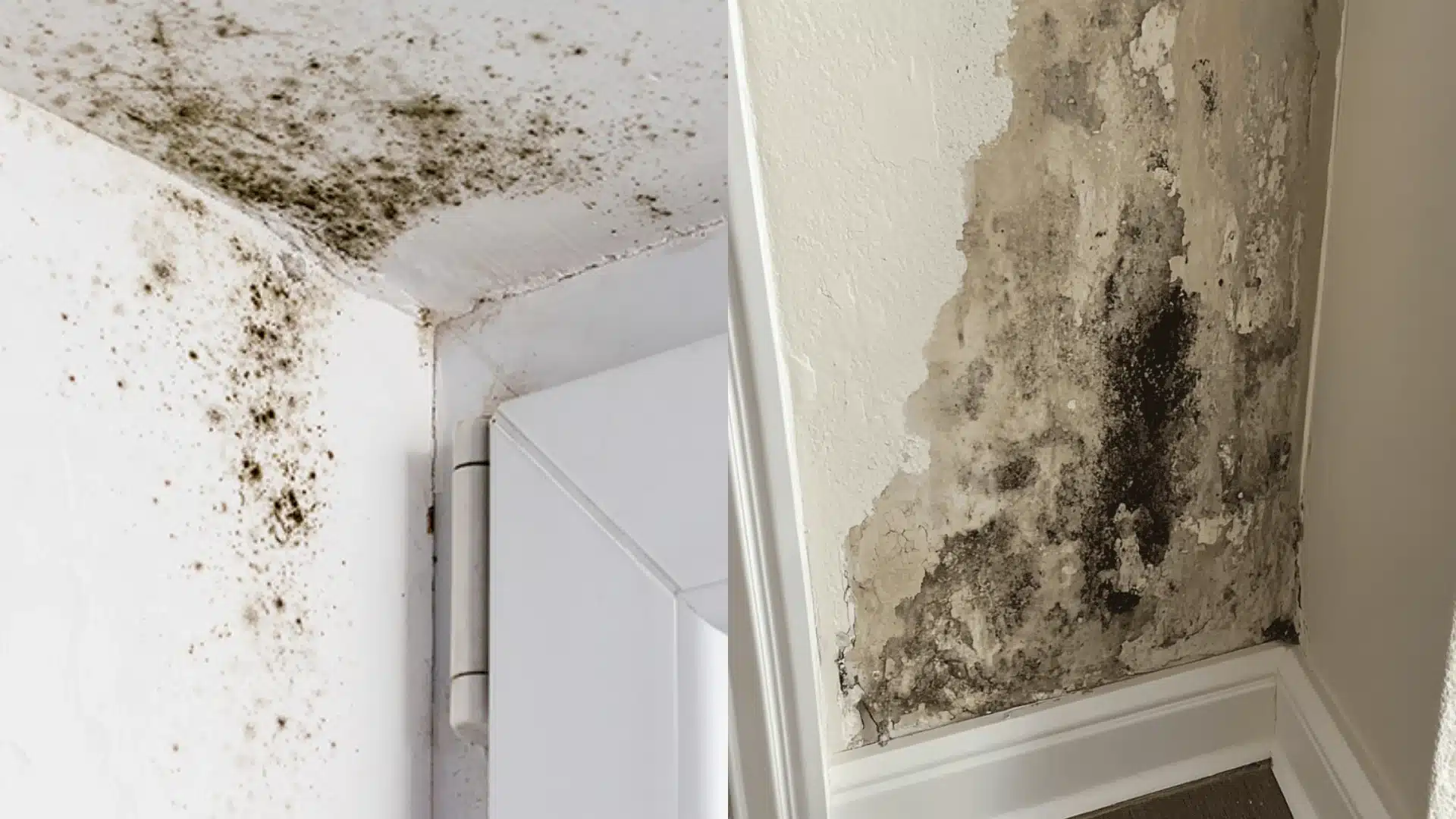
Black mold is a toxic fungus, scientifically known as Stachybotrys chartarum.
It grows in areas with long-term moisture and poor airflow. Unlike common mold, it feeds on materials like drywall, wood, and ceiling tiles.
Key Characteristics of Black Mold
It appears dark green or black.
The texture is slimy and sticky to the touch. It carries a strong, musty smell that lingers even after cleaning.
Common Places You’ll Find it
Black mold thrives in bathrooms, basements, and water-damaged walls. Any area that stays wet for long periods becomes a target.
What is Mildew?
Mildew is a surface-level fungus. It does not penetrate deep into materials the way black mold does.
It appears in two forms, powdery or fluffy, and spreads flat across surfaces.
Key Characteristics of Mildew
It usually shows up as white, gray, or yellow patches. The texture stays flat and powdery.
The smell is mild and musty, far less sharp than black mold.
Common Places You’ll Find Mildew
Mildew commonly appears on shower walls, windowsills, and fabrics.
Anywhere with light moisture and warm air gives it room to grow.
Side-by-Side Comparison: Black Mold vs Mildew
Telling them apart gets much easier when you lay them out side by side. Here’s a quick look at how they stack up:
| Feature | Black Mold | Mildew |
|---|---|---|
| Type | Toxic fungus | Surface fungus |
| Color | Dark green or black | White, gray, or yellow |
| Texture | Slimy, sticky | Flat, powdery |
| Smell | Strong, persistent | Mild, faint |
| Growth Depth | Penetrates deep into materials | Stays on the surface |
| Common Locations | Basements, drywall, water-damaged wood | Shower walls, windowsills, fabrics |
| Health Risk | Serious breathing problems, allergies | Low minor irritation |
| Cleaning Difficulty | Requires professional help often | Basic cleaning usually works |
How to Tell the Difference Quickly: Mildew vs Mold
A quick look and a sniff can tell you a lot. Check these clues before doing anything else:
Color
- White, gray, or yellow flat patches: likely mildew
- Dark green or black, spreading in clusters: likely black mold
Texture
- Powdery or dusty surface: likely mildew
- Slimy or sticky to the touch: likely black mold
Smell
- Faint, mild musty odor: likely mildew
- Strong, sharp smell that won’t go away: likely black mold
Location
- On fabrics, windowsills, or shower tiles: likely mildew
- Behind walls, under flooring, or on water-damaged wood: likely black mold
How to Remove Mildew Safely
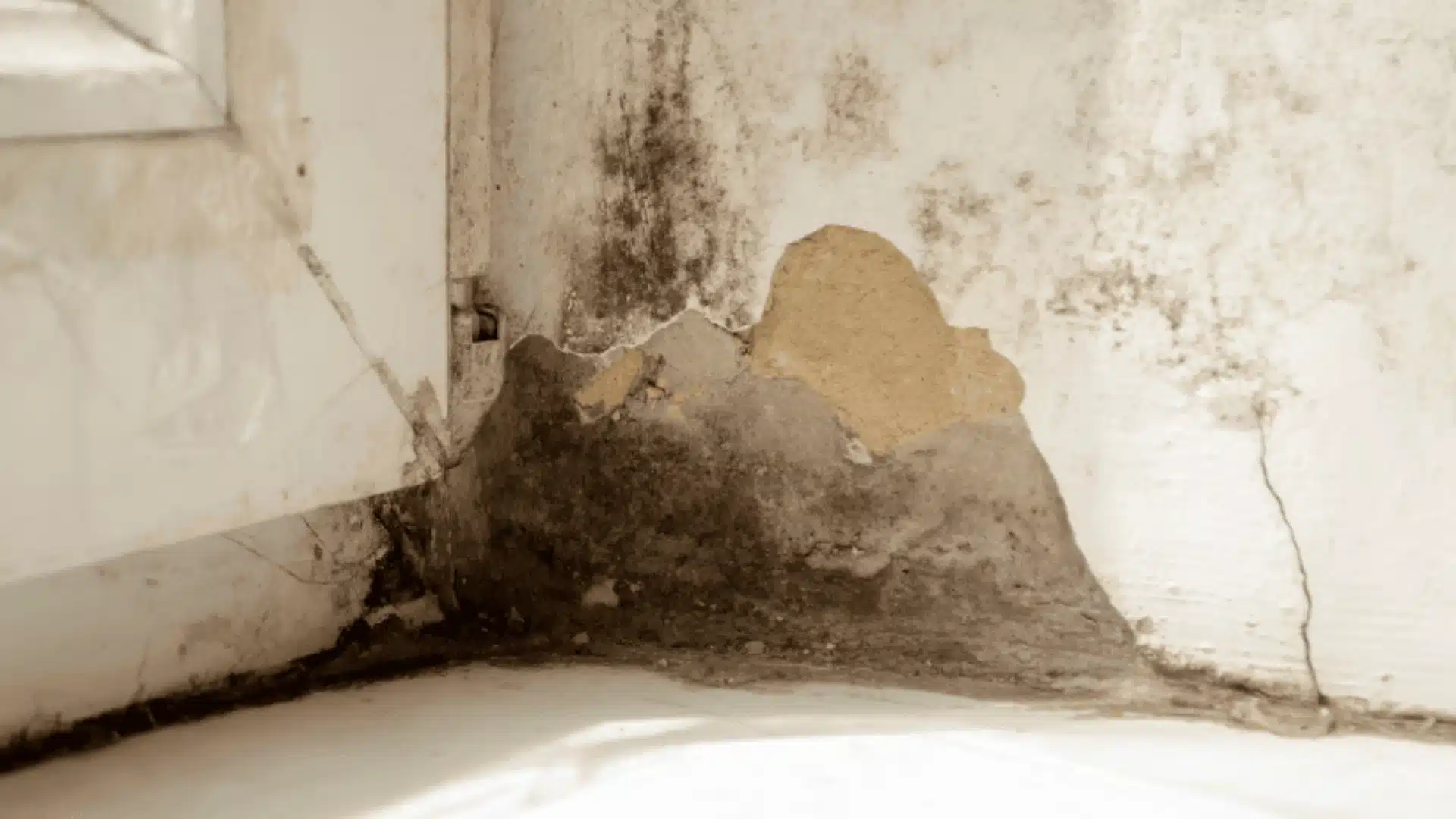
Mildew is manageable with basic supplies you likely already have at home.
Follow these steps to clear it out fast and stop it from spreading.
Step 1: Gear Up
Wear gloves and a basic face mask before you start. Mildew is low-risk, but breathing in spores is never a good idea.
Keep a trash bag nearby to dispose of used clothes right away. Do not touch your face during the process.
Step 2: Apply Your Cleaning Solution
Mix one part bleach with two parts water in a spray bottle.
Spray it directly onto the mildew patch and let it sit for 10 minutes. This gives the solution enough time to break down the fungus before you start scrubbing.
Step 3: Scrub and Wipe
Use a stiff brush to scrub the patch firmly.
Work in small circular motions to lift all the mildew off the surface. Wipe the area clean with a damp cloth.
Check carefully to see if patches remain; repeat the spray and scrub process once more.
Step 4: Dry the Area Completely
Leaving the surface wet invites mildew straight back.
After cleaning, run a fan or open a window to fully dry the area. A dry surface gives mildew no room to return. Give it at least 30 minutes before calling it done
How to Remove Black Mold Safely
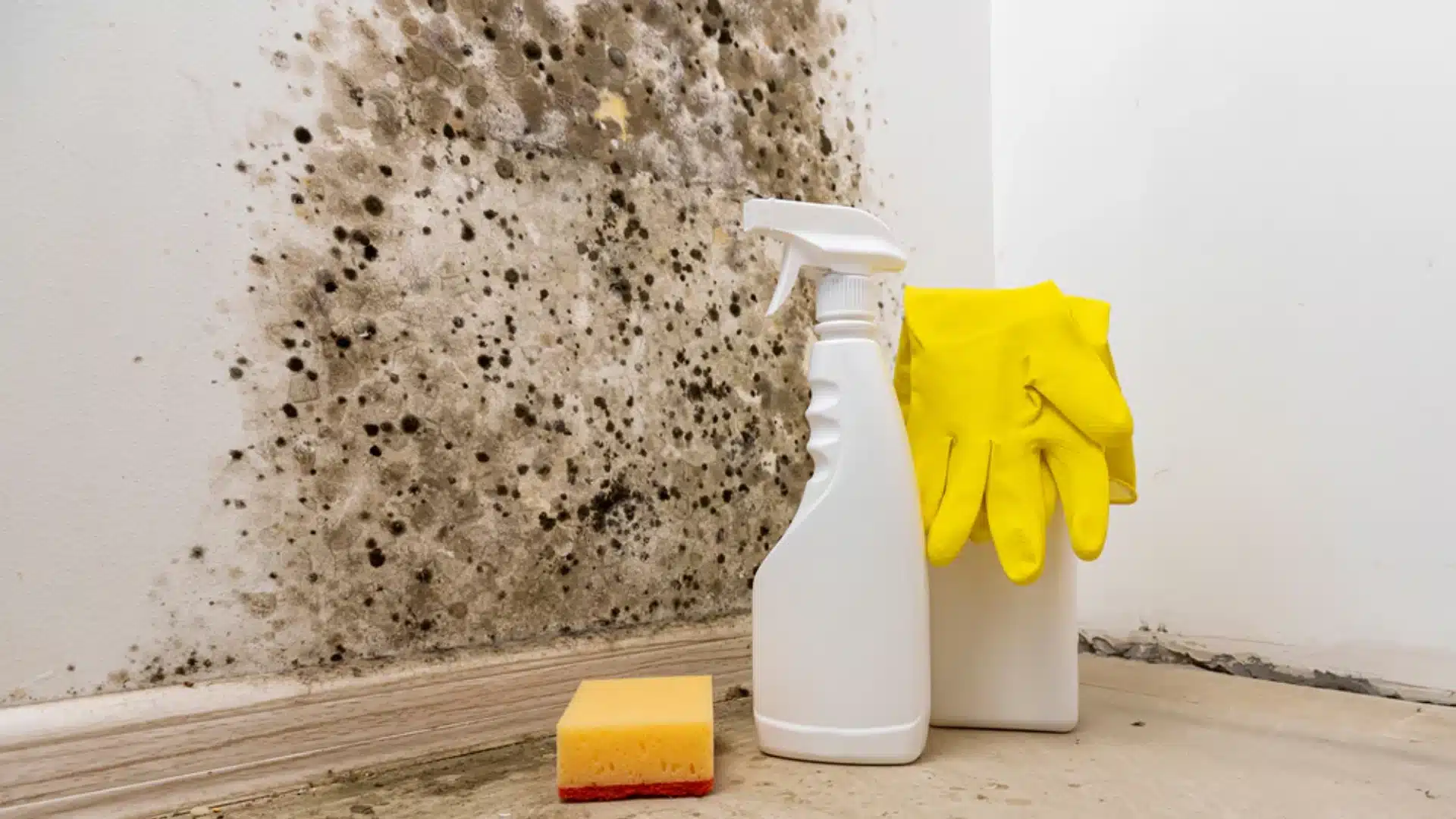
Black mold needs more care than mildew. It penetrates deeper into surfaces and poses greater health risks. Here is how to handle it the right way.
Step 1: Protect Yourself First
Put on an N95 mask, safety goggles, and disposable gloves before entering the area.
Black mold spores travel quickly through the air. One deep breath in a heavily affected room is enough to cause irritation. Do not skip this step under any circumstances.
Step 2: Seal Off the Area
Close every door leading to other rooms before you begin. Use plastic sheeting to cover vents if needed.
This keeps spores from drifting into clean areas of your home. The goal is to contain the problem to one spot.
Step 3: Apply a Mold-Killing Solution
Spray an EPA-approved mold remover or undiluted white vinegar generously over the affected area. Do not wipe it off straight away.
Let it sit for 15 to 20 minutes so it fully breaks down the mold at the surface level before scrubbing begins.
Step 4: Scrub and Remove Affected Material
Scrub hard surfaces firmly with a stiff brush.
For drywall, wood, or ceiling tiles with deep mold growth, scrubbing alone will not be enough. Those materials need to be cut out and replaced entirely.
Trying to save them usually leads to the mold coming back.
Step 5: Bag and Dispose Carefully
Seal everything used, cloths, scraped material, and disposable gear into thick plastic bags.
Tie them tightly and take them straight outside. Do not leave bags sitting indoors, even for a short while.
Spores can escape and spread back into your home quickly
Which is Harder to Get Rid of: Black Mold vs Mildew
Black mold, as it is not close. It roots itself deep into building materials, making surface cleaning largely pointless.
In many cases, the affected material out be removed completely.
Mildew, by contrast, sits on top and responds well to basic cleaning. The real challenge with black mold is that it often grows in hidden spots behind walls or under floors, making it hard to even find, let alone fix.
Preventing Mold and Mildew in Your Home
- Fix leaky pipes and taps as soon as you spot them.
- Run exhaust fans in bathrooms and kitchens during and after use.
- Keep indoor humidity levels below 50% using a dehumidifier.
- Open windows regularly to let fresh air move through your home.
- Wipe down wet surfaces, shower walls, sinks, and countertops after use.
- Wash and dry bathroom rugs, towels, and fabrics frequently.
- Inspect your basement and attic for water seepage every few months.
- Ensure proper drainage around your home’s foundation to stop water from pooling.
When to Call a Professional
Some situations go beyond DIY. Call a professional if the mold covers an area larger than 10 square feet.
If you or anyone in your home is experiencing persistent coughing, headaches, or breathing difficulties, do not wait.
Also, if black mold keeps coming back after cleaning, there is likely a deeper moisture problem that needs expert attention. Water damage from flooding or burst pipes almost always requires professional mold assessment.
Your health and your home’s structure are worth the call.
Final thoughts
Understanding black mold vs mildew saves you time, money, and unnecessary stress.
Mildew is a nuisance. Black mold is a health risk.
A quick check of color, texture, smell, and location tells you most of what you need to know. Clean mildew early before it spreads. Take black mold seriously and act fast.
When things look too far gone, bring in a professional. Keep moisture in check, and you keep both problems out.
A little attention now goes a long way toward keeping your home safe and clean
Frequently Asked Questions (FAQ’s)
1. Can I Stay in My House with Black Mold?
It is risky. Prolonged exposure causes serious health issues. Temporary relocation is strongly recommended.
2. Is Black Mold or Mildew Worse?
Black mold is far worse. It penetrates deep and poses serious long-term health risks.
3. What Kills Black Mold Immediately?
Undiluted white vinegar or an EPA-approved mold remover works fastest on black mold.
4. What are the First Signs of Mold Sickness?
Persistent coughing, sneezing, headaches, skin irritation, and breathing difficulties are the earliest warning signs.
5. What Kills 100% of Mold?
No single product kills all mold. Professional remediation, combined with moisture control, yields the best results.