
Kitchen cabinets seem simple. But the wrong depth ruins a whole kitchen layout.
Getting this right saves money and space.
So let’s set the record straight, once and for all.
Why is the Standard Kitchen Cabinet Depth Important?
The wrong depth makes simple tasks, like grabbing a pan or loading the dishwasher, harder than they need to be.
And the standard cabinet depth is built around the average person’s reach.
A 24-inch base cabinet lets you access the back without straining, and 12-inch wall cabinets keep everyday items close and easy to grab.
Most kitchen appliances are also designed to fit a 24-inch base cabinet.
Cabinets that are too deep cause items to get lost at the back. Too shallow, and your pots and dishes simply won’t fit. Standard depth avoids both problems.
Before going custom on depth, ask yourself if the extra length will actually get used. In most kitchens, standard depth does the job just fine.
How Deep Are Kitchen Cabinets?
It depends on the type of cabinet and its location in your kitchen. Base cabinets need more depth to support countertops.
Base Cabinets
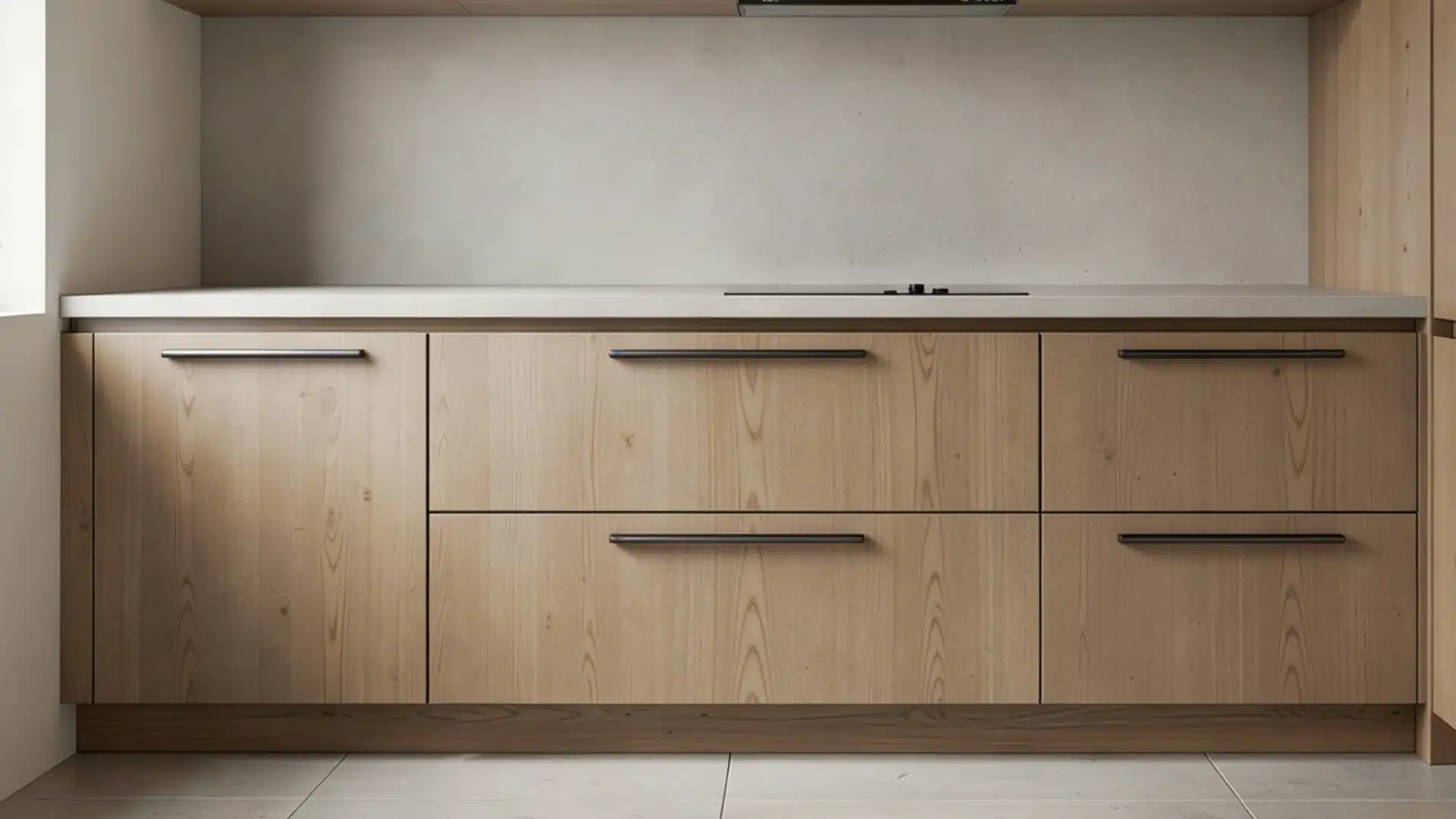
Base cabinets are the workhorses of any kitchen.
They sit on the floor and hold the most weight. The standard depth for base cabinets is 24 inches.
This depth gives you enough storage space inside without making the cabinet stick out too far.
It also lines up perfectly with standard countertops, which typically run 25 to 26 inches deep, protecting the cabinet face below.
If your kitchen is on the smaller side, stick to the 24 inch standard. Going deeper might save storage space elsewhere but can make the kitchen feel cramped.
Wall Cabinets
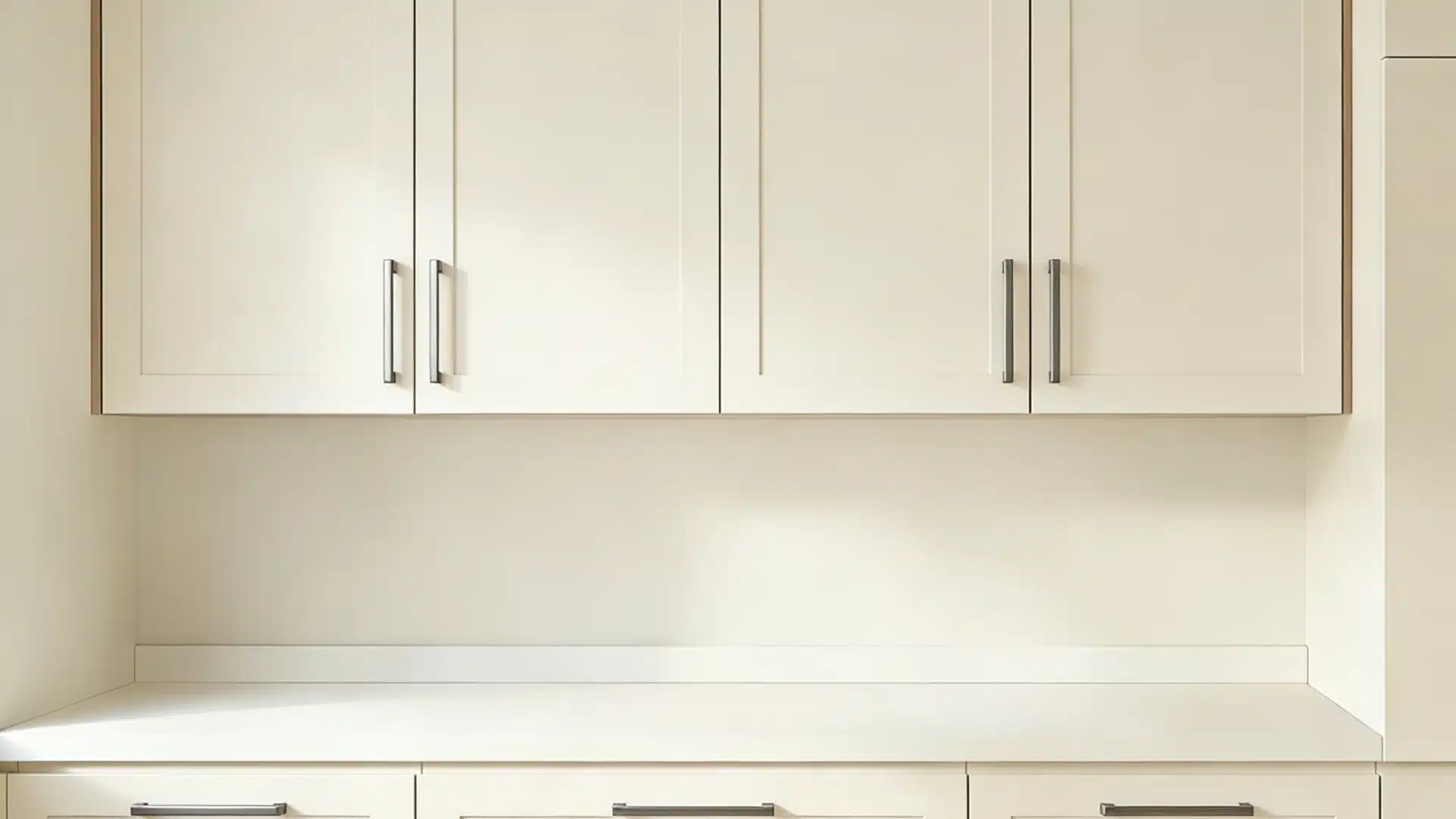
Wall cabinets hang above the countertop.
So the depth of wall cabinets matters for clearance, since the standard depth is 12 inches, which fits perfectly.
This keeps them from sitting too close to your face when you’re working at the counter.
It also leaves enough space between the cabinet and the countertop. Twelve inches is enough to store plates, glasses, and pantry items.
Tall Cabinets
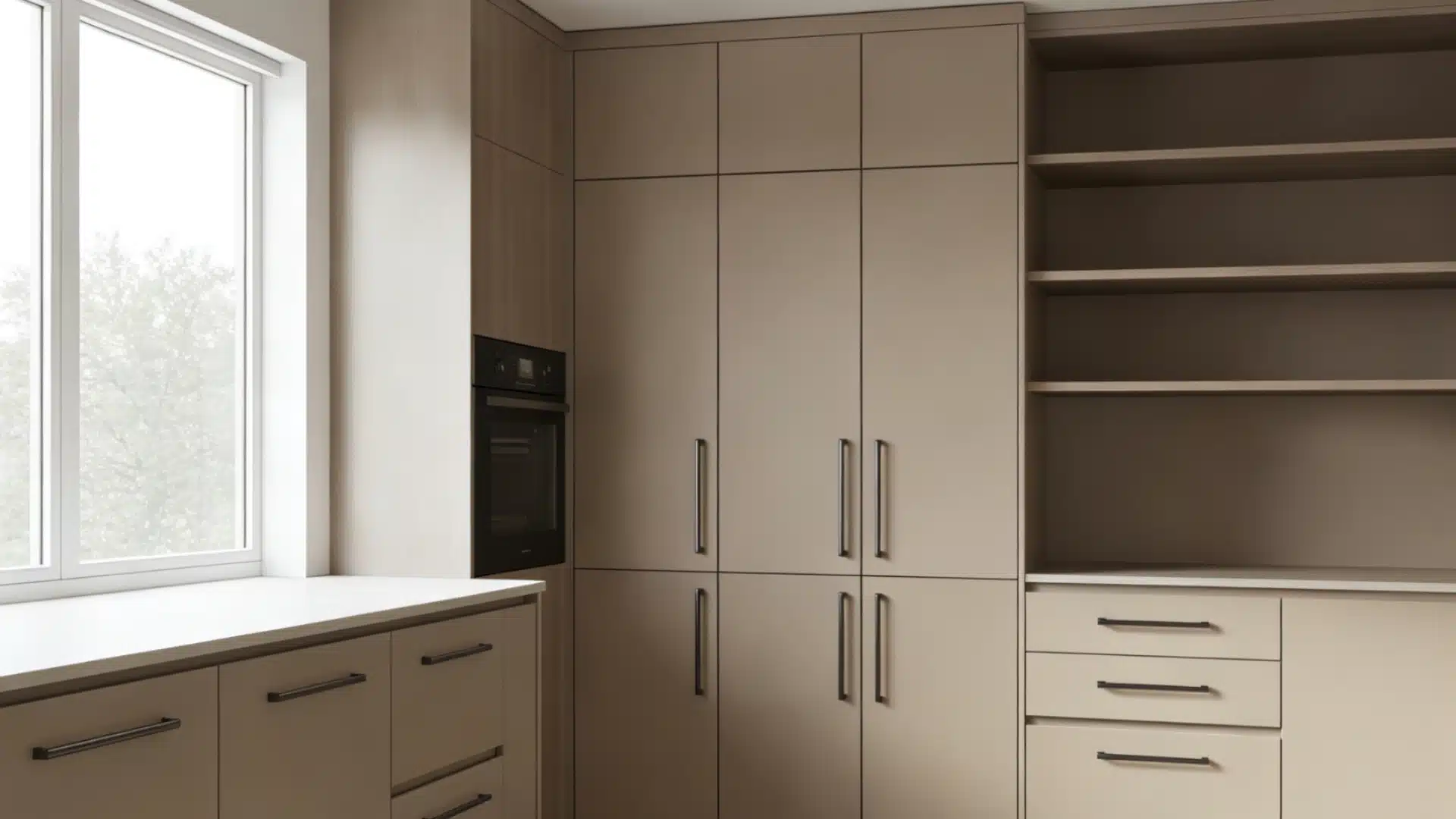
Tall cabinets, also called pantry or utility cabinets, can range from 12 to 24 inches deep.
The depth depends on what you plan to store in them. A tall cabinet used as a pantry is usually the same depth as the base cabinet, at 24 inches.
If it’s placed next to wall cabinets, a 12-inch depth keeps everything flush and neat.
Before choosing tall cabinet depth, think about what goes inside. Shelves packed with small items don’t need 24 inches. But if you’re storing large appliances or bulk groceries, go deeper.
Countertop Depth
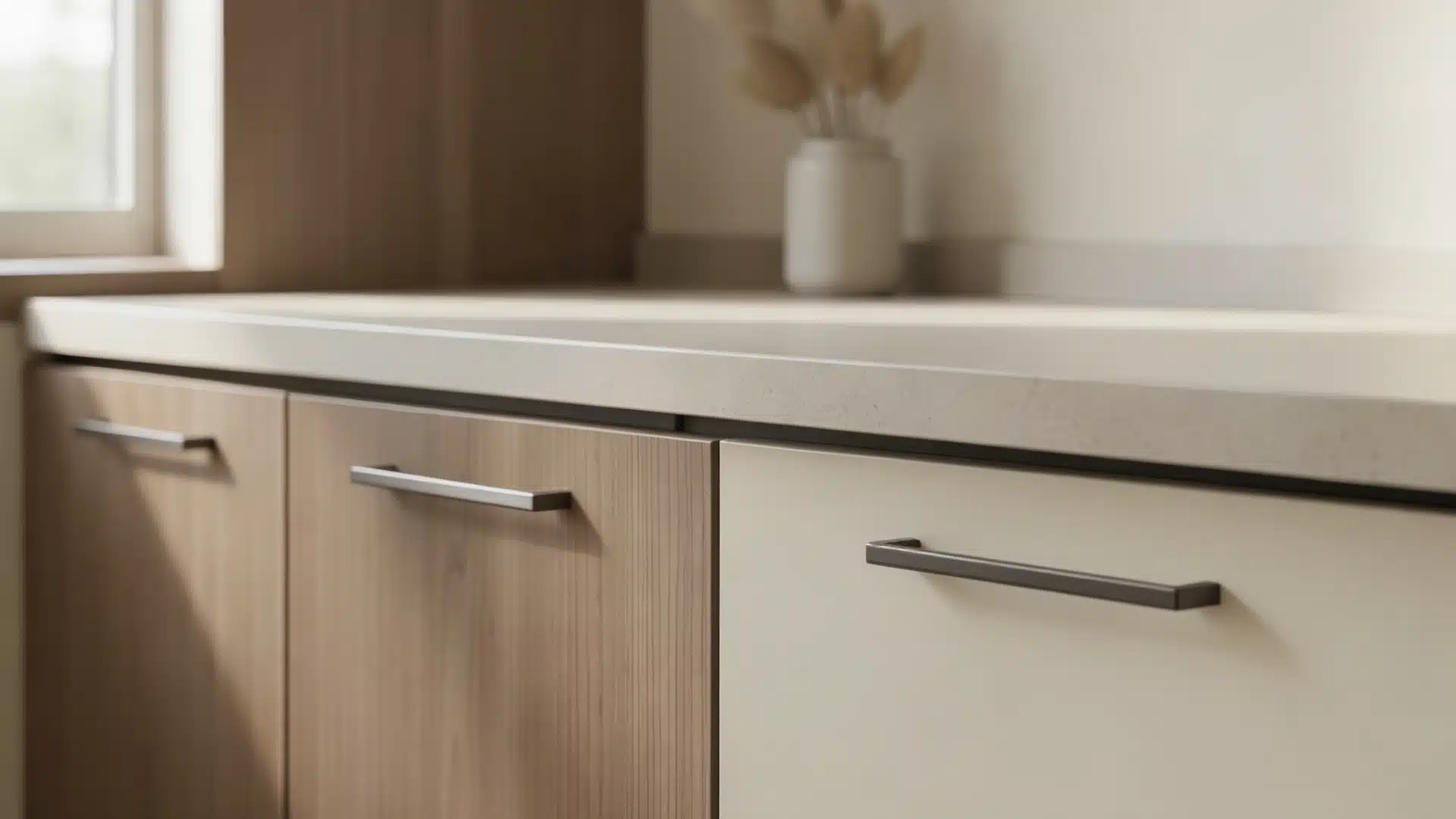
The countertop sits atop the base cabinet and is slightly deeper by design.
Most countertops run 25 to 26 inches deep. That extra inch or so beyond the 24-inch cabinet creates an overhang.
This overhang protects the cabinet doors from drips and spills.
It also gives you a natural edge to grip when pulling out drawers or opening doors. It’s a small detail, but it makes everyday use much more comfortable.
Custom Kitchen Cabinet Depth Options
Standard depths work well for most kitchens.
But sometimes, your kitchen has a layout that just doesn’t fit the norm.
Custom cabinet depth gives you the freedom to build around your specific needs. It costs more, but for the right kitchen, it’s worth every penny.
In a small kitchen, standard 24-inch base cabinets can feel like too much.
Dropping to 12 or 18 inches frees up walkway space and makes the kitchen easier to move around in.
Luxury kitchens sometimes extend beyond 24 inches to accommodate large appliances.
Going custom also means you can mix depths across different cabinet types, shallower wall cabinets here, deeper base cabinets there.
This kind of flexibility lets you shape the kitchen around your habits.
Best Materials for Kitchen Cabinets
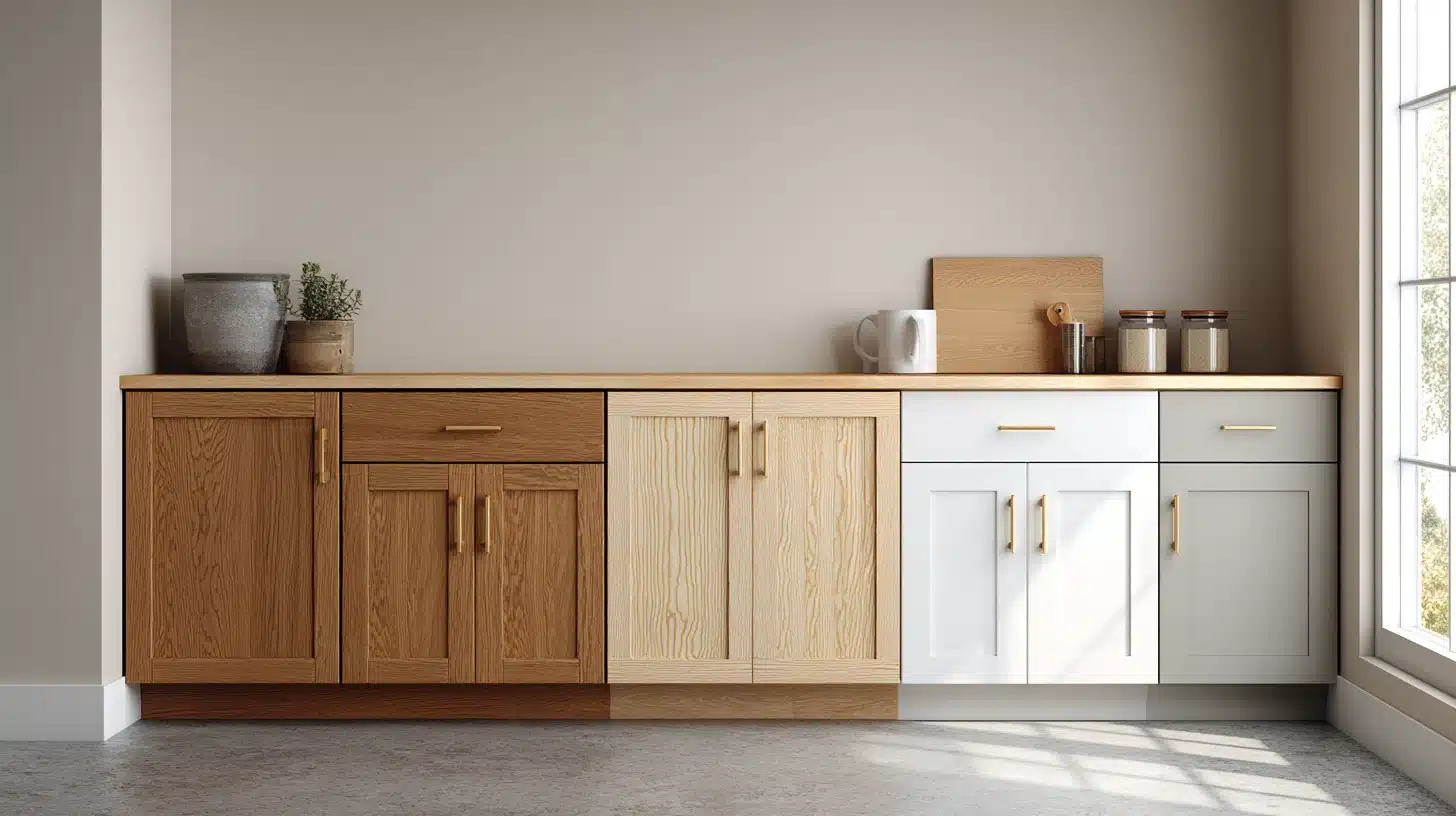
The material you choose affects more than just how your cabinets look.
It affects how long they last and how much weight they can hold. Deeper cabinets tend to carry more, so the material matters even more in that case.
Some materials handle heavy storage better than others.
| Material | Durability | Best For | Depth Consideration |
|---|---|---|---|
| Solid Wood | Very high | Long-term use, heavy storage | Handles deep cabinets well |
| Plywood | High | Every day use, wet areas | Good for deeper base cabinets |
| MDF | Medium | Painted finishes, light storage | Better for shallower wall cabinets |
| Laminate | Medium | Budget kitchens, easy cleaning | Works well at standard depths |
Are You Making These Kitchen Cabinet Depth Errors?
Planning kitchen cabinets seems straightforward.
Until you’re standing in a finished kitchen that doesn’t quite work. Most mistakes stem from skipping the small details during the planning stage.
A few wrong calls on depth layout can make daily kitchen tasks harder than they need to be.
1. Choosing Overly Deep Cabinets
Many people think deeper cabinets give more storage. In reality, items get pushed to the back. And on top of that, deep cabinets also eat into floor space, making your kitchen feel cramped.
2. Ignoring Clearance Space
Clearance space is the space between your wall cabinets and the countertop below. Too little clearance makes counter work uncomfortable.
So, always measure your tallest appliance height first.
3. Not Considering Countertop Overhang
Your countertop sits one to two inches beyond the cabinet face. Always add 1 to 1.5 inches to your base cabinet depth when measuring for countertops.
4. Poor Planning With Appliances
If your cabinets don’t match, appliances can stick out or sit unevenly.
Always check the dimensions of your dishwasher, fridge, and oven before deciding on cabinet depth.
Final Thoughts
Understanding how deep kitchen cabinets are comes down to one simple rule.
Match the depth to the job. Base cabinets at 24 inches and wall cabinets at 12 inches are standard for good reason.
They balance storage with everyday usability.
Going too deep will leave you without space, and going too shallow will cause you to lose function.
Stick to the standards, plan around your appliances, and your kitchen will be ready.
Frequently Asked Questions (FAQs)
1. Are all Kitchen Cabinets 24 Inches Deep?
No. 24 inches is the standard for base cabinets only. Wall cabinets are typically 12 inches deep, and tall cabinets range from 12 to 24 inches.
2. Are all Wall Cabinets 12 Inches Deep?
Most are, but not all. Wall cabinets can also be 15, 18, or 24 inches deep, depending on storage needs and the kitchen layout.
3. Is it Cheaper to Buy Cabinets or Have Them Built?
Buying pre made cabinets is almost always cheaper. Custom-built cabinets cost more due to the labor and materials involved.