A bedroom can have great furniture, nice bedding, and good lighting.
But if the rug is the wrong size, the whole room feels incomplete. It is one of the most common decorating mistakes people make.
A rug that is too small makes your queen bed look like it is floating. A rug that is too big crowds the room.
Getting the rug size for a queen bed just right is what pulls everything together.
The Five Golden Rules of Rug Placement Under a Bed
Think of these as the ground rules. Follow them and your bedroom will look put together every single time.
Rule 1. Always Measure Before You Buy
This is the number one mistake people make. They eyeball it and end up with a rug that is too small.
Grab a tape measure before anything else.
Measure your bed, your floor space, and the gap between your walls. Those few minutes of measuring can save you a costly return.
Rule 2. Keep it Centered
A rug that sits off to one side looks like an accident. Always align the rug evenly with the bed.
Equal space on the left and right side makes the room feel calm and intentional.
Rule 3. Show Enough Rug on Each Side
Aim for at least 18 to 24 inches of rug showing on both sides of the bed.
This gives your feet a soft landing every morning. Anything less and the rug starts to look like it does not belong there.
Rule 4. Use a Rug Pad
A rug pad keeps the rug from sliding around. It also protects your floor and adds a little extra cushion underfoot.
Most rug pads are inexpensive and easy to cut to size.
It is a small cost that is absolutely worth it.
Rule 5. Match the Rug to the Room, Not Just the Bed
Pick a rug that goes with your wall color, your furniture, and your floor tone.
A rug that ties all of those together will always look better than one that only matches the bedding.
Here’s How to Place a Rug Under Queen Bed

Placing a rug under a queen bed is simpler than it sounds. But the placement position matters a lot. Get it wrong and the whole room feels awkward.
The most common ways to do it:
Extend it on all Three Sides
Place the rug so it sticks out at least 18 to 24 inches on both sides and at the foot of the bed.
When you step out of bed in the morning, your feet land on a soft rug. It is one of those small things that makes a real difference to your day.
Slide Just the Foot End Under the Bed
Place about one third of the rug under the bed frame. The rest sits at the foot.
This works well with longer rugs and keeps things looking neat.
Place it Fully Under the Bed
The rug sits completely under the bed. Only the edges peek out from the sides. This works well if your bed frame sits higher off the floor.
A few things to keep in mind:
- Center the rug with the bed. An off-center rug makes the room feel unbalanced.
- Leave equal space on both sides of the bed where possible.
- Use a rug pad to keep the rug flat and stop it from sliding around.
Different Rug Sizes for Queen Bed
So what size rug actually works under a queen bed? This is where most people get stuck. They either go too small or pick a size without measuring first.
A queen bed is 60 inches wide and 80 inches long. That is your starting point.
The rug needs to be bigger than the bed to look right.
Here is a simple breakdown:
| Bedroom Size | Recommended Rug Size | Placement Style |
|---|---|---|
| Small (under 10×10) | 5×8 | Foot of bed only |
| Standard (10×12 to 12×12) | 8×10 | Under full bed |
| Large (12×14 and above) | 9×12 | Under full bed |
8×10 Rug Size
This is the most recommended size for a queen bed.
It gives you about 18 to 24 inches of rug showing on each side and at the foot of the bed.
If you have a standard-sized bedroom, this is a safe and solid choice.
9×12 Rug Size
Got a bigger bedroom? A 9×12 rug works really well. It gives more floor coverage and makes the room feel larger.
It also works wonderfully if you want your nightstands sitting on the rug, too.
5×8 Rug Size
This size works only if you place it at the foot of the bed. It is not large enough to fit under the full bed.
But used correctly, it adds a nice touch without taking over the space.
When in Doubt, Go Bigger
Most people regret going too small. If you are stuck between two sizes, always pick the larger one.
How to Layer Rugs in the Bedroom?
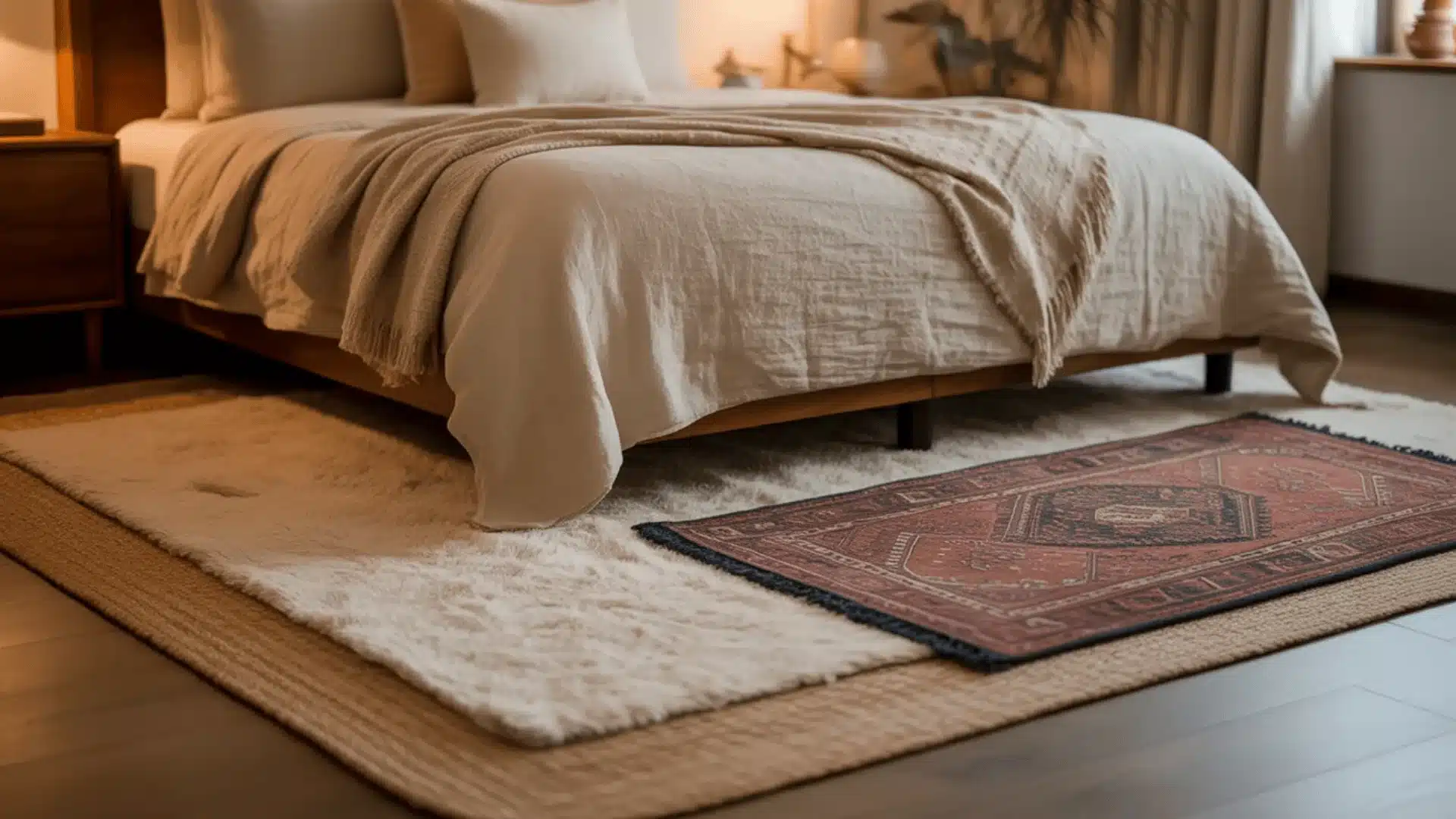
Layering rugs is simpler than it looks. You place a large, neutral rug on the bottom to anchor the bed.
Then add a smaller rug on top at the foot of the bed for extra detail. A 5×8 works well as the top layer over an 8×10 or 9×12 base.
A Few Things to Keep in Mind:
- Pick one bold rug and one simple rug. Two busy patterns make the floor look cluttered.
- The two rugs do not have to match. But they should share at least one color to keep things connected.
A Few Combinations that Work Well:
- Jute base rug with a soft wool rug on top
- Flat woven rug underneath with a fluffy shag rug on top
- Solid-colored base rug with a printed rug layered over i
Final Thoughts
Getting the rug size for queen bed setups right comes down to three things.
Measure your space. Know where the rug will sit. And always go bigger when you are unsure.
An 8×10 rug works for most queen beds.
Show at least 18 to 24 inches on each side. Use a rug pad. And let the whole room guide your choice, not just the bed.
Your floor deserves to get it right.
Frequently Asked Questions
1. Can I Use a 5×8 Rug Under a Queen Bed?
A 5×8 rug is too small to go fully under a queen bed. It works best placed at the foot of the bed only.
2. What Happens if My Rug is Too Small for My Queen Bed?
A small rug makes the bed look like it is floating. It throws off the balance of the whole room and makes the space feel unfinished.
3. How Far Should a Rug Stick Out From Under a Queen Bed?
At least 18 to 24 inches on both sides and at the foot of the bed. This gives your feet a soft landing every morning.
4. Do I Need a Rug Pad Under My Bedroom Rug?
Yes. A rug pad stops the rug from sliding, protects your floor, and adds extra cushion. It is a small cost for a big benefit.
5. What Rug Material Works Best Under a Queen Bed?
Wool and cotton rugs work really well under a queen bed. They are soft underfoot, hold up well over time, and are easy to clean.