

Face painting is so much fun for kids and adults.
But when you grab that tube of acrylic paint sitting on your craft table, you might wonder if it’s actually okay to put on skin.
This blog breaks down exactly why acrylic paint isn’t safe for skin, what risks to watch out for, and what you should use instead for fun.
Is it Safe to Apply Acrylic Paint on the Face?
No, the face is the worst place to put acrylic paint.
The skin on your face is thinner and more sensitive than the rest of your body. It reacts faster to chemicals.
The face also has more entry points, like the eyes, nose, and mouth. That makes it even more risky.
The skin around the eyes is very thin. Chemicals reach it quickly. If paint gets near the mouth, there is a real chance of swallowing some of it.
Face paint sold in stores goes through safety testing.
Acrylic paint does not. It is not made for the face. Using it there puts your skin and health at real risk. Keep acrylic paint away from the face. Every single time.
But Why is Acrylic Paint Not Safe for The Skin?

Acrylic paint is made for surfaces like canvas, wood, and walls. It contains chemicals, binders, and pigments that work well on those surfaces.
But skin is not a surface. It breathes, stretches, and absorbs things.
When you put acrylic paint on skin, a few things happen:
- The paint dries fast and tight. It can pull at the skin.
- The chemicals in it can cause irritation or allergic reactions.
- Some pigments contain cadmium, which are not safe near the body.
- The skin can absorb some of these chemicals over time.
So the answer is no, acrylic paint is not safe for skin, and now you know the reason behind it too.
Can You Use Acrylic Paint on the Body?
Technically, you can. But that does not mean you should.
Some people use acrylic paint for body art because it is cheap and comes in many colors. It also dries quickly, which seems convenient.
But as mentioned earlier, the body is not a canvas. What works on paper or wood can cause real problems on the skin.
The fact that something is possible does not make it a good idea.
Acrylic paint was never tested or approved for use on human skin. There are many safer options made specifically for body art. Those are always the better choice.
Did You Think to Use Acrylic Paint on Skin for Temporary Art?
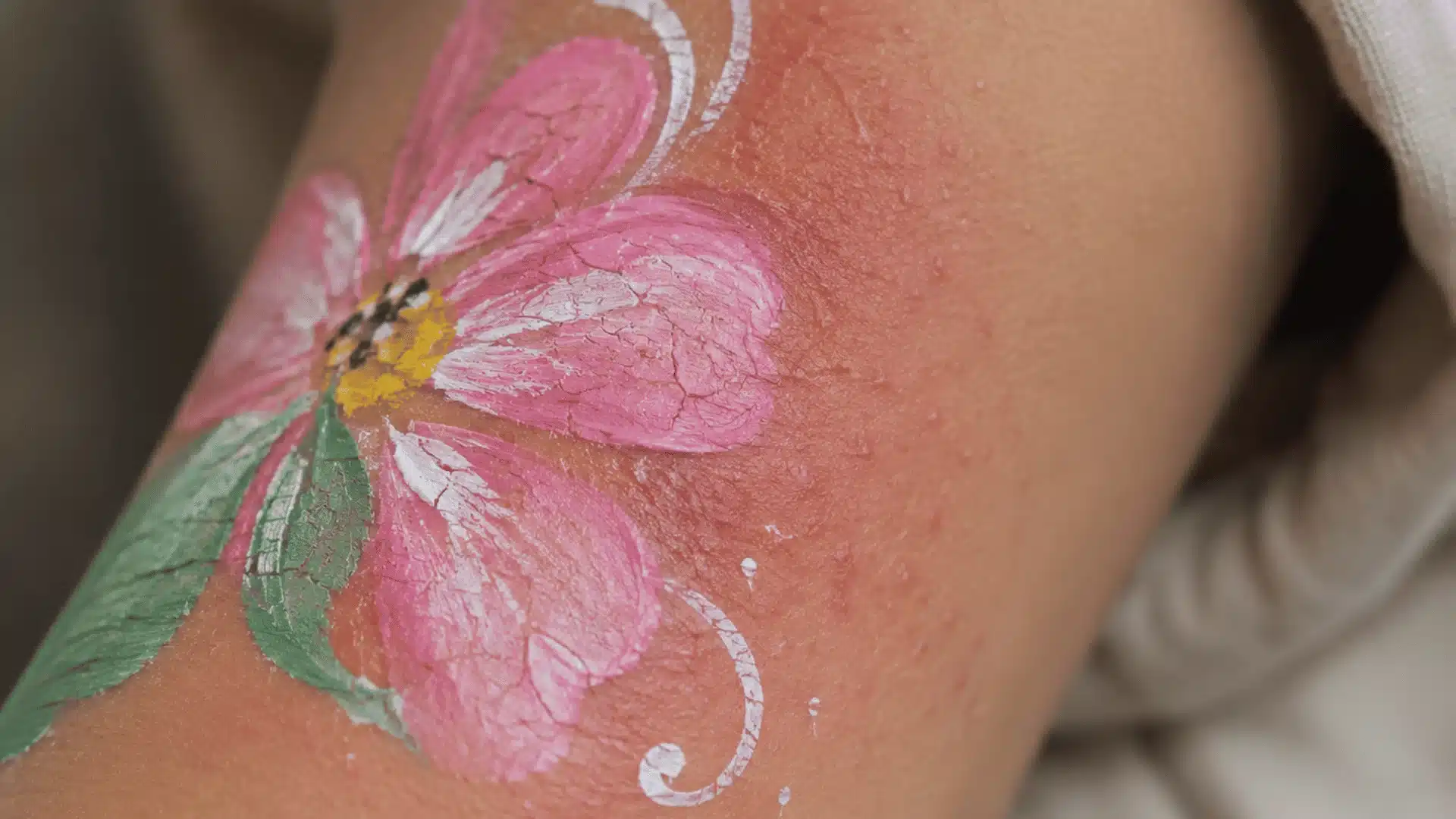
It seems like a good idea at first.
Acrylic paint is colorful, affordable, and easy to find. But temporary does not mean safe.
Even short contact can cause contact dermatitis. That means redness, itching, and swelling on the skin.
And since it dries into a hard layer, removing it means scrubbing hard or using harsh solvents. Both make things worse.
So, What Paint is Safe for Skin?

The good news is that there are paints made specifically for skin. You do not have to give up face or body painting. You just need the right products.
Face paint
This is the most common and widely available option. It is water-based, easy to apply, and washes off without scrubbing.
Look for brands that are dermatologist-tested and approved for use on skin.
Body Paint
Made for larger areas of the body. Good body paint is flexible, so it does not crack when you move. It also comes off easily with soap and water.
Henna
A natural option for temporary skin art. It is plant-based and has been used safely for centuries.
Just make sure you use natural henna and not black henna, which can cause reactions.
Theatrical Makeup
Used by performers and artists for years. It is safe for the skin and comes in a wide range of colors. A great option for costumes and events.
Always buy from trusted brands. Read the ingredients. And when in doubt, check whether the product is dermatologist-approved or certified for cosmetic use.
Your skin deserves that little bit of extra care.
Risks of Applying Acrylic Paint Directly onto the Skin
This is where things get serious. Acrylic paint on skin is not just uncomfortable. It can cause real harm.
Things you need to know:
- Skin Irritation: The chemicals in acrylic paint can cause redness, itching, and burning within minutes of contact.
- Allergic Reactions: Some people react strongly to the pigments or binders. Swelling and rashes are common.
- Clogged Pores: The paint seals the skin and blocks pores. This can lead to breakouts and infections.
- Toxin Absorption: Some pigments contain heavy metals. The skin can absorb these over time.
- Damage from Removal: Scrubbing dried paint off the skin causes friction burns and irritation.
- Eye and Mouth Risk: If used on the face, paint can get into the eyes or mouth. That is a serious health risk.
One session may not cause lasting damage. But the risks are real and not worth taking when safer options exist.
Safety and Precautions You Must Know About
If someone in your home is into face or body painting, these precautions are worth knowing. They can save a lot of trouble.
Check the Label First
Not all paints are the same. Look for products that say “skin safe” or “cosmetic grade” on the label. If it does not say that, keep it off the skin.
Do a Patch Test
Before applying any paint to a larger area, test a small amount on the inner wrist. Wait 24 hours. If there is no reaction, it is likely safe to use.
Keep it Away from the Face
Even skin-safe paints need to stay away from the eyes and mouth. Those areas are too sensitive for any kind of paint.
Remove it gently
Never scrub. Use mild soap and warm water to remove paint. If it does not come off easily, use a gentle oil like coconut oil first.
Never Use Acrylic Paint on Children
Kids have more sensitive skin. Their bodies also absorb chemicals more quickly than those of adults.
Paint it Off!
So, is acrylic paint safe for skin? NO. And now you have every reason to back that up.
The chemicals, the pigments, the way it seals the skin. None of it works in your favor. But that does not mean you stop having fun.
It just means you choose the right paint.
Pick products made for skin, do a patch test, and you are good to go.
Frequently Asked Questions (FAQ’s)
1. Does Acrylic Paint Wash Off Skin?
It does, but not easily. Dried acrylic paint often needs scrubbing or oil to fully remove it.
2. Is Acrylic Paint Toxic After It Dries?
Dried acrylic paint is generally less harmful, but flaking pieces can still be ingested or inhaled, posing potential health risks.
3. Is it Bad to Get Acrylic Paint on Your Hands?
A little paint on your hands may not cause an issue, but layers of it on your skin for hours could cause reactions.