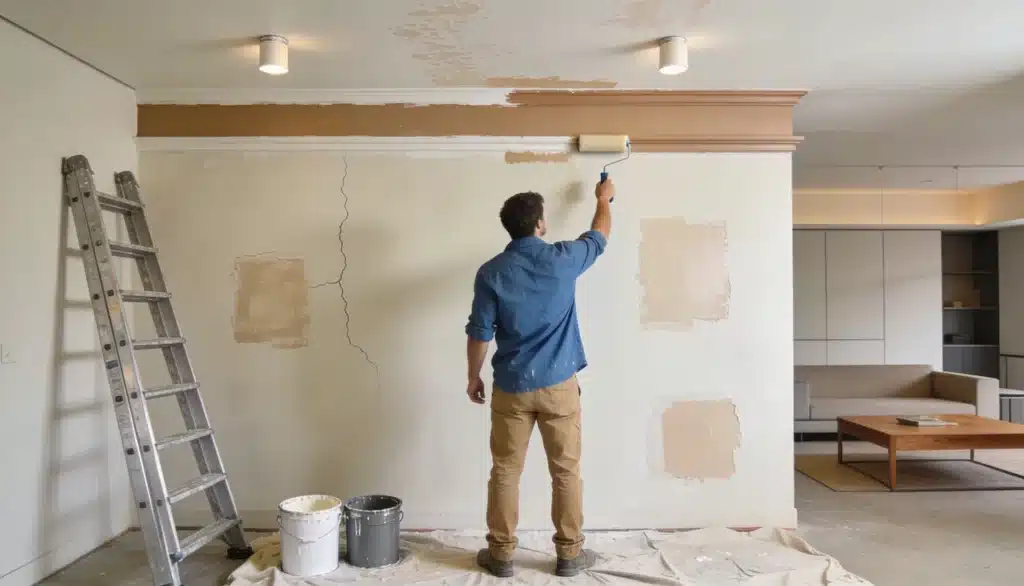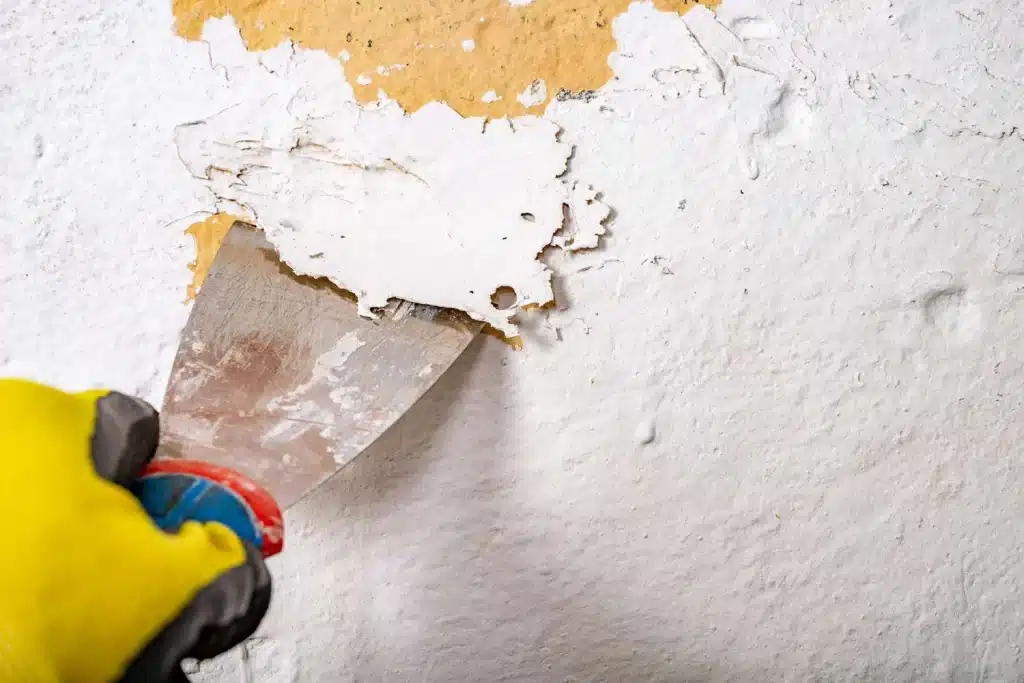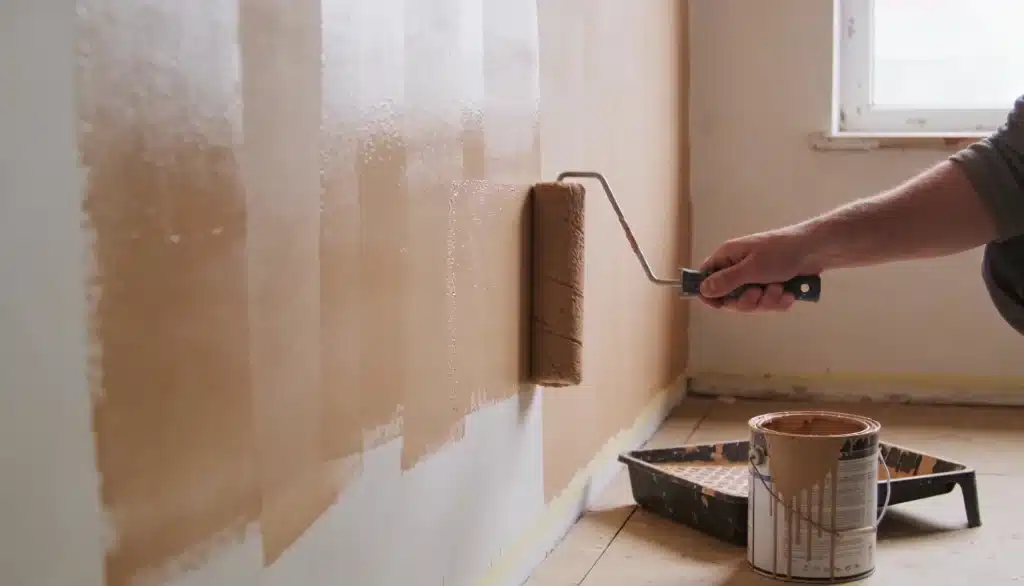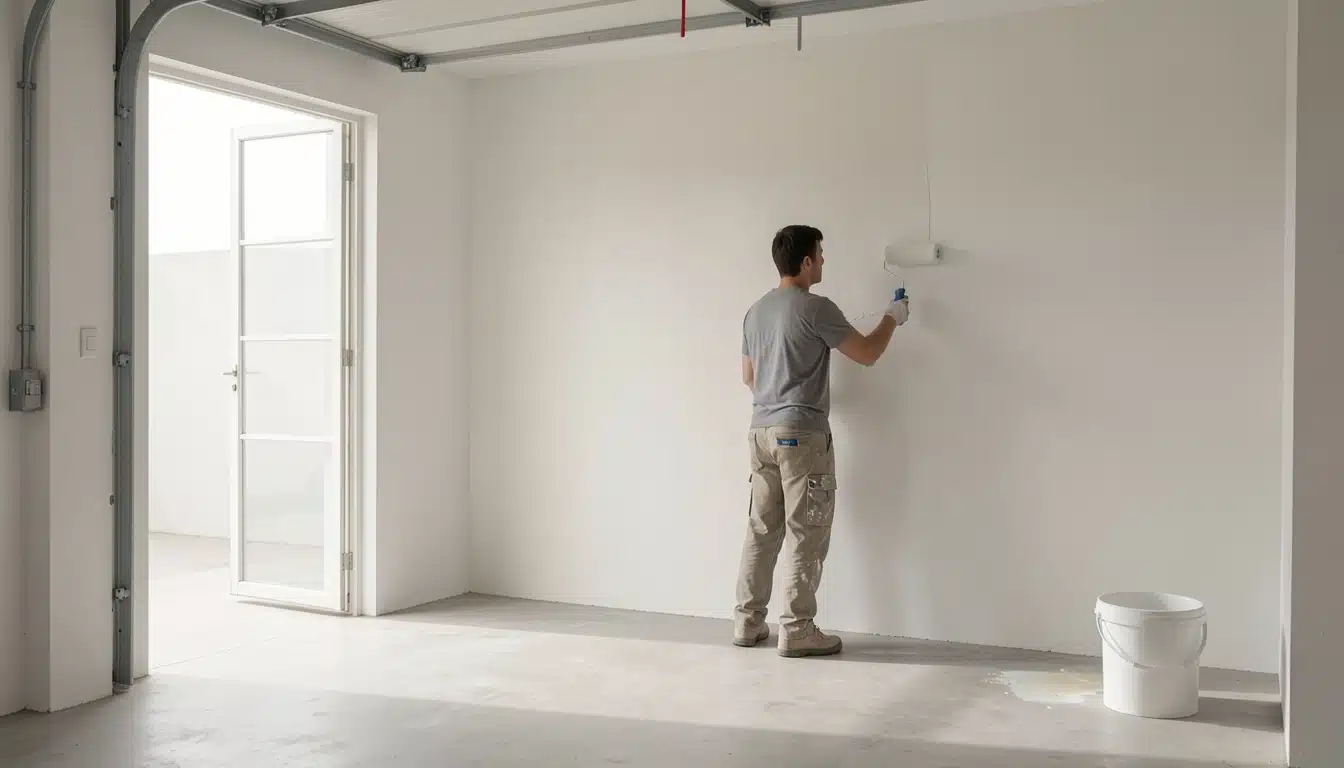

A leftover can of exterior paint, a room that needs a fresh coat, and one thought that follows naturally: can you use exterior paint inside?
It seems like a smart, practical move. Why let it go to waste, right?
But that can, sitting in your garage, was built for a completely different job.
The chemicals in it, the way it dries, and how it performs on indoor walls tell a very different story. And that story is worth knowing before you pop the lid.
Can You Use Exterior Paint Inside?
The short answer is no. Exterior paint contains chemicals designed for outdoor conditions, not for sealed rooms where people breathe all day.
The real problem is what is inside the can. Exterior paint contains fungicides, mildewcides, and high levels of VOCs formulated for outdoor exposure.
Trap those chemicals indoors, and you are looking at poor ventilation, prolonged exposure to fumes, and real health concerns.
Interior paint handles enclosed spaces far better because it was actually built for them.
The only exceptions are spaces such as garages or utility rooms with good ventilation and minimal daily use.
Exterior vs Interior Paint: Why is Exterior Paint Different from Interior Paint?
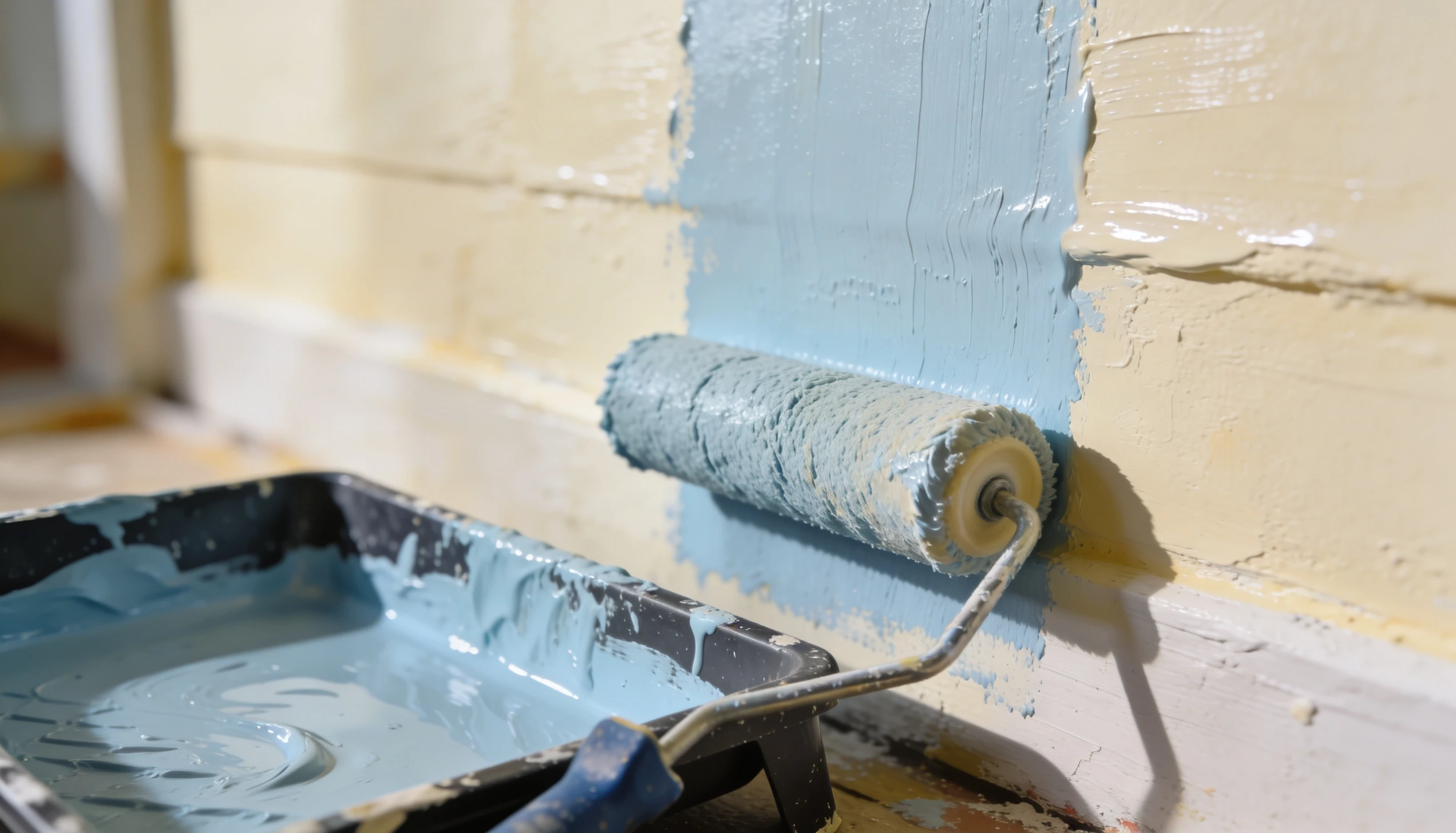
Exterior paint and interior paint might look the same in the can, but they are built for completely different conditions.
Interior paint is made for enclosed spaces, with ingredients that are safe around people day in and day out.
- Ingredients and Chemical Composition: Exterior paint contains higher VOC levels, fungicides, and weather-resistant binders, which can become problematic in closed indoor spaces.
- Durability and Finish Differences: The coating is tough and flexible by design, but it is built for outdoor surfaces, not forsealed interior walls.
- Odor and Fume Levels Indoors: The smell is stronger and lingers much longer, making it a real concern in rooms with limited airflow.
Interior paint works best in rooms where people spend time every day because it offers a smoother finish and lower odor.
Exterior paint is built for outdoor exposure and contains stronger ingredients that help surfaces handle moisture, heat, and sunlight.
What Happens if You Use Exterior Paint Inside?
Using exterior paint indoors does not just create a smell problem. It affects air quality, finish, and how the paint behaves on the wall over time.
1. Health and Air Quality Concerns
The high VOC content in exterior paint releases chemicals into the air long after the paint dries.
In an enclosed room, this builds up quickly.
It can cause headaches, eye irritation, and breathing discomfort, and in poorly ventilated spaces, prolonged exposure becomes a more serious concern.
2. Drying and Curing Issues
Exterior paint is formulated to cure in open air with natural airflow.
Indoors, that process slows down significantly.
The result is often a tacky surface that takes much longer to harden, and in some cases, an uneven finish that never fully settles.
3. Finish and Appearance Problems
Exterior paint tends to dry with a tougher, coarser texture that looks out of place on indoor walls.
It can appear too glossy, too rough, or simply off compared to what interior paint delivers.
No amount of extra coats will fix that difference.
If You Have Used Exterior Paint Inside, What Should You do?
It is done, and the paint is on the wall.
There are clear steps you can take right now to manage the situation before it becomes a bigger problem.
- Improve Ventilation Immediately: Open every window and door in the space and use fans to push fresh air through the room as continuously as possible.
- Monitor Indoor Air Quality: Pay attention to strong odors, eye irritation, or breathing discomfort. If symptoms persist, keep the room unoccupied until the fumes settle.
- Seal the Paint with a Safer Topcoat: Applying a low-VOC interior sealant over the exterior paint can help trap residual fumes and reduce off-gassing over time.
- Consider Repainting with Interior Paint: This is the most practical long-term fix. Repainting with a proper interior product gives a safer finish and better performance on indoor walls.
- When to Seek Professional Help: If the smell lingers for weeks or if anyone in the space is experiencing ongoing health symptoms, bring in a professional.
When You Can and Cannot Use Exterior Paint Inside?
Using exterior paint indoors depends heavily on the type of space and how often it is used.
Some low-traffic areas may handle it reasonably well, while occupied rooms can become uncomfortable due to strong fumes and slower curing times.
1. When Can You Use
Certain indoor spaces with steady airflow and limited daily use may be suitable for exterior paint.
These areas lower the chances of constant exposure and allow the coating to cure more effectively.
- Garages work better because open doors improve ventilation
- Storage rooms are safer when they receive regular airflow
- Sheds and utility spaces can handle tougher exterior coatings well
- Semi-outdoor areas face similar conditions to exterior surfaces
- Empty rooms reduce direct exposure to lingering fumes
2. When You Cannot
Exterior paint should be avoided in enclosed living spaces where people spend long hours each day.
Strong odors and chemical exposure may create discomfort indoors over time.
- Bedrooms can trap fumes and strong smells for longer periods
- Living rooms are not suitable because of constant daily occupancy
- Poorly ventilated spaces slow down the curing process significantly
- Homes with children or pets should avoid exterior paint indoors
- People with breathing sensitivities may react to lingering chemicals
The Right Paint for the Right Space
Choosing the right paint comes down to knowing what the space actually demands.
A bedroom wall and a kitchen backsplash are not the same problem, and treating them that way is how you end up repainting something two years earlier than you should have.
The finish matters. The formula matters. And so does where the wall lives, whether that is a sun-exposed exterior, a steam-filled bathroom, or a living room.
Whether that means a single accent wall or painting walls and trim the same color for a more seamless finish.
| Paint Type | Best For | Key Benefit |
|---|---|---|
| Water-Based Interior Paint | Bedrooms, living rooms | Low odor, easy to apply |
| Low VOC or Zero VOC Paint | Any indoor space | Safer air quality |
| Specialty Interior Paint | Kitchens, bathrooms | Moisture and scuff resistance |
| Weather-Resistant Exterior Paint | All outdoor surfaces | Handles sun, rain, temperature shifts |
| Acrylic or Oil-Based Exterior Paint | Siding, trim, fences | Strong adhesion and durability |
| Mold and Mildew Resistant Coating | Damp outdoor surfaces | Fights moisture and mold |
The right paint does not just protect the surface. It makes the space easier to live in, easier to maintain, and less likely to become a problem you have to deal with again in two years.
Conclusion
So, can you use exterior paint inside? Technically, yes, but practically, it is a decision that comes with real consequences.
The chemicals, the fumes, the finish, and the long-term performance all point in the same direction.
Interior paint exists for a reason, and it does the job better in any lived-in space.
Save the exterior paint for outdoor surfaces where it belongs. Your walls, your air quality, and anyone living in that space will be better off for it.
Frequently Asked Questions (FAQs)
1. Can You Use Exterior Paint Inside a Garage?
Yes, a well-ventilated garage is one of the few spaces where exterior paint is a reasonable option.
2. Does Exterior Paint Take Longer to Dry Indoors?
Yes, without outdoor airflow, exterior paint cures much more slowly and can leave a tacky surface for days.
3. Is Exterior Paint Toxic When Used Indoors?
It is not outright toxic, but the high VOC content in enclosed spaces can cause irritation, headaches, and poor air quality.
4. Can You Mix Exterior and Interior Paint Together?
It is not recommended as the chemical compositions differ, and mixing them compromises the performance of both products.
5. Does Primer Help When Using Exterior Paint Inside?
Primer improves adhesion but does nothing to reduce VOC levels or the fume-related concerns that come with using exterior paint indoors.