
You’re standing in an empty room, a stack of vinyl planks beside you, and thinking which way do these go?
It’s not as simple as just picking a direction and hoping for the best.
Lay them the wrong way, and a perfectly good room can feel narrow, dark, or just a little off. Get it right, and the same space feels open, bright, and put together.
The direction you choose depends on three things: the shape of your room, the source of your natural light, and the look you’re going for.
Once you know how those three factors work together, the right choice becomes pretty obvious.
Why is the Direction of Vinyl Plank Flooring Important?
The direction of flooring is not just a style choice. The direction you lay your planks affects how a room feels.
Run them lengthwise, and a narrow space stretches out. Lay them the wrong way, and it feels cramped.
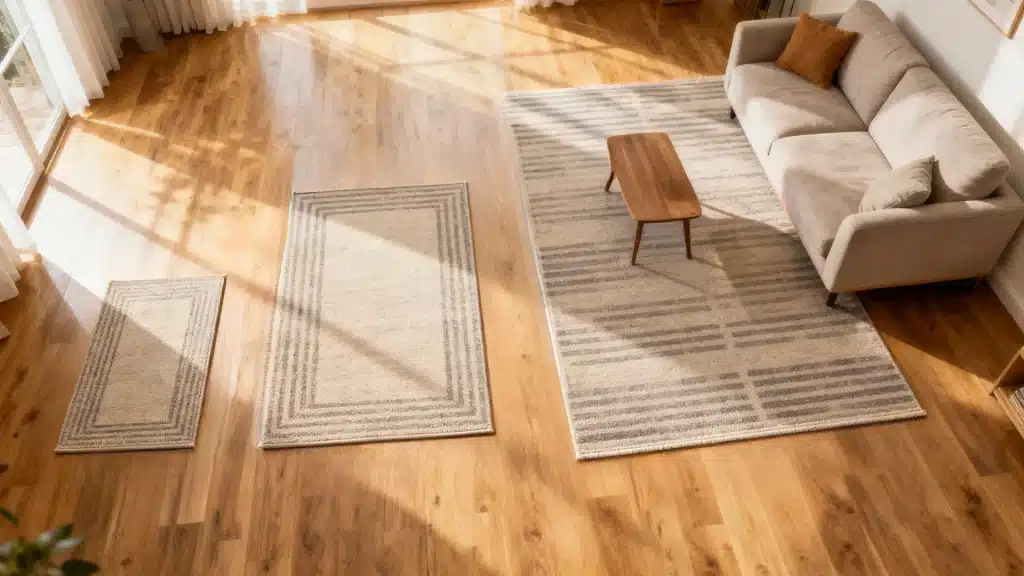
Light matters too. Planks parallel to your main window look smoother and more seamless.
The right direction can hide subfloor imperfections rather than highlight them.
People choose a direction based solely on looks, then notice every seam in their floor six months later because the light hits it at the wrong angle.
Which Direction to Lay Vinyl Plank Flooring in a Room Layout
There’s no single rule that works for every room. But room layout gives you the clearest clues.
The shape of the walkways and room connections directs you.
Parallel to the Longest Wall
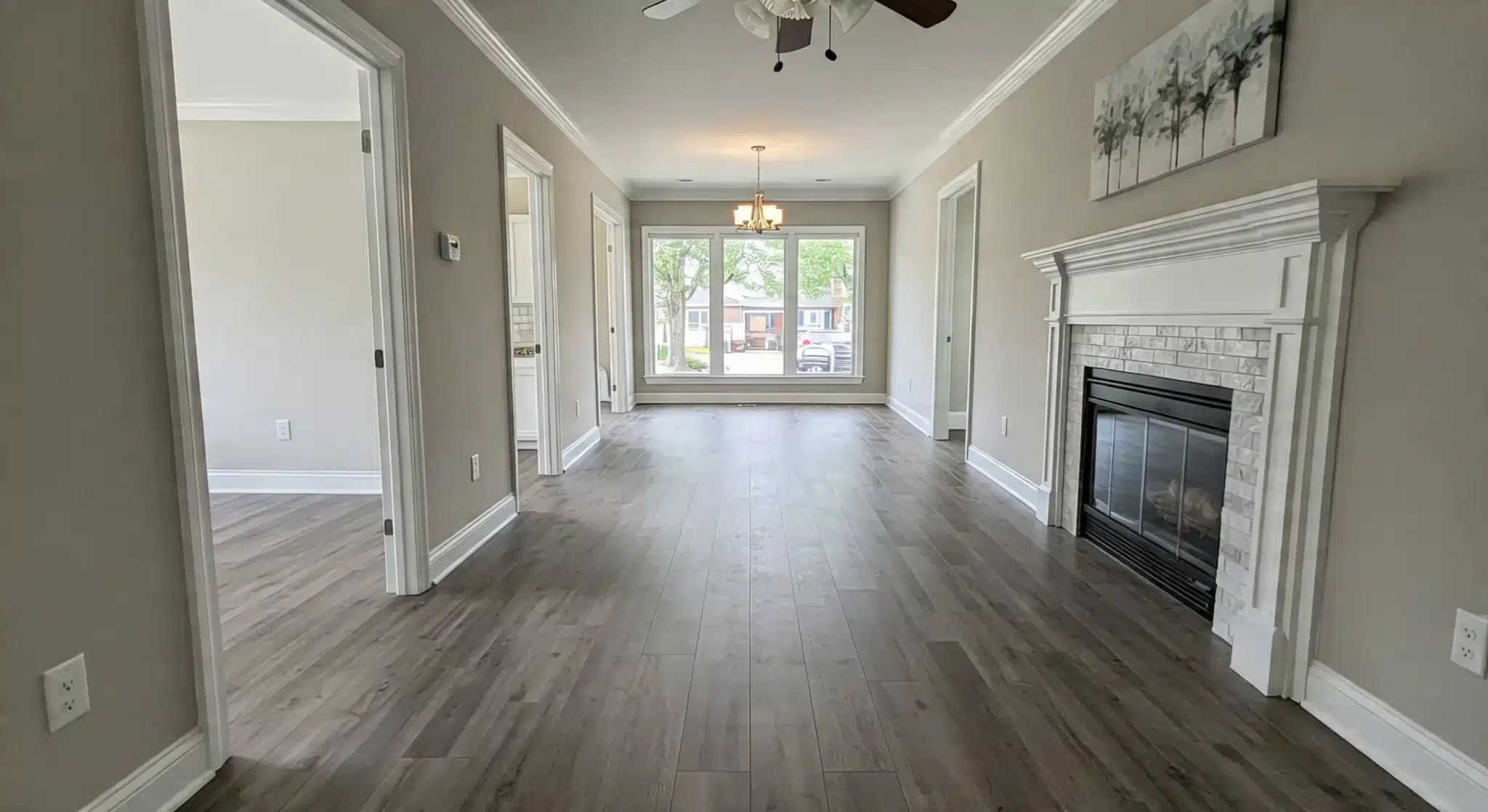
If you are trying to figure out which direction to lay vinyl plank flooring, going parallel to the longest wall is honestly one of the most popular layout patterns out there:
- Running planks parallel to the longest wall creates a balanced, intentional flow.
- It also makes the room look longer and more open, especially in rectangular spaces.
- Fewer cuts mean less waste and quicker installation, making it a smart choice visually and logistically.
When measuring a longest wall with a bay window or angled corner, measure the true straight run, not the wall with the cutout.
Following the Natural Path of Movement
The way you walk from room to room every day can actually tell you a lot about which direction to lay vinyl plank flooring.
- Think about how you move through a room: you walk in, move forward, and your eyes follow the same path.
- Laying planks in the direction of that natural movement just feels right; it’s almost instinctive.
- In a living room, that’s usually toward the main seating area.
- In a bedroom, it’s often toward the bed.
- The floor quietly directs the eye without drawing attention to itself.
In open-plan homes, I always trace the path from the front door to the kitchen first. That single line usually tells you everything about which direction works for the whole space.
Running Planks From Entry to Back
Starting your plank run at the entry and through to the back creates a strong visual line that draws you in.
It also makes the space feel deeper and more inviting the moment you step through the door.
First impressions matter; a well-directed floor sets the tone before walls or furniture.
What All Factors Affect the Direction of Vinyl Plank Flooring
These factors separate a floor that looks amazing from one that just looks like it was installed.
1. Room Shape and Size
Your room is already giving you hints. A long, narrow space is practically begging for planks to run along its length.
Fight the shape, and the whole space feels off balance.
2. Traffic Flow and Movement
Walk through the room naturally.
That’s your plank direction. Floors that follow natural movement feel cohesive and intentional every single day.
3. Subfloor Condition
The right plank direction can quietly camouflage dips and bumps, rather than putting them on full display.
A little planning here saves a lot of regret later.
4. Focal Points
A fireplace, a feature wall, a bold bed frame. Run your planks toward it and watch the whole room lock into place.
How Light Affects Vinyl Plank Direction
Light is one of those things that quietly makes or breaks your floor’s final appearance.
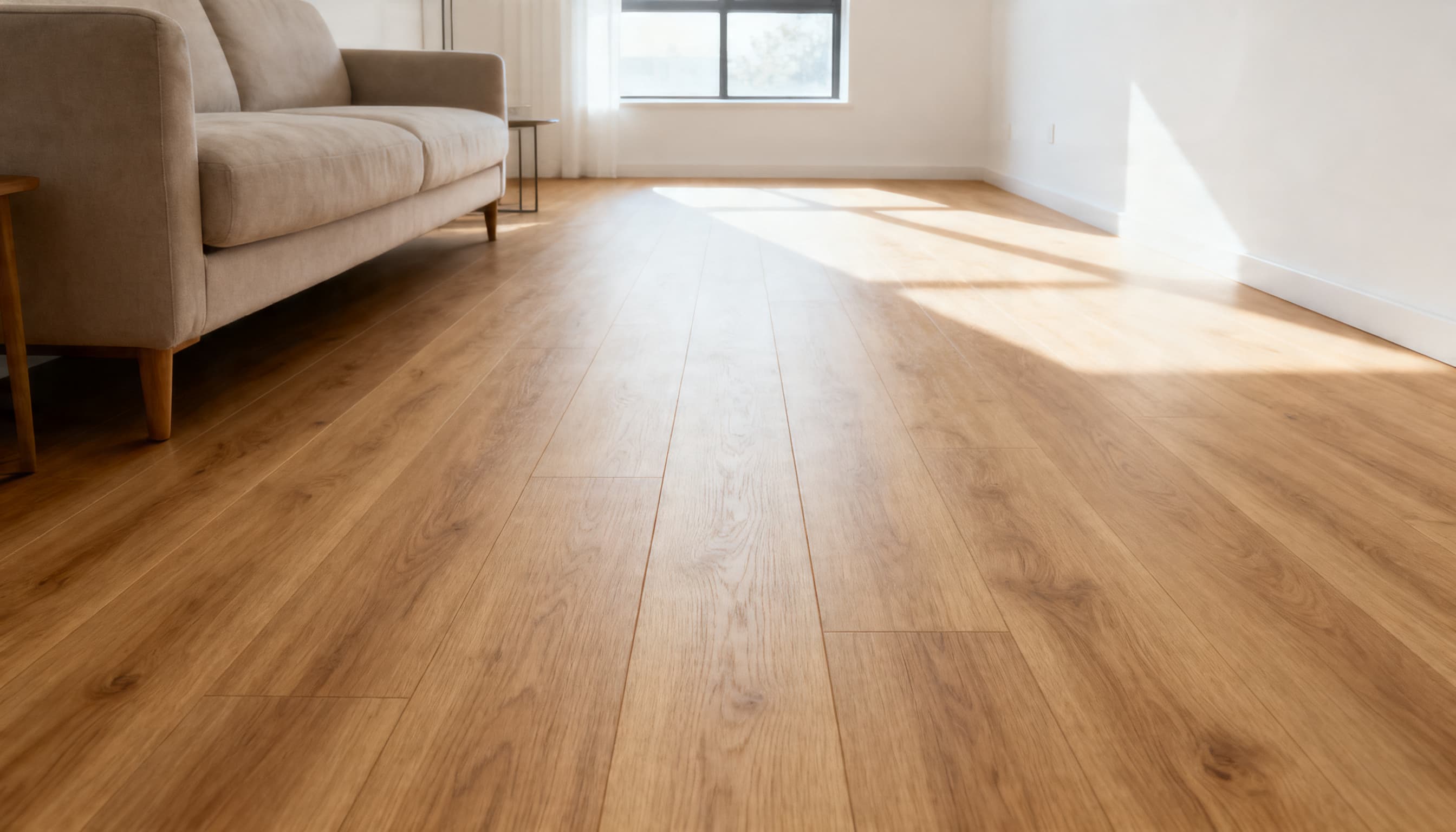
Laying planks parallel to your main light source, usually the largest window, helps the floor look smooth and seamless. The light runs along the planks rather than cutting across them.
Go perpendicular to the light, and the seams become more visible.
Not a dealbreaker, but worth knowing.
Natural light changes throughout the day, too.
So consider your room’s brightest hours before deciding. In a kitchen, vinyl plank flooring should run parallel to the longest wall or toward natural light for a balanced look.
A south-facing room with afternoon sun is the harshest test. The low angle catches every seam. Running planks parallel to that window made a real difference in how finished the floor looked.
Choosing the Right Direction For Different Room Types
Every room has its personality and challenges. What works in a spacious living room may not suit a narrow hallway.
Here’s how to approach each space.
Living Room Flooring Direction
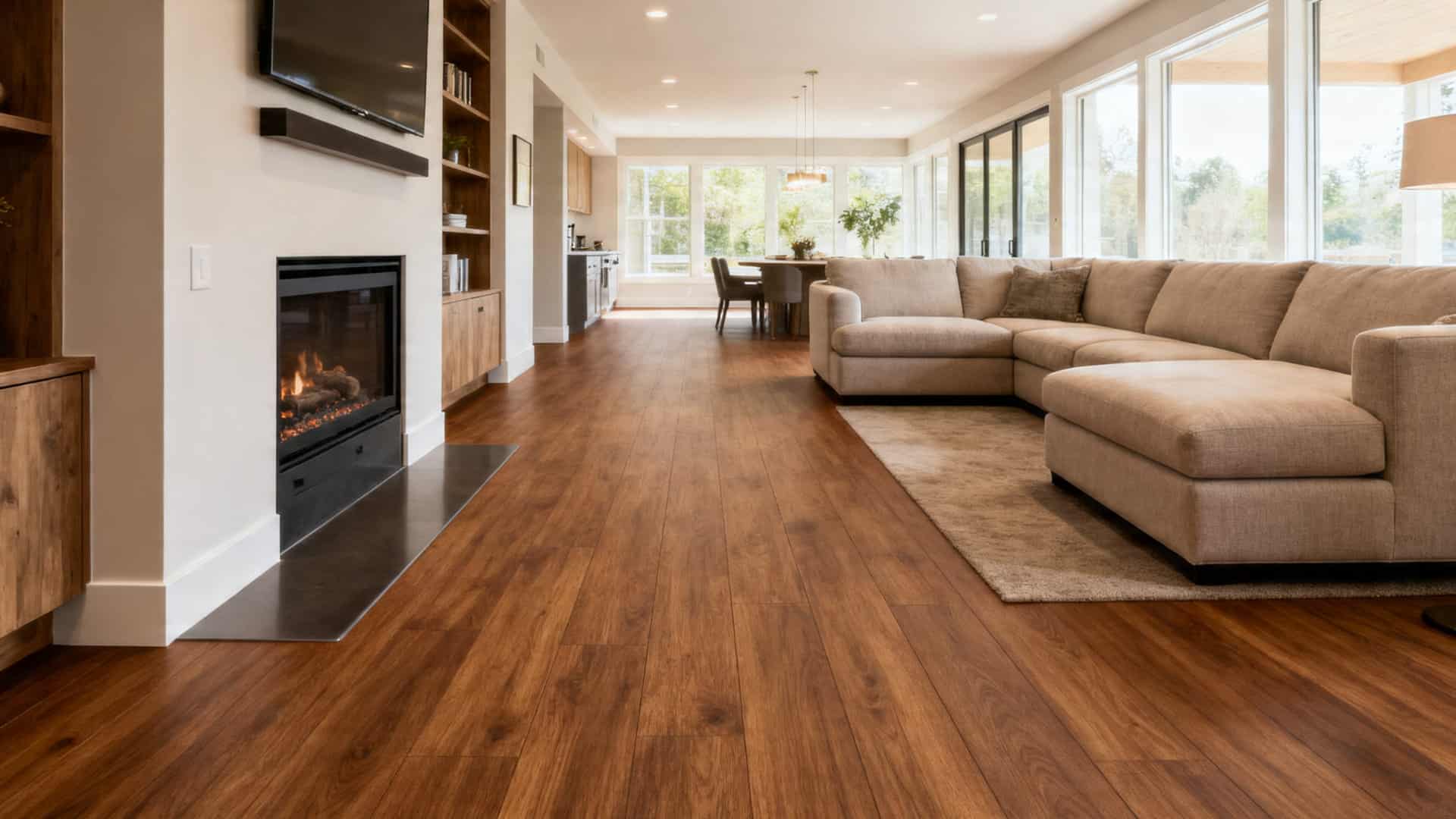
The living room is usually the first thing people see, so it sets the tone for the rest of the home.
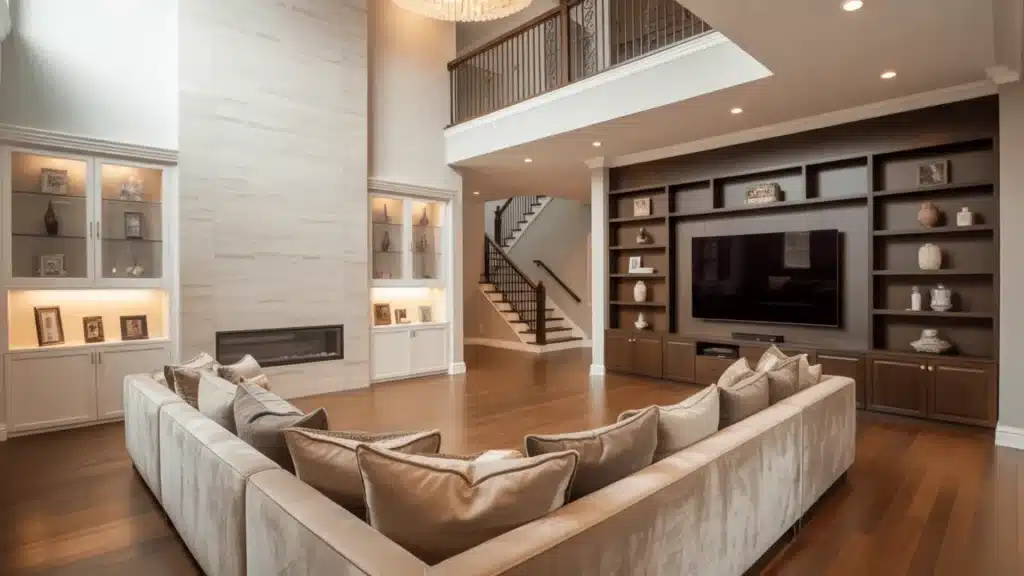
Run your planks parallel to the longest wall or toward the focus point of a fireplace, a feature wall, or your main seating arrangement. This creates a natural flow that ties the room together.
It keeps everything feeling connected rather than choppy.
Bedroom Flooring Direction
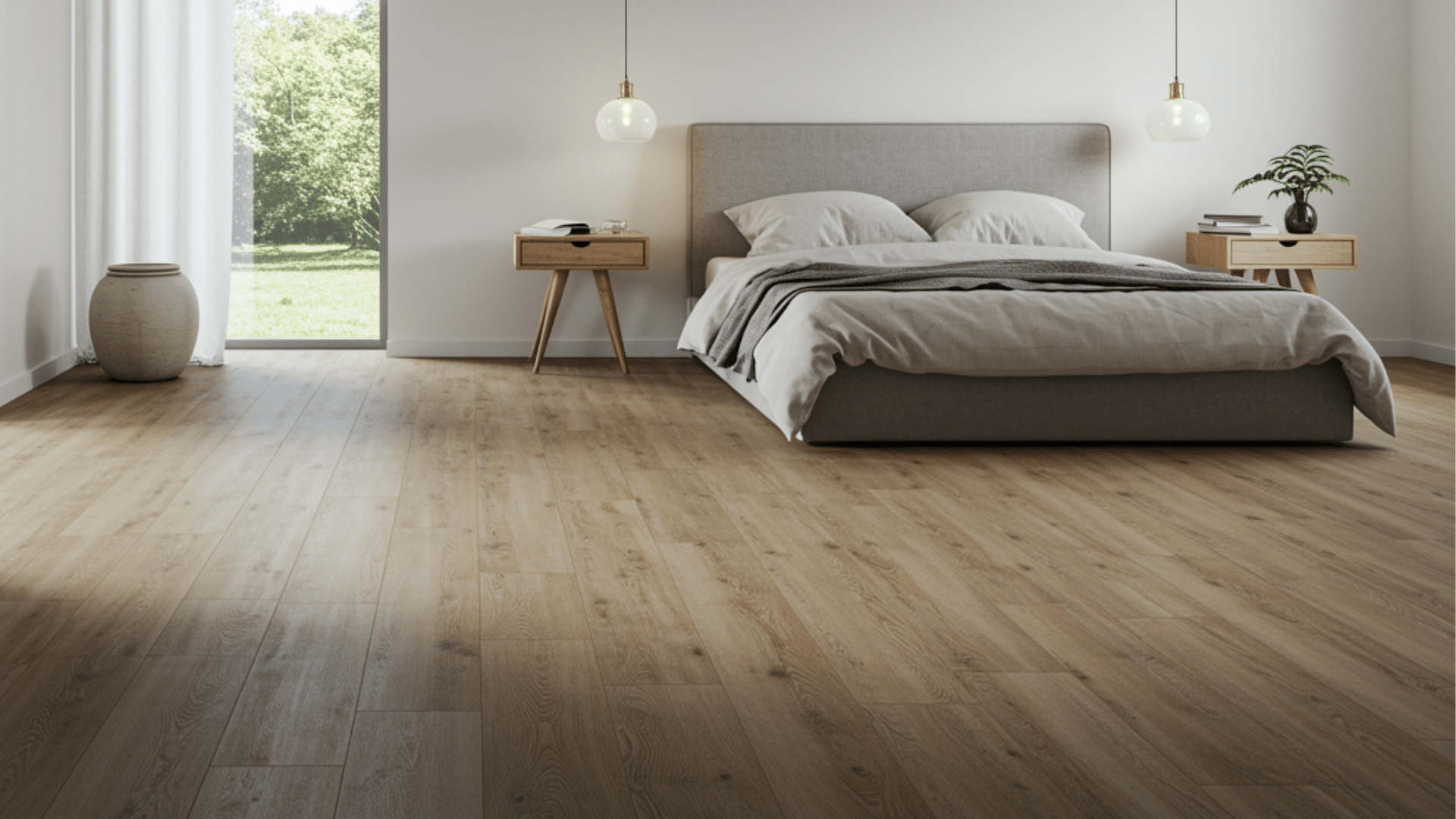
The bedrooms are personal spaces, so comfort and visual calm matter here.
Running planks toward the bed is the most popular choice and for good reason.
It draws the eye naturally to the room’s focal point and makes the space feel intentional. In smaller bedrooms, running planks lengthwise across the longest dimension adds a sense of space.
Since bedrooms aren’t high-traffic areas, you have a little more creative freedom here than in other rooms.
Kitchen Flooring Direction
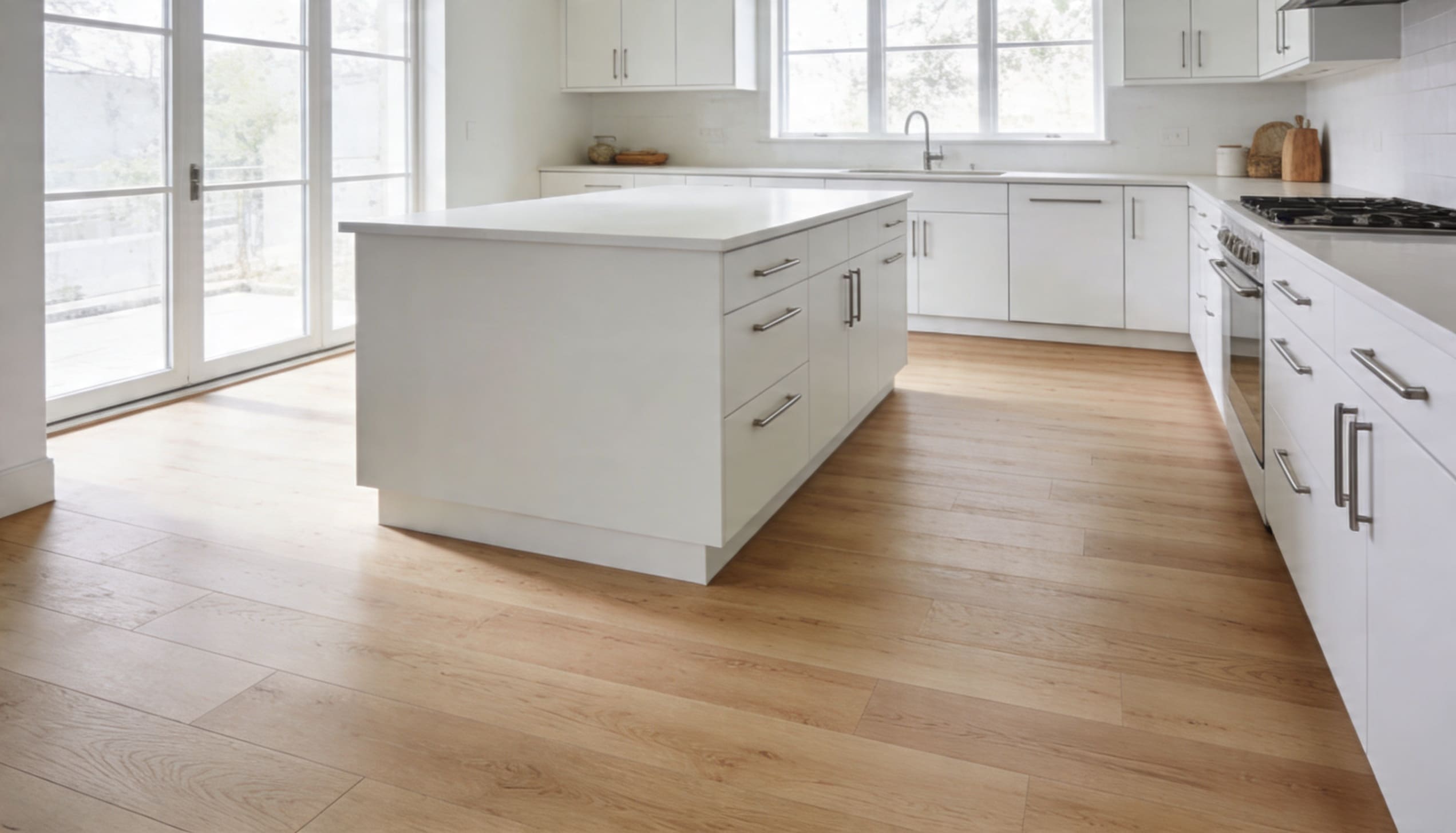
Running planks along the kitchen, usually toward the main work area, keeps it clean and tidy.
It also visually widens a galley-style kitchen, which can otherwise feel tight.
If your kitchen flows into a dining or living area, try continuing the same plank direction throughout.
It creates a seamless look and makes the whole space feel bigger and more cohesive.
Hallways And Narrow Spaces
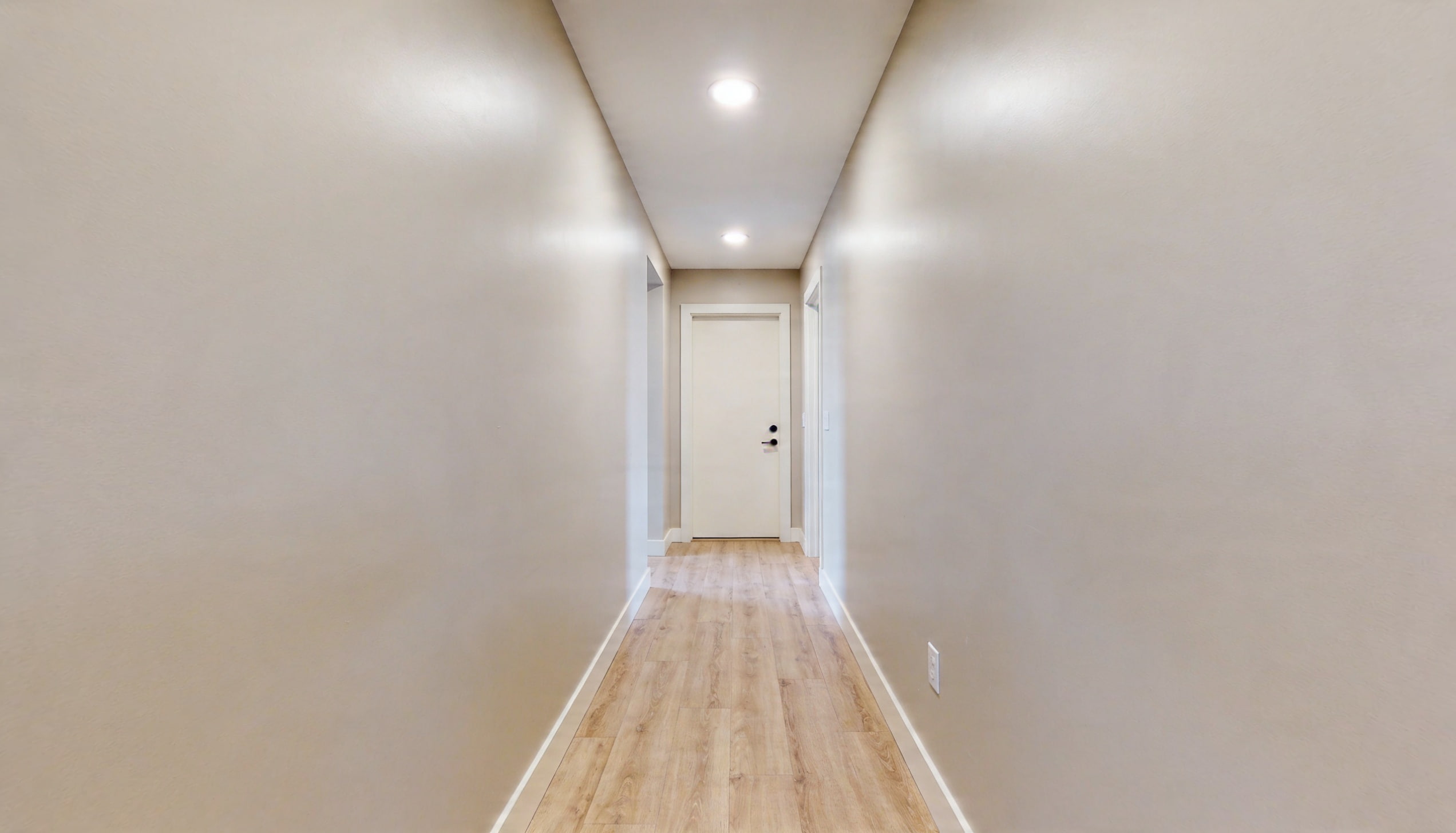
This one’s pretty clear. Always run planks lengthwise down a hallway. Running them the long way visually stretches the space and naturally directs movement from one end to the other.
Go sideways, and the hallway instantly feels shorter and wider than it actually is.
Bathroom Flooring Direction
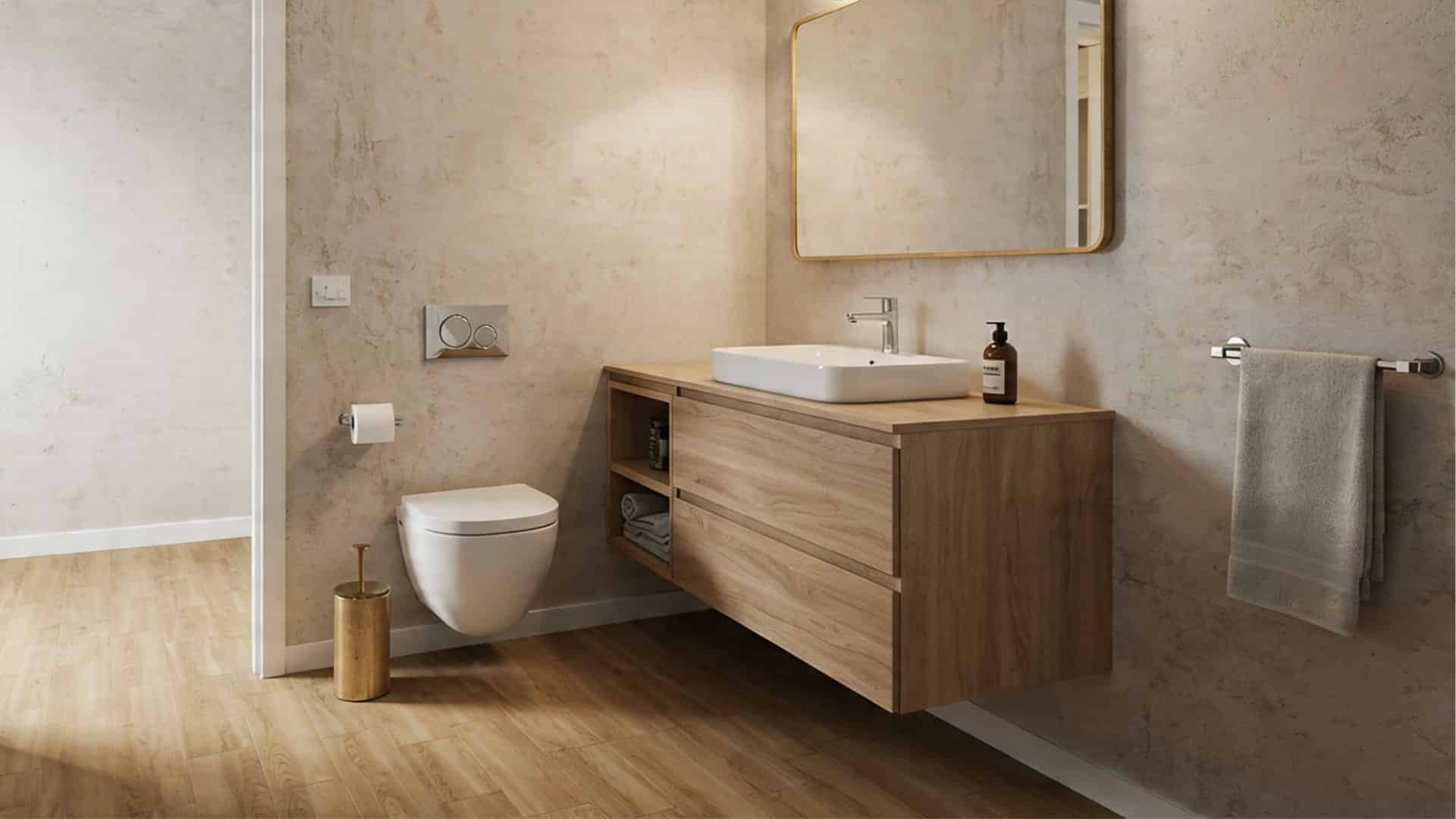
Bathrooms are often overlooked when it comes to plank direction, but they deserve the same thought. Run planks away from the door and toward the back wall. It makes small bathrooms feel bigger.
Consider your vanity and fixtures, too.
Align planks parallel to the longest wall for a clean look, especially in tight spaces.
Basement
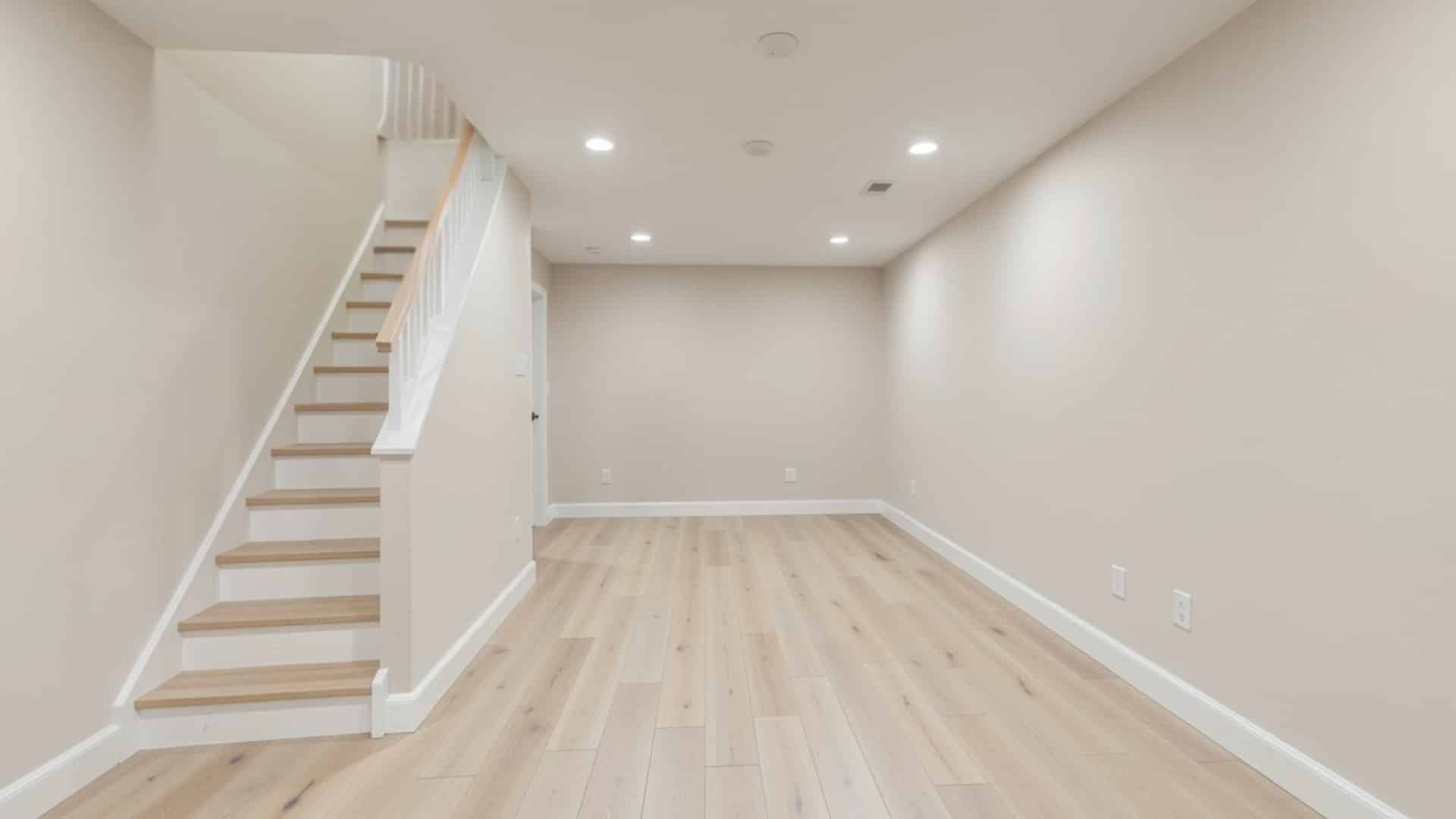
Basements have a reputation for feeling dark, cramped, and uninviting. Honestly, a lot of that comes down to flooring direction, and it’s an easy fix. Run your planks lengthwise toward the brightest part of the space.
A window, a walkout door, or your main light source. It pulls the eye forward and instantly makes the room breathe.
Best Vinyl Plank Layout Patterns to Consider
Direction is just one piece of the puzzle. The pattern you choose adds another whole layer to how your floor looks and feels.
Straight Lay
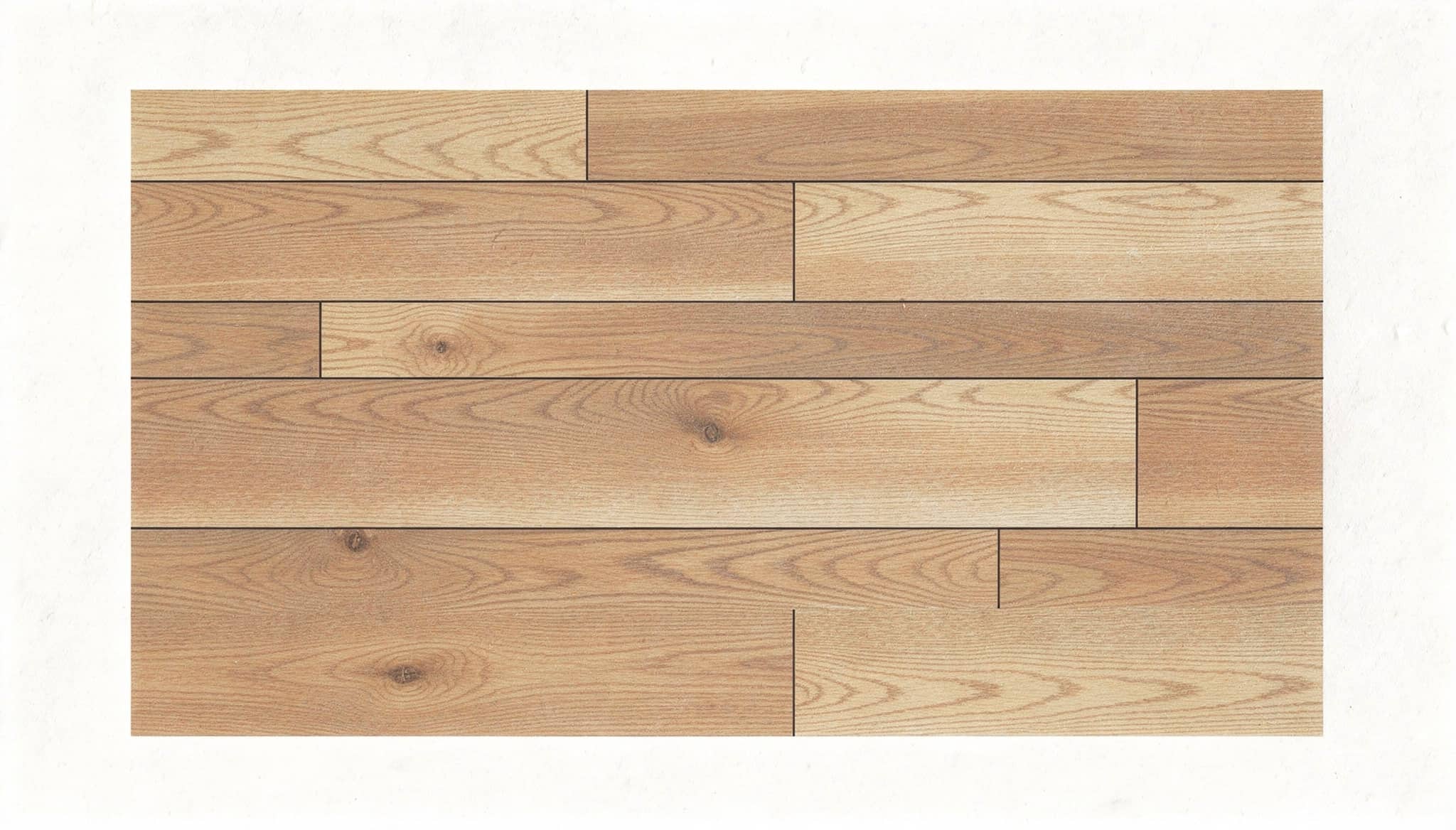
If you are just starting out and trying to figure out which direction to lay vinyl plank flooring, straight lay is the easiest way to go.
It works great in large, open spaces, saves time, and uses very little material.
Staggered Layout
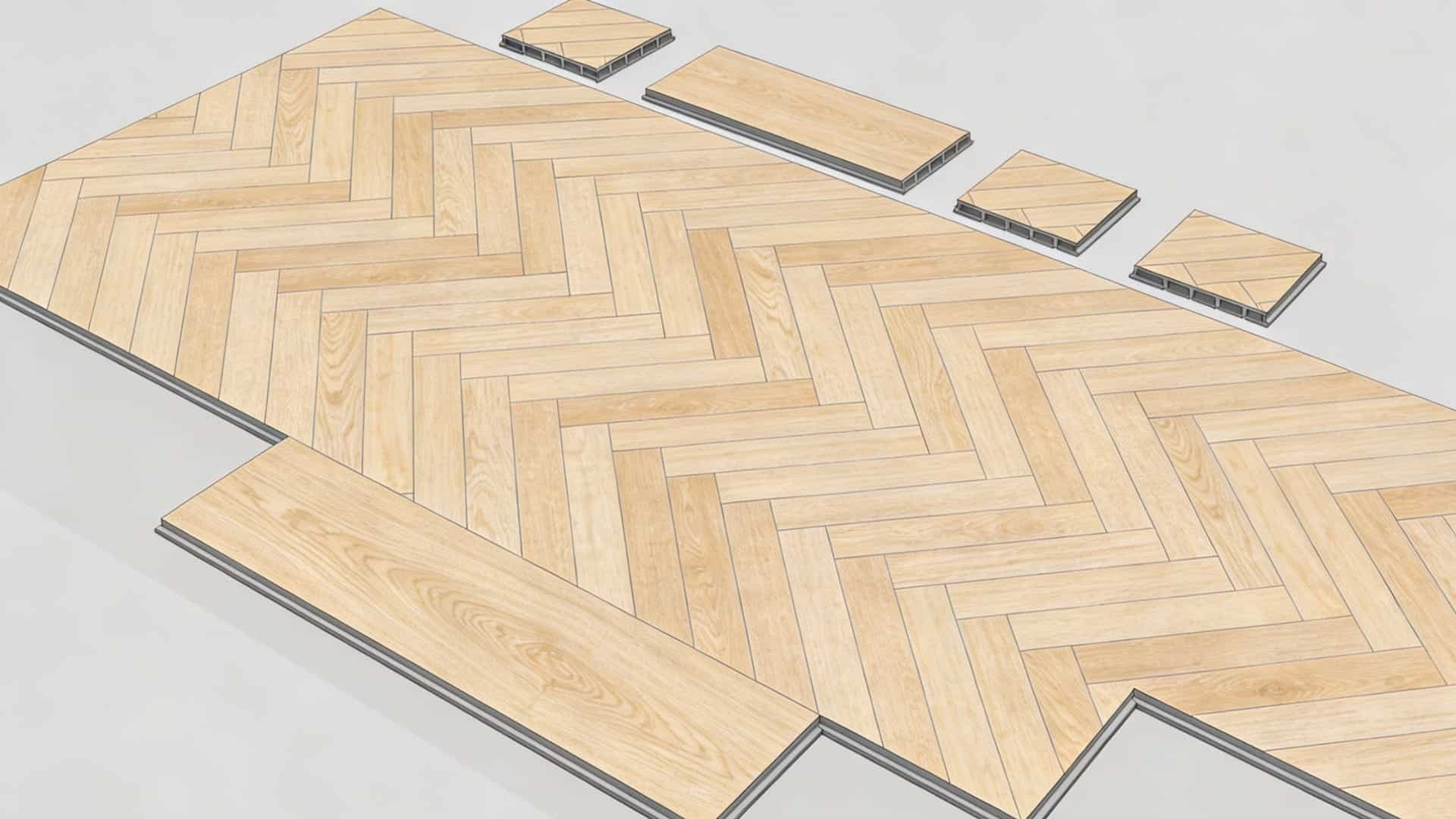
This is one of the most common layout patterns people use in living rooms and other busy areas. It hides the seams really well and gives your floor a natural, real-wood feel without much extra effort.
Herringbone
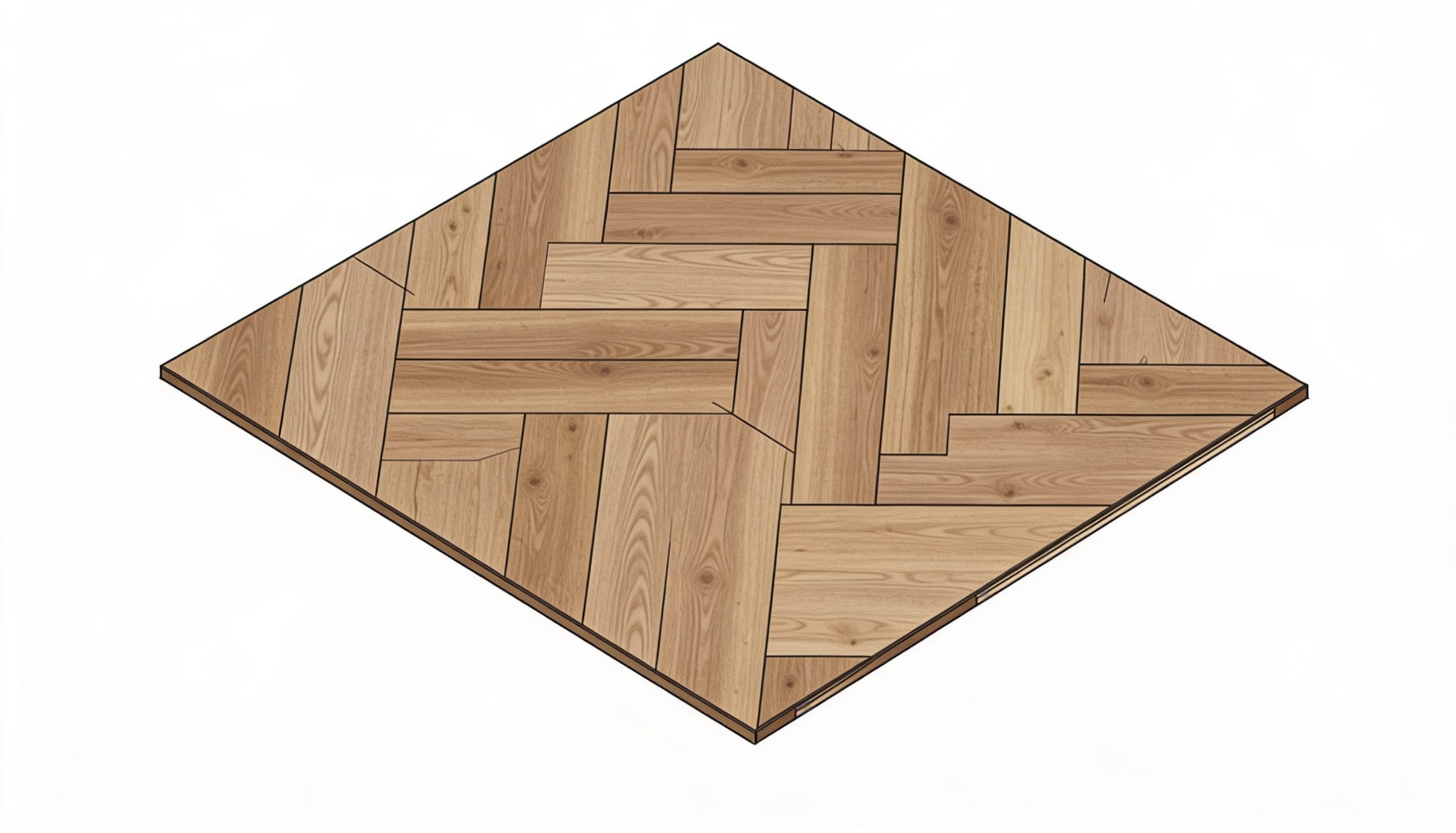
Herringbone is a step up from the basics, but the result is worth it.
It works really well in hallways and entryways, giving your floor a bold character that people will notice the moment they walk in. Herringbone looks great, but it generates 15–20% more waste than straight lay.
Factor that into your material order before you commit.
Chevron
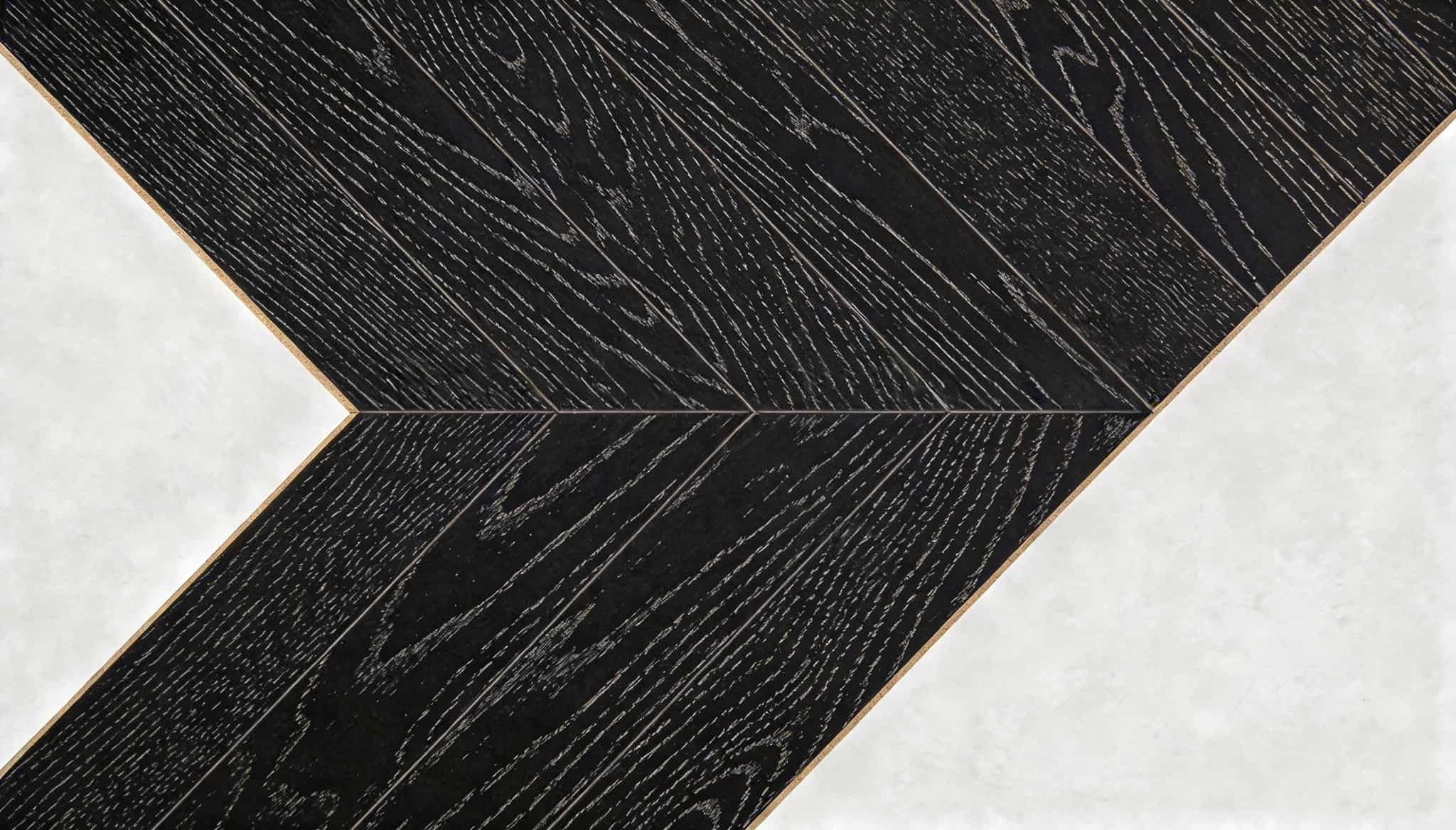
Chevron is the one floor that looks high-end and clean. It takes a little more skill, but in a luxury room or a feature space, it brings a sleek finished look that honestly speaks for itself.
Pro Tips From Flooring Experts
Before you snap your chalk line, check your starting wall with a long level.
Most walls aren’t perfectly straight. If you lock your first row to a crooked wall, every row after it drifts
A few insider pointers that make a real difference:
- Dry Lay First: Arrange a few rows without locking them in. It helps you visualize the final look.
- Snap a Chalk Line: it keeps your rows straight from start to finish.
- Work Toward Natural Light: Your seams will practically disappear.
- Mix Planks from Multiple Boxes: Color and texture vary slightly, so blending avoids patchy results.
- Stagger Your End Joints: Keep at least 6 inches between seams for a cleaner, more natural look.
Final Thoughts
Now that you understand which direction to lay vinyl plank flooring.
Choosing the right direction for your vinyl plank flooring isn’t complicated, but it does make a real difference.
It shapes how your room looks, feels, and flows every single day.
Take the light into account. Consider the shape of each room and how they connect to one another.
When in doubt, run parallel to the longest wall; it rarely steers you wrong. A little thinking upfront saves a lot of regret later.
Frequently Asked Questions (FAQ’s)
1. Which Way Should Vinyl Plank Flooring Run in a Halfway?
Vinyl plank flooring in a hallway should run lengthwise to make the space look longer and guide natural flow.
2. Does Vinyl Plank Direction Need to Match Existing Flooring in Adjoining Rooms?
Not always, but it helps. When two rooms share an open doorway, matching directions keep the space connected. If separated by a door, you have more flexibility. Use a transition strip either way.
3. Which Way Should Vinyl Plank Flooring Run in the Kitchen?
In a kitchen, vinyl plank flooring should run parallel to the longest wall or in the direction of natural light for a balanced appearance.