
Picking a rug might sound simple.
But if you get the size wrong, it throws the whole room off. A rug that’s too small makes furniture look like it’s floating.
And if its too big, the space feels cramped.
But this blog will help you find the common area rug sizes so you can shop without any confusion.
What is the Most Common Rug Size?
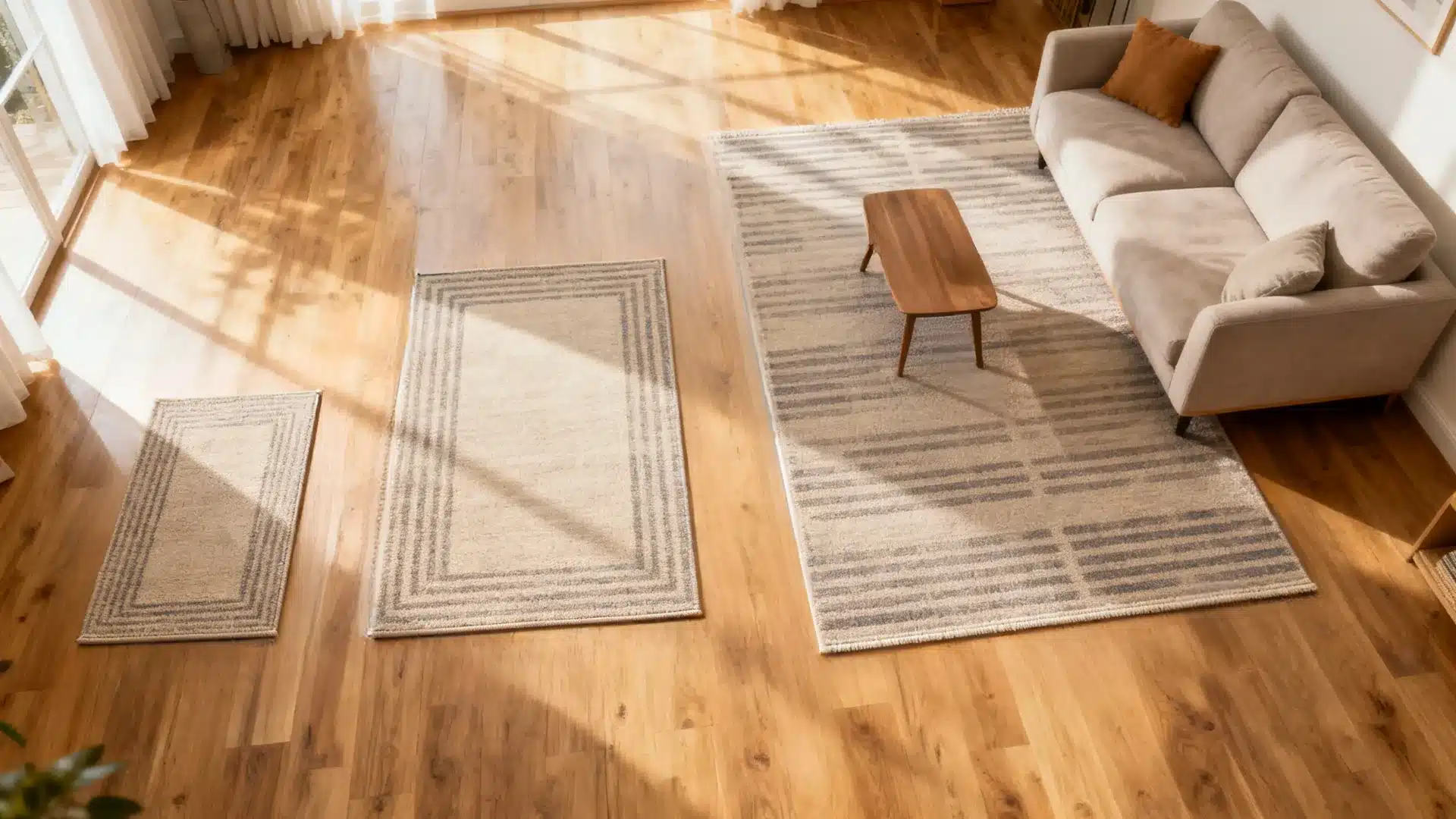
Area rugs come in quite a few standard sizes.
But if there’s one size that fits almost every home, it’s the 8’x10′. It’s the most popular rug size out there, and for good reason.
It works well in a living room, a master bedroom, or even a large dining space.
You can place all your main furniture legs on it, or just the front legs. Either way, it makes the room feel put together.
If your space is slightly bigger than 9’x12′ is the next step up. But for most rooms, the 8’x10’ hits the sweet spot
Standard Rug Sizes Chart
A standard rug size chart takes the guesswork out of the window.
It lays out the most common area rug sizes in one place, so it’s easy to match a rug to a room before making a purchase.
From small accent rugs to large room-sized options, a standard chart makes it easy to choose.
| Rug Size (Feet) | Dimensions (Inches) | Best For |
|---|---|---|
| 2′ x 3′ | 24″ x 36″ | Entryways, small spaces |
| 3′ x 5′ | 36″ x 60″ | Bedside, compact areas |
| 5′ x 7′ | 60″ x 84″ | Small living rooms |
| 6′ x 9′ | 72″ x 108″ | Medium living rooms, under coffee tables |
| 8′ x 10′ | 96″ x 120″ | Standard living rooms, under queen beds |
| 9′ x 12′ | 108″ x 144″ | Large living rooms, under king beds |
| 10′ x 14′ | 120″ x 168″ | Spacious rooms, open layouts |
Room by Room Guide to Common Area Rug Sizes
Every room has a different look.
And the right rug size depends on how the space is used; a rug that works well in a living room won’t necessarily work in a bedroom or kitchen.
Knwoing about the common area rug sizes makes it easier to find the right fit.
Living Room Rug Sizes
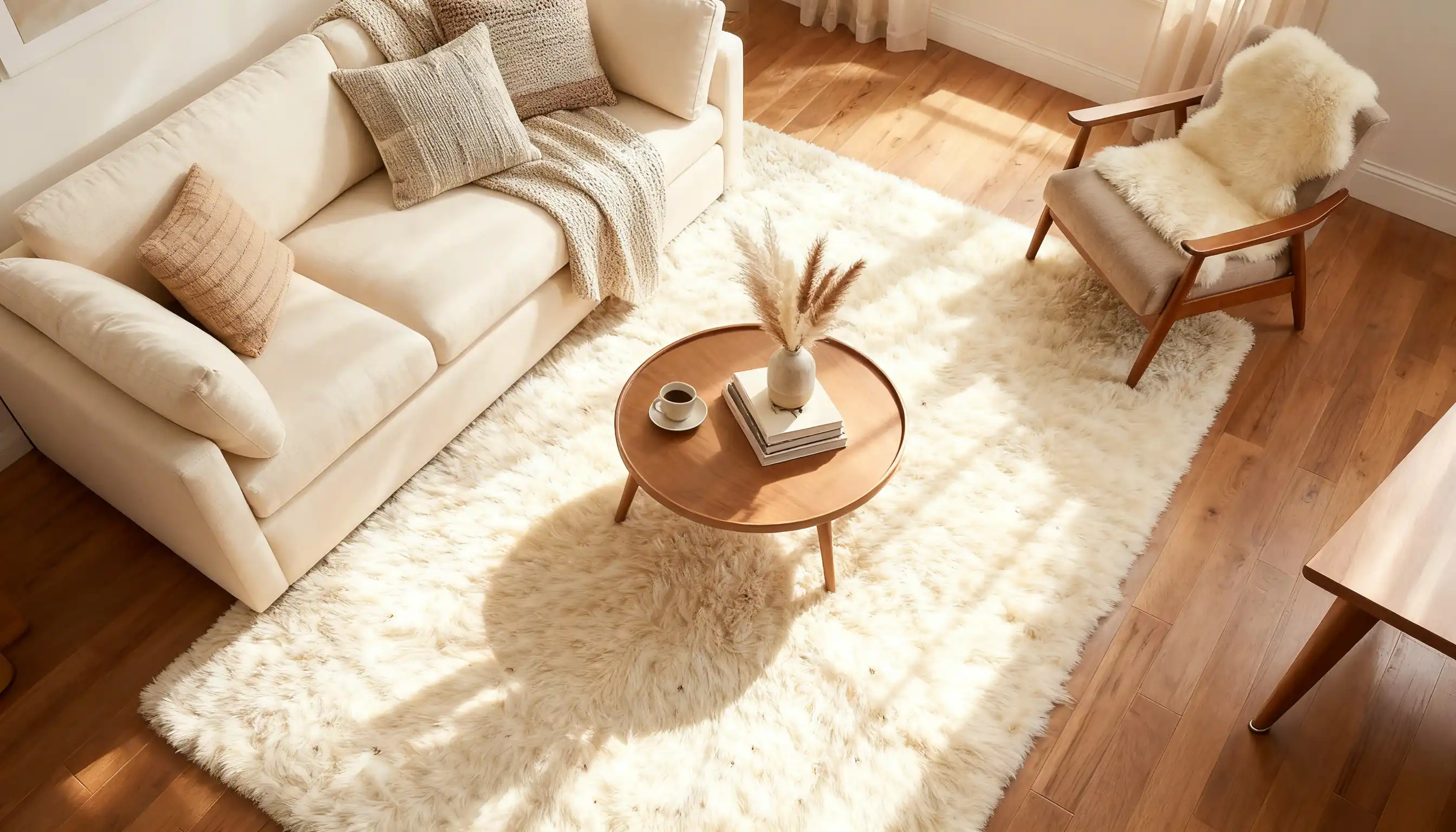
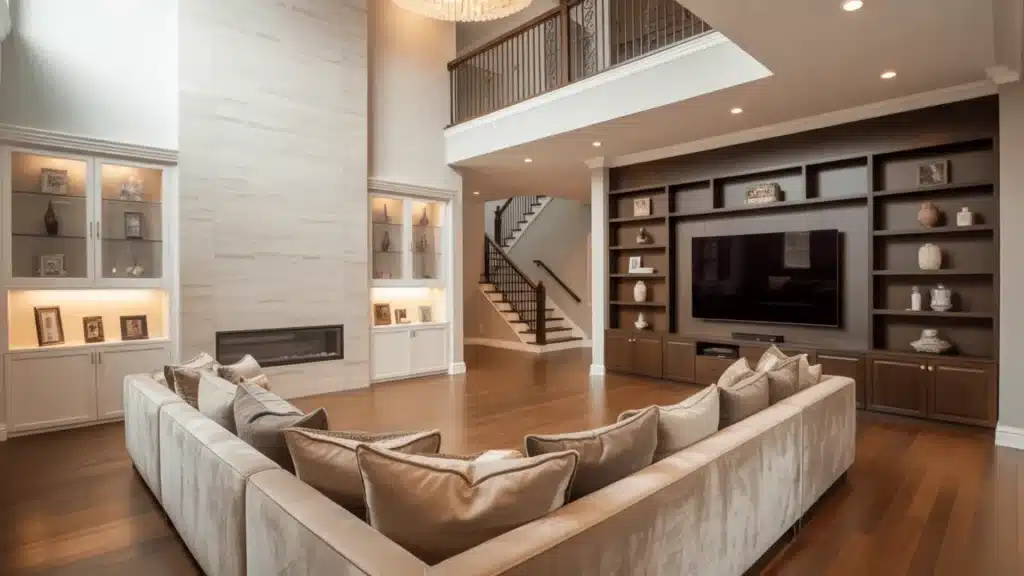
The living room usually has the most furniture, so the rug needs to work around the seating layout.
For a standard living room, an 8×10 is the most practical choice.
It’s large enough to anchor the sofa and chairs without taking over the floor, and in a bigger room, a 9×12 keeps everything feeling connected.
The front legs of all main seating pieces should sit on the rug.
If the room is on the smaller side, a 6×9 can still do the job well.
Bedroom Rug Sizes
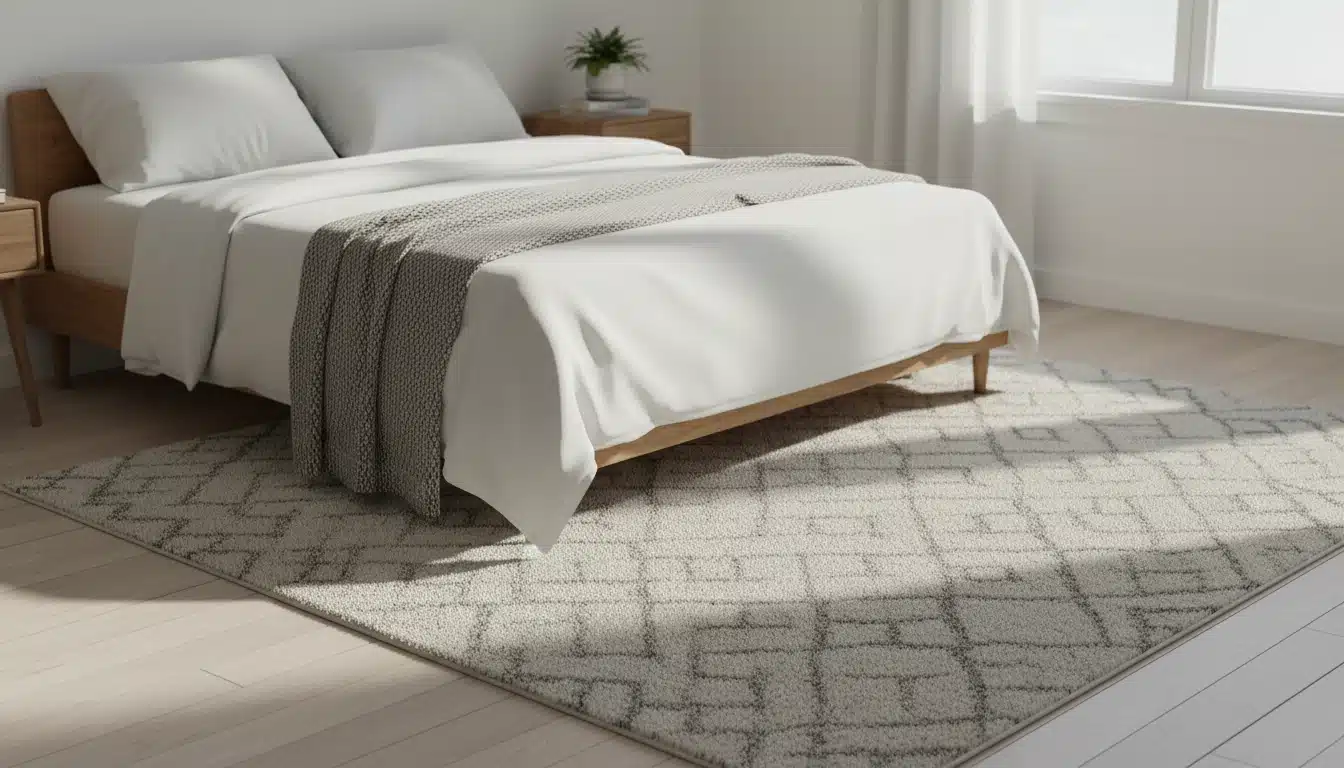
The bedroom rug should frame the bed and give enough soft floor space on the sides for a comfortable step down each morning.
For a queen bed, an 8×10 placed under the lower two-thirds of the bed works well.
Leaving about 18 to 24 inches of rug on each side, and a king bed pairs better with a 9×12 for the same effect.
In a smaller bedroom, a 5×8 placed at the foot of the bed is a better option.
Choosing a smaller rug size adds warmth and softness without overwhelming a tight space and making the room look cluttered.
Dining Room Rug Sizes
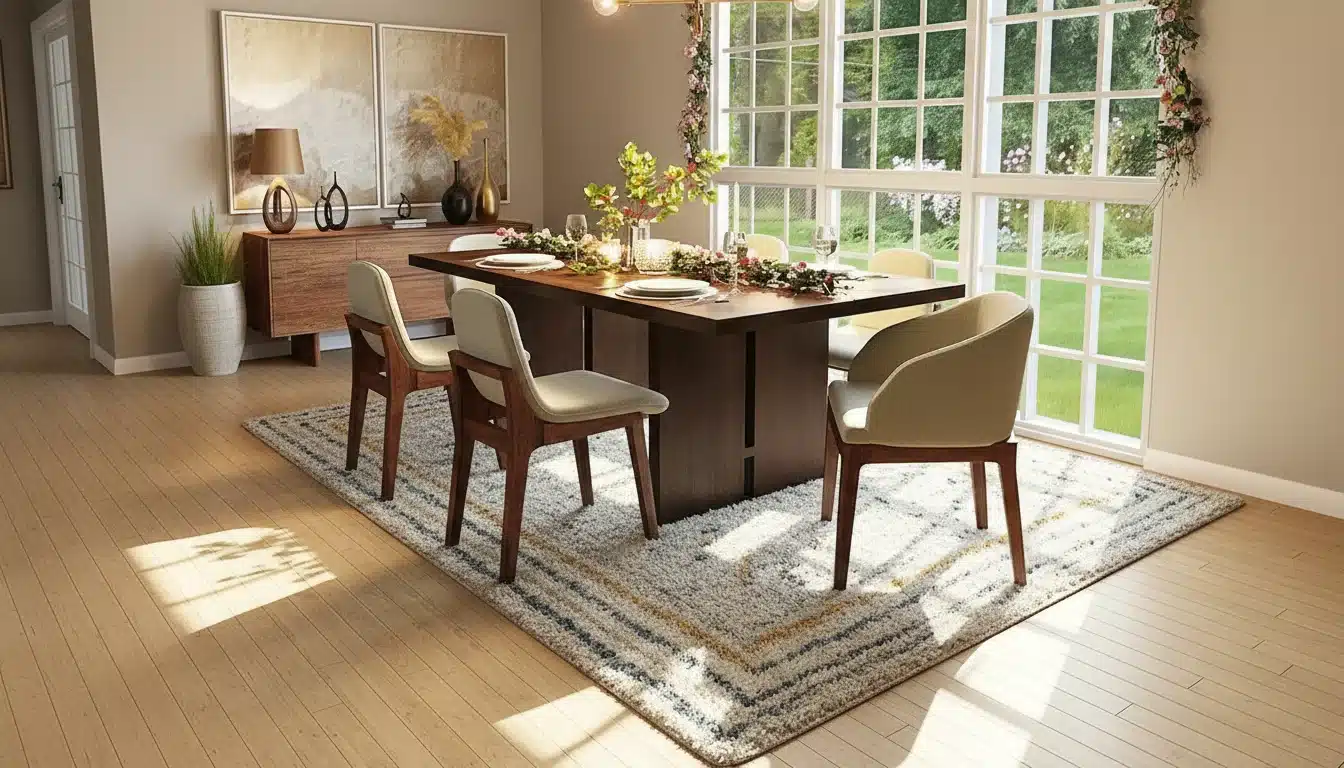
The dining room has one simple rule.
The rug must be large enough for the chairs to stay on it, even when pulled out from the dining table.
For a table that seats six, an 8×10 is usually the minimum.
A table that seats eight or more needs a 9×12 rug to keep all the chairs comfortably on the rug, and a small rug forces chair legs off the edge every time someone sits down or stands up.
This looks awkward and wears out the rug unevenly over time.
Kitchen Rug Sizes
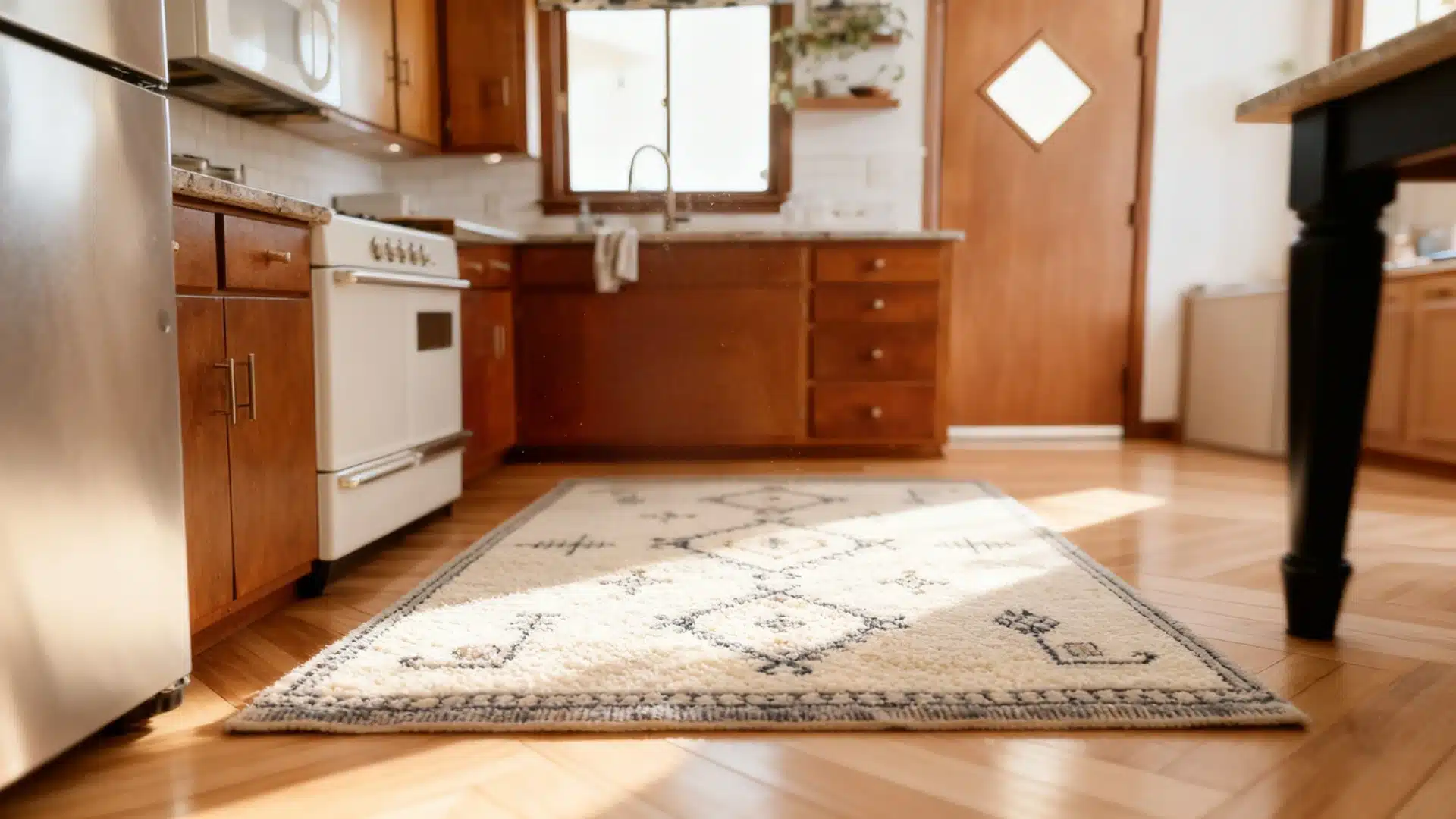
Kitchen rugs are more about comfort and function than making a style statement.
For a small kitchen, a 2×3 in front of the sink or stove gives a soft, supportive surface during meal prep.
A 2.5×4 works well in a slightly larger kitchen with more counter space.
In a galley-style kitchen or one with a long stretch of counter, a runner in the 2×6 or 2×8 range covers the most-used areas without getting in the way.
The rug should sit flat and stay in place because safety matters just as much as size here.
Children’s Room Rug Sizes
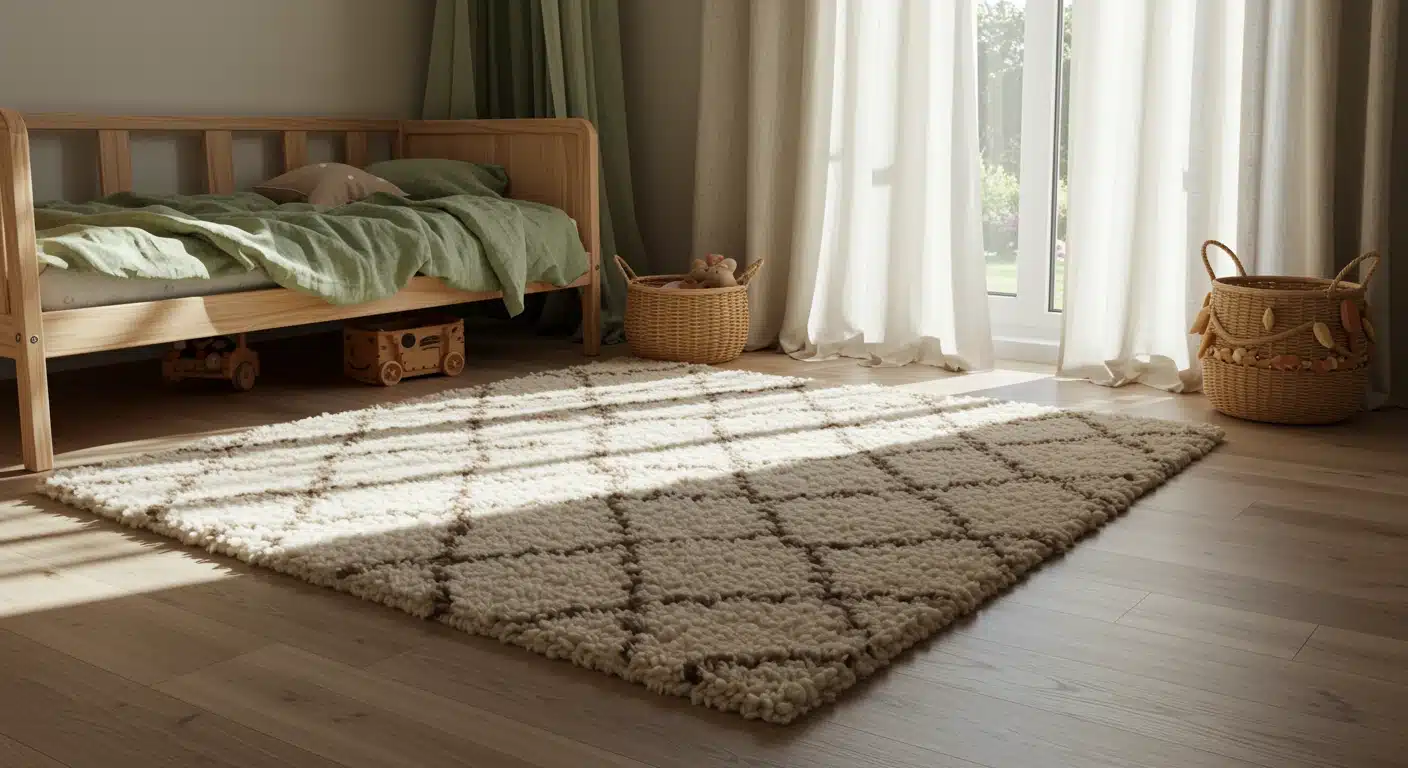
A children’s room needs a rug that gives kids real floor space to play, sit, and spread out.
For a smaller room, a 5×8 placed in the center of the room works well and leaves enough space around the edges for furniture.
In a larger room, a 6×9 or 8×10 gives more play area and makes the room feel more complete.
The rug should sit away from the bed legs to create a clear, open play zone and make it easy to clean.
In a child’s room, it is as important as getting the size right.
Answering Questions You Might Have Related to Rugs
Placing a rug correctly can make or break the look of a room.
Even the right-sized rug can feel wrong if it’s in the wrong spot, which raises questions about how to get your rug placement right.
But the answers are simpler than most people think.
How Far Should a Rug Be From the Wall?
A rug should sit about 18 inches away from the wall in a larger room.
This bare floor gap around the edges gives the room a clean, finished look. In a smaller room, 8 to 10 inches works just as well.
And cuts off the natural flow of the space.
Pushing a rug too close to the wall makes the room feel cramped.
Should an Area Rug Be Centered in a Room?
In most cases, yes.
Centering a rug in a room is the safest and most visually pleasing option, helping the space feel balanced.
That said, it doesn’t always have to sit dead center.
In a bedroom, for example, the rug is often centered under the bed rather than the entire room. It should feel intentional, not random.
Can You Put Two Different Rugs in the Same Room?
Two rugs in the same room can work really well.
But only if they’re chosen carefully, they should share something in common, whether that’s a color or a pattern style.
Keeping one rug as the main piece and the second as a smaller accent is the easiest way.
Using two completely different rugs with no visual connection makes a room feel unplanned.
Final Thoughts
Choosing the right common area rug sizes changes how a room looks and functions.
From understanding standard rug sizes to matching them with each space, the right choice helps tie everything together.
With a few simple guidelines and ideas, it becomes easier to avoid sizing mistakes.
Creating a balanced layout that feels comfortable, practical, and well put together to make the common area look balanced.
Frequently Asked Questions (FAQs)
1. Is it Better for a Rug to be Too Big or Too Small?
A slightly larger rug is better. Small rugs make rooms feel disconnected, while bigger rugs help furniture sit together and make the space look more complete.
2. Should a Rug be Lighter or Darker than a Couch?
It depends on contrast. A lighter rug brightens a dark couch, while a darker rug grounds a light couch. Aim for balance, not a perfect match.
3. What Makes a Rug Look High End?
Good materials, dense weave, clean edges, and simple patterns make a rug look high-end. Proper size and placement also make a big difference.